
The Unexpected Reason People Fall in Love With Weekend Woodworking
Most people don’t start woodworking because they dream of becoming craftsmen.
They start because they’re frustrated.
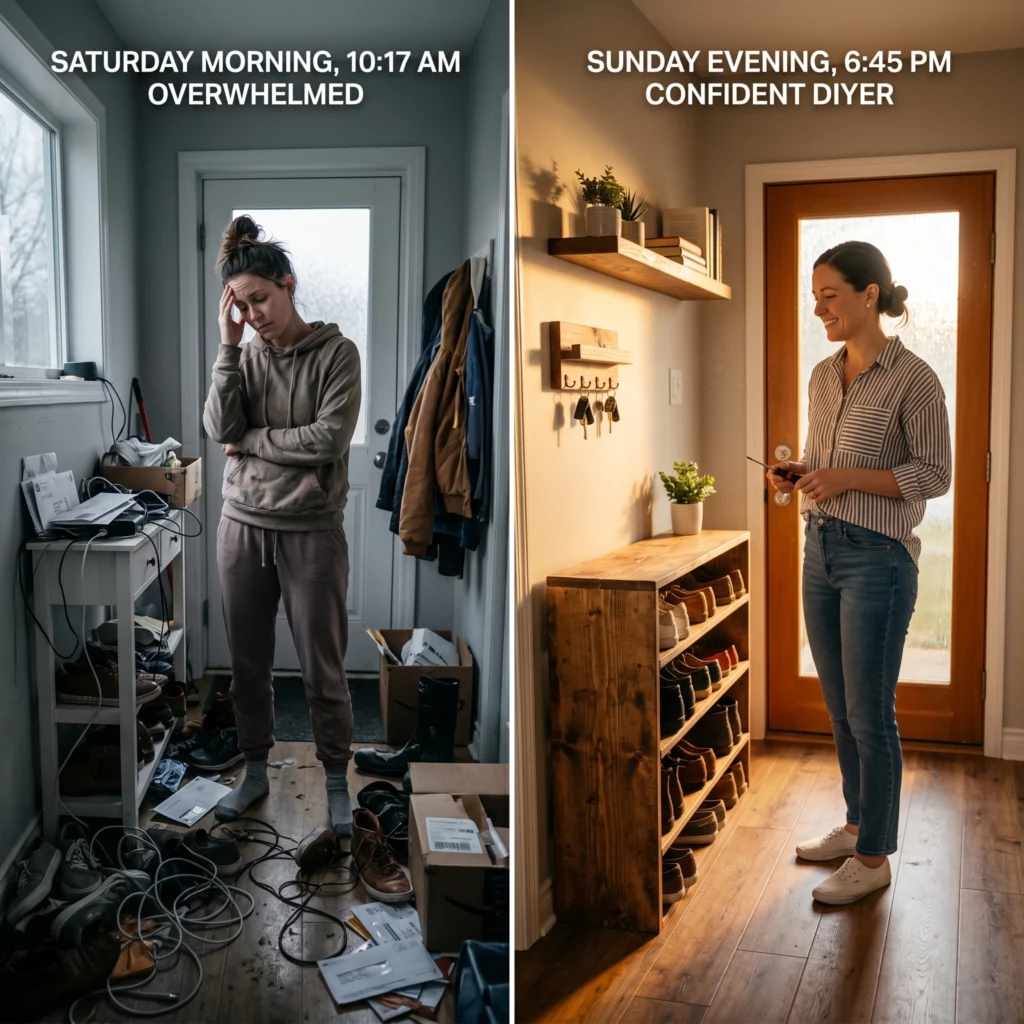
A cluttered entryway. A pile of shoes by the door. Kitchen cabinets that somehow never have enough space. Charging cables tangled across a nightstand like vines creeping through an abandoned building.
The initial goal is simple: fix a problem.
Then something interesting happens.
A few pieces of lumber become a shelf. The shelf solves a problem that has existed for months. Maybe years. Suddenly, the room feels lighter. More intentional. More yours.
That’s the moment woodworking stops being about saving money and starts becoming something deeper.
It becomes a way to shape the spaces you live in.
The beauty of quick weekend woodworking projects is that they don’t demand years of experience, a professional workshop, or an expensive collection of tools. They offer immediate results. Practical improvements. Visible wins.
And in a world filled with disposable products and flat-pack furniture, building something with your own hands feels surprisingly rare.
And surprisingly satisfying.
Looking for the Fastest Projects? Start Here.
If your goal is to complete something useful this weekend, these beginner-friendly woodworking projects consistently deliver the best combination of simplicity, affordability, and impact:
- Floating shelves
- Wooden charging station
- Entryway key holder
- Shoe rack
- Mail organizer
- Plant stand
- Blanket ladder
- Spice rack
- Desk organizer
- Storage crate
Most can be completed in a single day. Several take only a few hours.
More importantly, they’re projects you’ll actually use.
Why Building It Yourself Often Makes More Sense Than Buying It
Walk through any home décor store and pay attention to the price tags.
A floating shelf. $80.
A shoe rack. $120.
A decorative storage crate. $60.
At first glance, these prices seem normal. Then you realize many of these products are built from basic materials and straightforward construction techniques.
What you’re often paying for isn’t complexity.
It’s convenience.
Woodworking flips that equation.
Instead of accepting standardized dimensions and limited designs, you create something tailored to your space. A shelf that fits perfectly between two windows. A charging station designed specifically for your devices. A storage solution that works for your home rather than someone else’s.
The financial savings are significant.
The customization is even more valuable.
DIY vs Store-Bought Cost Comparison
| Project | Average Retail Cost | Typical DIY Cost |
|---|---|---|
| Floating Shelf | $50–$150 | $15–$40 |
| Shoe Rack | $80–$200 | $25–$60 |
| Charging Station | $35–$80 | $10–$25 |
| Spice Rack | $40–$120 | $15–$35 |
| Blanket Ladder | $70–$180 | $20–$50 |
What begins as a way to save money often becomes something else entirely: the realization that you can build solutions better suited to your life than anything sitting on a retail shelf.
The Essential Tools That Make Weekend Projects Possible
One of the biggest misconceptions about woodworking is that it requires a garage packed with expensive equipment.
For beginner woodworking projects, that’s simply not true.
A surprisingly small collection of tools can carry you through dozens of builds.
Cordless Drill
If woodworking had an MVP, this would be it.
From driving screws to drilling pilot holes, a cordless drill earns its place in nearly every project you’ll tackle.
Circular Saw
Clean cuts. Fast progress.
A circular saw opens the door to shelving, furniture, storage solutions, and countless weekend builds.
Tape Measure
The difference between a professional-looking project and a frustrating mistake often comes down to a fraction of an inch.
Precision starts here.
Speed Square
Simple. Inexpensive. Essential.
This small tool helps ensure your cuts stay accurate and your assemblies remain square.
Clamps
Every beginner underestimates clamps.
Every experienced woodworker eventually buys more.
They’re the extra set of hands you’ll wish you had.
Orbital Sander
The fastest way to make a project feel premium is to make it feel smooth.
An orbital sander turns rough lumber into furniture that feels intentional.
Living Room Projects That Eliminate Clutter Without Sacrificing Style
The living room tends to collect evidence of everyday life.
Books accumulate.
Blankets migrate.
Electronics spread.
What begins as comfort gradually turns into visual noise.
These woodworking projects help restore order while adding character to the room.
1. Floating Shelves
Few projects deliver more impact for less effort.
Floating shelves create storage where none existed before. They pull objects off surfaces, free up floor space, and instantly make a room feel more organized.
Why Homeowners Love Them
- Display books beautifully
- Showcase plants
- Highlight artwork and photographs
- Add vertical storage without bulky furniture
Typical Cost
$15–$40
Build Time
2–4 hours
Pro-Level Upgrade
Use concealed shelf brackets to achieve the clean, modern appearance seen in custom-designed interiors.
2. Blanket Ladder
There’s something undeniably inviting about a blanket ladder.
It serves a practical purpose, yet it also creates warmth within a room.
A stack of folded throws hidden inside a closet remains invisible.
A blanket ladder transforms those same blankets into part of the design.
Typical Cost
$20–$50
Build Time
3–5 hours
Ideal For
- Living rooms
- Guest rooms
- Reading corners
- Farmhouse-inspired interiors
3. Wooden Coffee Table Tray
Sometimes organization isn’t about removing items.
It’s about giving them a home.
A wooden tray corrals everyday objects into a single, intentional space.
Remote controls stop wandering. Candles feel curated rather than random. Coasters finally stay where they’re supposed to.
Typical Cost
Under $20
Skill Level
Beginner
4. Decorative Storage Crates
Storage crates occupy a sweet spot between function and flexibility.
Need toy storage today?
Use them for books tomorrow.
Seasonal decorations next month?
No problem.
Stack them. Slide them under furniture. Place them on shelves.
Few woodworking projects adapt as easily.
Entryway Projects That Make Your Home Feel Instantly More Organized
The entryway sets the tone for everything that follows.
Walk into a cluttered entryway and the entire house feels disorganized.
Walk into a clean, intentional space and everything feels calmer.
The good news?
A few simple woodworking projects can completely transform that first impression.
5. Wall-Mounted Key Holder
Everyone has experienced it.
You’re ready to leave.
One shoe is on.
The other is in your hand.
And suddenly your keys have vanished.
A dedicated key holder eliminates that daily frustration.
Features Worth Adding
- Key hooks
- Small shelf
- Mail compartment
- Sunglasses storage
Cost
$10–$25
Build Time
1–2 hours
Small project. Huge quality-of-life upgrade.
6. Shoe Rack
Few household clutter problems spread faster than shoes.
A custom shoe rack creates order immediately.
Even better, it can be designed around your actual space rather than forcing your space to adapt to a store-bought solution.
Benefits
- Cleaner floors
- Better shoe organization
- Easier daily routines
- Improved entryway appearance
Estimated Savings
Most retail shoe racks cost significantly more than the lumber required to build one yourself.
7. Mail Organizer
Paper clutter has a way of multiplying.
One unopened envelope becomes three.
Three become ten.
Before long, countertops disappear beneath paperwork.
A simple wooden mail organizer creates dedicated spaces for incoming mail, bills, important documents, and household paperwork.
The result isn’t just organization.
It’s mental clarity.
Kitchen Woodworking Projects That Create More Space Without Renovation
Kitchen remodels are expensive.
Kitchen organization projects aren’t.
Sometimes the biggest improvements come from solving small inefficiencies that repeat every day.
8. Spice Rack
Every cook knows the frustration.
You need paprika.
You find cumin.
You find garlic powder.
You find everything except paprika.
A custom spice rack solves the visibility problem while freeing valuable cabinet space.
Why It Works
- Better organization
- Faster meal preparation
- Easier ingredient access
- Cleaner countertops
Cost
$15–$35
9. Wooden Paper Towel Holder
Simple projects often become the most-used projects.
A handcrafted paper towel holder brings subtle character to an everyday item most people never think about.
Build Time
Under 2 Hours
Materials
- Hardwood dowel
- Scrap wood
- Wood glue
- Sandpaper
Minimal effort. Daily utility.
10. Coffee Station Organizer
Morning routines thrive on simplicity.
A dedicated coffee station keeps mugs, pods, filters, sweeteners, and accessories together in one organized zone.
No searching.
No clutter.
Just a smoother start to the day.
11. Cutting Board Storage Rack
Some kitchen frustrations are so common that people stop noticing them.
Cutting boards leaning awkwardly against each other.
Cabinet doors that barely close.
The constant shuffle every time you need the board buried at the back.
A cutting board storage rack solves all of it with a surprisingly small footprint.
Instead of stacking boards horizontally, the rack stores them upright, keeping each one visible and accessible.
Why This Project Delivers Outsized Value
- Improves cabinet organization
- Prevents warped cutting boards
- Makes meal preparation faster
- Reduces kitchen clutter
Estimated Cost
$10–$25
Build Time
2–3 hours
Sometimes the best woodworking projects don’t add more storage.
They simply make existing storage work better.
Bedroom Woodworking Projects That Create Calm, Not Clutter
A bedroom should feel restorative.
But modern bedrooms often become storage zones disguised as sleeping spaces.
Phone chargers snake across nightstands.
Clothing accumulates on chairs.
Accessories scatter across dressers.
The projects below address those everyday pain points while introducing the kind of organization that feels effortless rather than restrictive.
12. Bedside Charging Station
Few modern problems are as universal as cable clutter.
Phones.
Smartwatches.
Wireless earbuds.
Tablets.
Every device demands power, and somehow every charging cable ends up tangled together.
A custom bedside charging station creates a dedicated home for everything.
What It Organizes
- Smartphones
- Smartwatches
- Earbuds
- Charging cables
- Tablets
Cost
$10–$30
Build Time
2–3 hours
The result isn’t just a cleaner nightstand.
It’s a calmer visual environment at the beginning and end of every day.
13. Under-Bed Storage Drawers
Most bedrooms contain an overlooked storage opportunity hiding in plain sight.
The space beneath the bed.
For many households, that square footage remains completely unused.
Custom rolling storage drawers transform that dead space into functional storage for:
- Seasonal clothing
- Extra bedding
- Shoes
- Holiday decorations
- Sports equipment
Why Homeowners Love This Project
Unlike bulky dressers or storage cabinets, under-bed drawers create storage without consuming additional floor space.
That’s especially valuable in smaller homes, apartments, and guest rooms.
14. Floating Nightstand
There’s something visually satisfying about furniture that appears to float.
The room feels lighter.
Cleaner.
More spacious.
A floating nightstand accomplishes exactly that while providing practical bedside storage.
Benefits
- Modern appearance
- Easier floor cleaning
- Improved visual openness
- Custom sizing options
Estimated Cost
$20–$50
Build Time
4–6 hours
For minimalist interiors, few beginner woodworking projects create a bigger design impact.
15. Jewelry Organizer
Jewelry often exists in two states:
Perfectly organized for about three days.
Then somehow tangled forever.
A handcrafted jewelry organizer transforms necklaces, bracelets, rings, and watches into an attractive display while keeping everything easy to access.
Design Ideas
- Wall-mounted organizer
- Tabletop display stand
- Rustic wood backing with hooks
- Hidden compartment storage
Why It Works
The project combines organization and décor in a way many commercial products fail to achieve.
Home Office Projects That Improve Focus and Productivity
The rise of remote work changed how people think about home offices.
A desk is no longer just a desk.
It’s a workspace.
A meeting room.
A planning center.
And often, a source of visual stress.
Small woodworking projects can dramatically improve functionality without requiring a complete office renovation.
16. Desk Organizer
Clutter competes for attention.
Every loose pen, notebook, charger, and sticky note creates subtle mental friction.
A desk organizer creates structure.
And structure creates focus.
Store Common Items Like
- Pens
- Highlighters
- Chargers
- Flash drives
- Notebooks
- Business cards
Cost
Under $15
Build Time
1–3 hours
One of the easiest woodworking projects on this list—and one of the most practical.
17. Monitor Stand
Poor monitor positioning affects posture, comfort, and productivity.
A wooden monitor stand solves all three.
It raises the screen to a more ergonomic height while creating valuable storage space underneath.
Additional Benefits
- Cleaner desk setup
- Better cable management
- Reduced neck strain
- Professional workspace appearance
Cost
$15–$40
Build Time
2–4 hours
18. Wall File Organizer
Paper clutter rarely arrives all at once.
It accumulates quietly.
Invoices.
Notes.
Receipts.
Important documents.
Eventually, the pile becomes part of the furniture.
A wall-mounted file organizer moves paperwork off the desk and into a dedicated vertical storage system.
Ideal For
- Home offices
- Family command centers
- Small business workspaces
- Study areas
By utilizing wall space, the organizer creates breathing room without sacrificing accessibility.
Garage and Workshop Projects That Save Time Every Week
Organization isn’t just about appearance.
It’s about efficiency.
In garages and workshops, every misplaced tool costs time.
Every cluttered surface slows progress.
These woodworking projects pay dividends every single time you work.
19. Tool Caddy
Ask experienced woodworkers what they use most often, and many will mention a simple tool caddy.
Why?
Because the best tool is the one you can actually find.
Store Essentials Like
- Screwdrivers
- Tape measures
- Pliers
- Utility knives
- Drill bits
Benefits
- Portability
- Faster workflow
- Better organization
- Reduced frustration
Build Time
2–4 hours
Simple. Functional. Endlessly useful.
20. Scrap Wood Storage Rack
Every woodworker eventually discovers the same truth:
Throwing away usable lumber feels wrong.
But keeping random scraps without a system quickly becomes chaos.
A scrap wood storage rack creates order from that chaos.
Why It Matters
- Keeps offcuts accessible
- Prevents wasted material
- Improves workshop safety
- Maximizes available space
Many future projects begin with wood that would otherwise have been discarded.
21. Wall-Mounted Tool Organizer
There is a certain satisfaction that comes from seeing every tool in its place.
A wall-mounted organizer creates instant visibility.
No digging.
No searching.
No wasted motion.
Great For Storing
- Hammers
- Clamps
- Measuring tools
- Hand saws
- Power tools
Organizational Benefit
When tools remain visible, they’re easier to maintain, easier to find, and far more likely to be returned to their proper location.
Outdoor Weekend Woodworking Projects That Improve Curb Appeal
Not every project belongs indoors.
Some of the most rewarding woodworking builds live outside, where they’re used daily and seen by everyone who visits.
The best outdoor projects combine functionality with visual impact.
22. Wooden Planter Box
A planter box is one of those projects that immediately feels rewarding.
You build it in an afternoon.
Then watch it improve over time as flowers, herbs, or greenery fill the space.
Ideal For
- Patios
- Decks
- Front porches
- Gardens
Cost
$20–$50
Build Time
3–5 hours
For beginners, it’s also an excellent introduction to outdoor woodworking techniques.
23. Garden Tool Storage Station
Garden tools have a remarkable ability to disappear exactly when you need them.
A dedicated storage station keeps everything visible, organized, and protected.
Organize
- Shovels
- Rakes
- Hand tools
- Watering equipment
- Gloves
Benefits
- Longer tool lifespan
- Cleaner garage
- Faster gardening workflow
24. Birdhouse
Some projects remain classics for a reason.
A birdhouse teaches fundamental woodworking skills while delivering an enjoyable finished product.
Skills You’ll Practice
- Measuring
- Cutting
- Assembly
- Fastening
- Finishing
Why Beginners Love It
The project is approachable, affordable, and genuinely enjoyable.
And unlike many beginner projects, it serves a purpose long after the build is complete.
25. Outdoor Side Table
A simple outdoor side table adds surprising utility to patios, decks, and seating areas.
Coffee cups.
Books.
Plants.
Drinks during summer evenings.
The table quietly becomes one of the most-used pieces in the space.
Estimated Cost
$20–$60
Build Time
4–6 hours
It’s also a natural stepping stone toward larger outdoor furniture projects.
The Difference Between Homemade and Professional Often Comes Down to One Thing
Most people assume professional-looking woodworking requires advanced skills.
It doesn’t.
More often than not, the difference lies in the finishing process.
The cuts don’t have to be perfect.
The design doesn’t need to be revolutionary.
What matters is how carefully the final details are handled.
How to Make DIY Woodworking Projects Look Store-Bought
A project can be brilliantly designed and still look unfinished.
Conversely, a simple project can look expensive when finished properly.
That’s where craftsmanship becomes visible.
Sanding Is Where Quality Begins
Many beginners rush through sanding because it feels repetitive.
Experienced woodworkers know better.
The feel of a finished piece begins long before stain or paint ever touches the surface.
A typical sanding progression looks like this:
- 80 grit
- 120 grit
- 180 grit
- 220 grit
Each step removes imperfections left behind by the previous grit.
The difference becomes obvious the moment your hand touches the finished surface.
Smoothness communicates quality before a person notices anything else.
Precision Creates Trust
Humans instinctively notice alignment.
We notice gaps.
We notice uneven spacing.
Even if we can’t explain why something looks off, we feel it.
That’s why woodworking’s oldest advice remains timeless:
Measure twice.
Cut once.
Every accurate measurement compounds into a cleaner final result.
And every shortcut eventually reveals itself.
Choose Finishes That Make People Ask Where You Bought It
There is a moment that happens after a project is complete.
The cuts are made.
The assembly is finished.
Everything is structurally sound.
And yet something still feels missing.
That’s where finishing enters the picture.
A quality finish doesn’t simply protect wood. It changes how people experience it.
The grain becomes richer. The color deepens. The entire project gains visual weight and character.
For beginner woodworking projects, a few finishing options consistently deliver excellent results:
Polyurethane
A durable protective layer that stands up well to daily use.
Ideal for:
- Shelves
- Tables
- Desks
- Frequently handled furniture
Danish Oil
Easy to apply and forgiving for beginners.
It enhances natural grain patterns while maintaining a warm, organic appearance.
Hardwax Oil
Increasingly popular among furniture makers because it provides protection without creating a heavy plastic-like surface.
Water-Based Finishes
A practical option when maintaining the natural color of the wood is important.
Furniture Wax
Perfect for decorative projects that benefit from a softer, handcrafted aesthetic.
The finish you choose becomes part of the story your project tells.
Rustic.
Modern.
Minimalist.
Traditional.
The wood remembers every decision.
Can You Actually Make Money Selling These Woodworking Projects?
The short answer?
Yes.
The longer answer is far more interesting.
Many of the most profitable woodworking projects aren’t large dining tables or custom cabinets. They’re smaller pieces that solve everyday problems.
The same projects homeowners search for every day are often the same projects buyers happily purchase.
Think about it.
People need organization.
They need storage.
They need solutions that fit their homes.
And they’re often willing to pay a premium for handmade products that feel personal rather than mass-produced.
Woodworking Projects That Consistently Sell
Floating Shelves
Strong demand.
Relatively simple construction.
Easy customization.
Blanket Ladders
A favorite in farmhouse, modern rustic, and cottage-inspired interiors.
Charging Stations
Practical products with broad appeal.
Planter Boxes
Popular among homeowners, renters, and gardening enthusiasts alike.
Spice Racks
Small footprint. Everyday utility. Strong gift potential.
Shoe Racks
A universal organizational challenge with a straightforward solution.
Why Handmade Products Continue to Thrive
Mass production creates convenience.
Handmade craftsmanship creates connection.
Buyers aren’t always paying for wood.
They’re paying for attention.
Attention to detail.
Attention to design.
Attention to the small imperfections that make an object feel human rather than manufactured.
That’s why local marketplaces, craft fairs, and custom furniture businesses continue to grow despite an endless supply of factory-made alternatives.
The Beginner Mistakes Almost Everyone Makes
Every woodworker remembers their first projects.
And almost every woodworker remembers the mistakes.
The good news?
Most of them are predictable.
Which means they’re avoidable.
Mistake #1: Starting Too Big
There’s a natural temptation to skip ahead.
A simple shelf doesn’t seem exciting.
A custom dining table does.
But skill develops through repetition, not ambition alone.
Small projects teach:
- Measuring
- Cutting
- Assembly
- Sanding
- Finishing
Without those fundamentals, larger projects become expensive lessons.
Confidence is built one successful project at a time.
Mistake #2: Ignoring Wood Movement
Wood is alive in ways many beginners don’t expect.
Humidity changes it.
Temperature affects it.
Seasons influence it.
Boards expand and contract throughout the year.
Ignoring this reality can lead to:
- Cracks
- Warping
- Joint failure
- Structural instability
Understanding wood movement is one of the first steps toward building projects that last.
Mistake #3: Buying Every Tool at Once
Woodworking videos can make it seem as though success requires a workshop filled with expensive equipment.
It doesn’t.
In fact, too many tools often create confusion.
Start with fundamentals.
Learn how they work.
Discover the types of projects you genuinely enjoy building.
Then expand deliberately.
Many exceptional woodworkers built their skills long before their tool collections grew.
Mistake #4: Rushing the Finish
Most woodworking mistakes happen after construction.
Not during it.
People become eager to see the final result.
They skip sanding steps.
They apply stain too quickly.
They rush drying times.
Unfortunately, finishing is where craftsmanship becomes visible.
Slow down here.
The final ten percent of effort often determines one hundred percent of the visual impression.
Mistake #5: Chasing Perfection Instead of Progress
This mistake quietly stops more projects than any other.
A measurement is slightly off.
A corner isn’t perfectly square.
A finish develops a tiny imperfection.
Suddenly the project feels ruined.
It isn’t.
Every experienced woodworker has shelves, tables, and projects containing flaws only they can see.
The goal isn’t perfection.
The goal is improvement.
Every project teaches something the previous one couldn’t.
And that’s how craftsmanship grows.
Questions People Secretly Ask Before Starting Woodworking
“What’s the easiest woodworking project if I’ve never built anything before?”
Start with something small enough to finish quickly.
A wooden phone stand.
A key holder.
A storage crate.
A floating shelf.
The first goal isn’t creating a masterpiece.
It’s proving to yourself that you can complete a project from beginning to end.
That first finished build changes how every future project feels.
“Do I need a garage workshop to get started?”
Not even close.
Many beginner woodworking projects can be completed in:
- Apartments
- Balconies
- Basements
- Spare rooms
- Small garages
- Shared workspaces
Woodworking is more adaptable than most people realize.
A dedicated workshop is wonderful.
It’s not a requirement.
“How much money should I expect to spend when starting?”
For most beginners, a practical starter setup falls somewhere between $100 and $300.
The exact number depends on tool quality and project goals.
What’s important is this:
You don’t need professional-grade equipment to produce professional-looking results.
Skill scales faster than spending.
“What type of wood is easiest for beginners?”
Pine remains one of the best entry points.
It’s widely available.
Affordable.
Easy to cut.
Easy to sand.
And forgiving when mistakes happen.
As skills improve, many woodworkers gradually explore:
- Poplar
- Oak
- Maple
- Walnut
- Birch plywood
But pine remains a trusted starting point for good reason.
“Can woodworking really save money?”
Yes—but perhaps not in the way people initially expect.
The savings often begin with a single project.
A shelf.
A storage solution.
A planter box.
Over time, those savings compound across dozens of household improvements.
But the bigger value comes from capability.
Once you know how to build, your options expand dramatically.
You stop searching for exact products.
You start creating solutions.
“How long does it take before projects start looking professional?”
Usually sooner than people think.
The biggest improvements often come from:
- Better measurements
- Cleaner sanding
- Stronger finishing techniques
- Improved patience
Many beginners produce surprisingly polished work within their first few projects.
The learning curve feels steep from the outside.
Inside it, progress often arrives faster than expected.
Products / Tools / Resources
If you’re building your first collection of woodworking essentials, these are the items most beginners end up using repeatedly across dozens of projects.
Core Hand Tools
- Tape measure
- Speed square
- Combination square
- Utility knife
- Marking pencil
- Claw hammer
- Chisels
Essential Power Tools
- Cordless drill and driver
- Circular saw
- Orbital sander
- Jigsaw
- Compact router (optional upgrade)
Workshop Essentials
- Bar clamps
- Corner clamps
- Wood glue
- Safety glasses
- Hearing protection
- Dust mask or respirator
- Workbench or portable work surface
Recommended Wood Types for Beginners
Pine
Affordable, accessible, and ideal for learning.
Poplar
Smooth, stable, and excellent for painted projects.
Birch Plywood
Strong, versatile, and popular for storage and organization builds.
Oak
Durable and attractive for furniture projects.
Maple
Excellent for modern furniture and clean contemporary designs.
Finishing Products Worth Having on Hand
- Water-based polyurethane
- Oil-based polyurethane
- Danish oil
- Hardwax oil
- Wood filler
- Sandpaper assortment (80–220 grit)
- Tack cloth
- Foam brushes
- Lint-free finishing cloths
Helpful Learning Resources
For Beginners
- Basic measuring and layout guides
- Woodworking safety tutorials
- Lumber selection guides
- Beginner joinery techniques
For Intermediate Builders
- Furniture design principles
- Cabinet-building fundamentals
- Wood movement education
- Advanced finishing systems
For Future Side-Hustle Builders
- Product photography guides
- Local marketplace selling strategies
- Craft fair preparation resources
- Pricing calculators for handmade goods
Smart First Projects to Build Next
After completing one or two projects from this list, many woodworkers naturally progress toward:
- Floating nightstands
- Entryway benches
- Coffee tables
- Storage cabinets
- Console tables
- Outdoor furniture
- Workshop storage systems
- Custom shelving units
Each project introduces new skills, new challenges, and new possibilities—often from the same simple materials that started the journey in the first place.