
There’s a moment that happens in almost every small home.
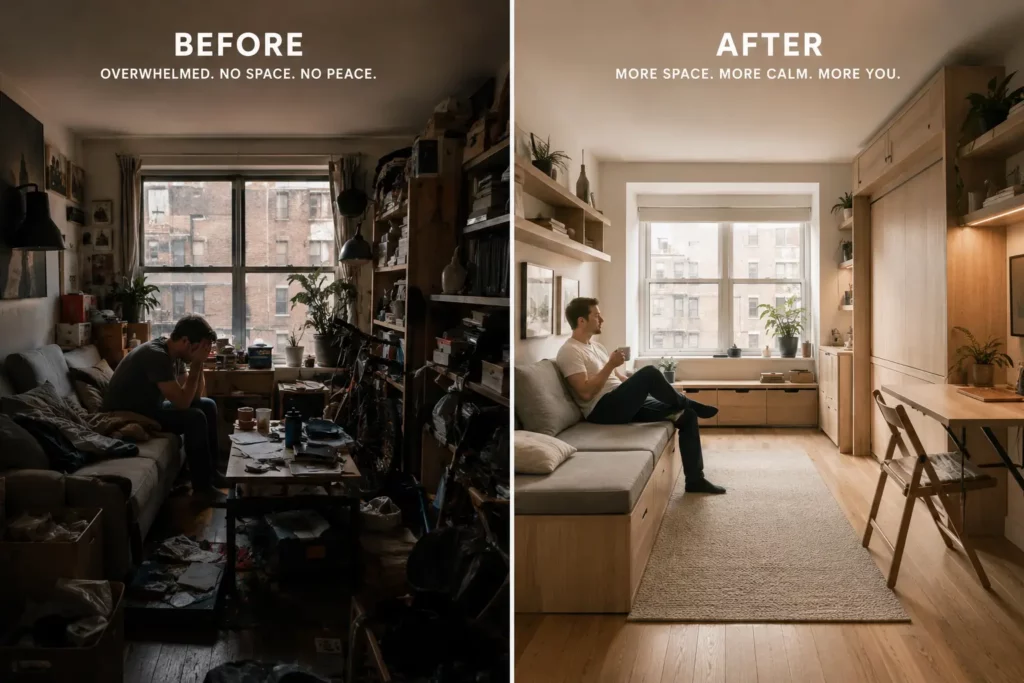
You feel it walking through a crowded apartment after a long day. Or stepping over storage bins in a tiny house that once felt charming but now feels… compressed. The room hasn’t changed dimensions, yet somehow the walls seem closer than they were a month ago.
That feeling rarely comes from square footage alone.
It comes from friction.
Too much furniture. Too little function. Objects competing for space instead of working with it.
And that’s exactly why space-saving woodworking furniture has exploded in popularity—not as a passing Pinterest obsession, but as a smarter way to live inside smaller footprints without sacrificing comfort, beauty, or calm.
The best woodworking projects today aren’t just furniture builds. They’re spatial solutions. Quiet little acts of engineering that make a room breathe again.
A staircase becomes storage.
A wall folds into a desk.
A coffee table hides an entire workspace beneath its surface.
And suddenly, a cramped room starts feeling open in ways that seem almost impossible.
Why Small-Space Furniture Feels So Different When It’s Designed Well
Most people think spacious homes feel relaxing because they’re larger.
That’s only partially true.
What actually creates comfort is flow—the ability to move through a space without visual noise, physical obstruction, or constant low-grade stress. Smart multifunctional furniture reduces that invisible pressure. It removes the tiny interruptions your brain processes every second.
That’s why well-designed tiny homes often feel more peaceful than oversized houses packed with clutter.
Modern woodworking has evolved around this exact principle:
every piece should earn its footprint.
The rise of:
- multifunctional furniture
- hidden storage systems
- foldable woodworking designs
- modular furniture
- minimalist interiors
- vertical storage solutions
has completely changed how small apartments, compact homes, studios, RVs, and cabins are designed.
The goal isn’t simply saving space anymore.
It’s creating emotional spaciousness.
27 Space-Saving Woodworking Furniture Ideas That Completely Change Small Homes
1. Murphy Beds That Disappear Into the Wall
A good Murphy bed feels slightly magical the first time you use one.
At night, it’s a comfortable sleeping area. By morning, the room opens back up again—as if someone quietly added square footage while you slept.
The smartest modern versions include:
- built-in shelving
- integrated lighting
- hidden side storage
- fold-out desks
For studio apartments and tiny homes, this single woodworking project can completely redefine how one room functions.
2. Lift-Top Coffee Tables With Hidden Storage
Some furniture works harder than people do.
Lift-top coffee tables are one of those pieces.
They function as:
- coffee tables
- dining surfaces
- laptop workstations
- hidden blanket storage
- charging hubs
The beauty is in the transition. One movement changes the entire purpose of the room.
And psychologically, that adaptability makes small spaces feel far less restrictive.
3. Fold-Down Wall Desks for Compact Home Offices
Remote work permanently changed furniture design.
People no longer want dedicated offices consuming entire rooms. They want flexibility.
Wall-mounted folding desks create a workspace when needed and disappear when they’re not. In a small apartment, that matters more than most people realize. A room that serves multiple identities feels dramatically larger than one trapped in a single function.
Especially when the design is clean, minimal, and mounted at the right visual height.
4. Under-Stair Storage That Turns Dead Space Into Gold
Most staircases waste astonishing amounts of usable space.
Once you notice it, you can’t unsee it.
Custom woodworking transforms that empty cavity into:
- pull-out drawers
- pantry shelving
- shoe organization
- hidden pet areas
- compact tool storage
In tiny homes, under-stair systems are often the difference between constant clutter and calm functionality.
5. Platform Beds With Deep Drawer Storage
Traditional bed frames quietly consume huge amounts of potential storage.
Platform beds reclaim it.
Deep integrated drawers create space for:
- clothing
- winter blankets
- luggage
- seasonal décor
- extra bedding
And there’s another benefit people rarely mention:
when storage disappears beneath the bed, visual clutter disappears with it.
That changes the emotional atmosphere of the room almost immediately.
6. Expandable Dining Tables That Adapt to Real Life
Large dining tables are wonderful… until they dominate an entire room 90% of the time.
Expandable woodworking tables solve that contradiction beautifully.
Compact when folded. Spacious when needed.
Modern designs use:
- butterfly leaf systems
- sliding rails
- pivot extensions
- hidden folding panels
so the table expands only when life actually requires it.
7. Floating Nightstands That Make Bedrooms Feel Airier
Bulky furniture visually weighs down small rooms.
Floating furniture does the opposite.
Mounted nightstands expose more floor area, improve light flow, and create the illusion of openness without changing the room’s dimensions at all.
It’s one of the oldest interior design tricks—and one of the most effective.
8. Hidden Storage Benches That Eliminate Everyday Chaos
There’s something deeply satisfying about furniture that conceals disorder.
Storage benches work especially well in:
- entryways
- mudrooms
- dining areas
- tiny apartments
They provide seating while quietly swallowing:
- shoes
- backpacks
- blankets
- seasonal items
- daily clutter
The room immediately feels calmer because fewer objects compete for attention.
9. Vertical Wall Storage Systems
When floor space disappears, walls become infrastructure.
Smart vertical woodworking systems can hold:
- books
- cookware
- office supplies
- plants
- foldable desks
- modular storage bins
And because the eye naturally follows vertical lines upward, these systems can make ceilings feel taller too.
That visual effect matters more than people think.
10. Rolling Kitchen Islands for Flexible Cooking Spaces
Small kitchens need movement.
A rolling kitchen island creates extra prep space exactly when you need it—and disappears when you don’t.
The best designs combine:
- butcher block surfaces
- hidden drawers
- open shelving
- locking caster wheels
so the island becomes a movable workstation rather than a permanent obstacle.
11. Nesting Tables That Expand on Demand
Nesting furniture solves a problem most homes never address:
occasional need versus permanent footprint.
Three tables can occupy the space of one until guests arrive or extra surfaces become necessary.
That kind of flexibility changes how compact living feels day to day.
12. Corner Shelving That Uses Forgotten Space
Corners are strangely neglected in most homes.
Custom corner bookshelves soften hard room geometry while adding practical storage without interrupting movement flow.
In smaller rooms, those details compound quickly.
13. Sliding Barn-Door Cabinets
Traditional cabinet doors consume invisible space every time they swing open.
Sliding systems eliminate that issue completely.
They also introduce texture and warmth that works beautifully in:
- modern rustic interiors
- Scandinavian spaces
- minimalist apartments
- tiny homes
14. Convertible Sofa Beds That Actually Feel Comfortable
Older sofa beds had a reputation for being miserable.
Modern woodworking designs changed that.
Today’s high-quality convertible sofas integrate real mattress support, cleaner mechanics, and hidden storage while maintaining a refined appearance.
For guest-friendly small homes, they’re nearly indispensable.
15. Wall-Mounted Dining Tables
A folding dining table attached directly to the wall can completely transform a tiny kitchen.
Folded down, it disappears almost entirely.
Opened up, it becomes:
- a dining space
- work desk
- prep station
- creative workspace
That adaptability is the heart of modern small-space design.
16. Window Benches With Hidden Storage
Some furniture changes the emotional tone of a room.
Window benches do exactly that.
They create warmth. Softness. A sense of stillness.
At the same time, hidden compartments beneath the seating provide substantial storage for blankets, books, and seasonal items.
Function and atmosphere rarely blend this naturally.
17. Foldable Workbenches for Compact Workshops
Woodworkers living in smaller homes face a unique challenge:
the tools required to build efficient spaces often require space themselves.
Foldable workbenches solve that elegantly.
Collapsed when not in use. Stable when needed.
That balance keeps garages and utility spaces usable instead of permanently overcrowded.
18. Staircase Bookshelves
A staircase already occupies visual attention.
Integrating shelving into that structure makes the architecture itself functional.
Books, décor, and storage become part of the design instead of additional clutter layered on top of it.
19. Pegboard Wall Systems That Evolve Over Time
Pegboards used to belong exclusively in workshops.
Not anymore.
Modern wooden peg systems have become one of the most adaptable storage solutions available for:
- kitchens
- bedrooms
- offices
- entryways
- studios
The real advantage is flexibility. You can continuously rearrange the system as your needs change.
Few furniture solutions age that gracefully.
20. Hidden Pull-Out Pantry Cabinets
Narrow gaps between cabinets often become wasted dead zones.
Pull-out pantry systems reclaim those inches and convert them into surprisingly efficient storage towers for:
- spices
- canned goods
- oils
- dry foods
- cooking tools
Tiny kitchens depend on details like this.
21. Modular Sofas That Shift With Your Space
Small homes evolve constantly.
Furniture should too.
Modular sofa systems allow layouts to adapt around:
- guests
- movie nights
- remote work
- storage needs
- changing room configurations
Static furniture can make a room feel trapped. Modular furniture keeps it alive.
22. Storage Ottomans That Quietly Do Everything
Some pieces don’t demand attention.
They simply make life easier.
Storage ottomans can function as:
- seating
- footrests
- coffee tables
- blanket storage
- toy storage
They’re one of the simplest ways to increase functionality without increasing clutter.
23. Fold-Flat Chairs for Entertaining in Small Spaces
Extra seating becomes complicated in tiny homes.
Fold-flat wooden chairs solve that instantly. Hung vertically on a wall or tucked into slim storage areas, they remain accessible without consuming daily living space.
24. Headboards With Integrated Storage and Lighting
Modern headboards can replace multiple furniture pieces simultaneously.
Integrated systems often include:
- shelving
- hidden compartments
- charging stations
- reading lights
The result feels cleaner, calmer, and far more intentional.
25. Ceiling-Hung Storage Racks
Most homes completely ignore ceiling space.
In garages, workshops, and utility rooms, overhead racks can dramatically increase storage capacity without affecting floor movement at all.
Especially for seasonal items, this approach is incredibly effective.
26. Open Shelving Room Dividers
Traditional walls block both movement and light.
Open shelving systems divide spaces gently while preserving visibility and airflow.
That balance is critical in compact interiors where darkness and visual heaviness quickly make rooms feel smaller.
27. Multifunctional Entryway Systems
The entryway shapes your first emotional impression every single day.
A thoughtfully designed woodworking system can combine:
- coat hooks
- bench seating
- hidden drawers
- shoe organization
- mail storage
into one compact structure that immediately reduces household chaos.
And chaos, more than almost anything else, makes small spaces feel exhausting.
The Woods That Work Best for Space-Saving Furniture
Not every material behaves well in multifunctional furniture.
Weight matters. Durability matters. Structural stability matters even more when pieces fold, slide, pivot, or move regularly.
Lightweight Woods for Foldable Furniture
- Birch plywood
- Poplar
- Pine
- Alder
Premium Hardwoods for Long-Term Durability
- Walnut
- White oak
- Maple
Budget-Friendly Materials
- Baltic birch plywood
- Veneered MDF
- Furniture-grade plywood
Lighter materials reduce strain on hinges, sliders, and folding hardware over time—which dramatically improves longevity.
The Hardware Most People Get Wrong
Beautiful woodworking can still fail if the mechanics feel cheap.
That’s why experienced furniture builders obsess over hardware quality.
The components that matter most:
- soft-close hinges
- heavy-duty drawer slides
- concealed brackets
- pivot systems
- gas struts
- locking caster wheels
- hidden mounting hardware
Smooth movement creates a subconscious feeling of quality. People may not always notice good mechanics consciously—but they absolutely feel them.
Small Furniture Mistakes That Make Rooms Feel Smaller Instantly
Oversized Furniture Ratios
Even one oversized piece can visually compress an entire room.
Blocking Natural Light
Furniture placement affects brightness more than most people realize.
Dark corners psychologically shrink space fast.
Ignoring Vertical Storage
Unused wall height is one of the biggest missed opportunities in small-home design.
Choosing Decoration Over Function
Beautiful furniture that creates friction eventually becomes stressful furniture.
And stress changes how spaces feel.
FAQs People Quietly Ask Before Redesigning a Small Space
What type of furniture saves the most space without making a room feel crowded?
Multifunctional furniture almost always delivers the biggest impact. Pieces like Murphy beds, lift-top coffee tables, storage ottomans, and expandable dining tables combine multiple uses into one footprint, which reduces clutter and improves movement flow.
Is custom woodworking actually worth it for tiny apartments?
Usually, yes—especially in awkward layouts where standard furniture wastes inches that matter. Custom woodworking allows furniture to fit exact dimensions while adding hidden storage and multifunctionality that mass-produced furniture often lacks.
What’s the best wood for space-saving furniture projects?
Birch plywood is one of the strongest all-around options because it’s durable, lightweight, affordable, and stable enough for foldable furniture systems.
How do designers make tiny rooms feel bigger without knocking down walls?
The biggest shifts usually come from:
- floating furniture
- vertical storage
- hidden compartments
- lighter wood tones
- foldable furniture
- reducing visible clutter
- improving natural light flow
Most spacious-feeling rooms are designed around openness, not size.
Products / Tools / Resources
Recommended Hardware Brands
- Blum soft-close hinges
- Accuride drawer slides
- Rockler folding brackets
- Hafele concealed hardware systems
Best Power Tools for Small-Space Woodworking
- Compact track saws
- Cordless drills
- Palm routers
- Folding workbenches
- Precision pocket-hole jigs
Helpful Design Software
- SketchUp
- Fusion 360
- Shapr3D
- RoomSketcher
Best Places to Find Woodworking Plans
- Ana White
- Fine Woodworking
- Rockler project library
- Woodsmith plans
- Kreg woodworking guides
Smart Storage Accessories Worth Considering
- Under-bed storage casters
- Magnetic cabinet latches
- Cable management trays
- Modular pegboard systems
- Heavy-duty locking casters
Finishes That Work Beautifully in Small Spaces
- Matte polyurethane
- Natural hard wax oils
- Low-VOC finishes
- Satin water-based sealers
Lighter, natural finishes tend to reflect more light and help compact rooms feel softer, brighter, and more open.