
There’s a moment that happens in certain rooms.
You walk in, and before you notice the lighting or the architecture or the view outside the windows, your eyes land on the furniture. A walnut dining table with impossible grain continuity. A white oak console that seems to float against the wall. A platform bed so clean and restrained it feels less like furniture and more like part of the house itself.
Most people assume those pieces belong to another world.
Designer showrooms. Private craftsmen. Custom architectural firms.
And to be fair, the pricing reinforces the illusion.
A handcrafted dining table can cost $8,000. A minimalist credenza might sell for $5,400. A boutique coffee table built from solid walnut and stone? Easily more than a month’s rent in most cities.
But here’s the part almost nobody sees.
Behind a huge percentage of luxury furniture builds are woodworking plans—sometimes decades old, quietly shared in maker communities, buried inside furniture archives, passed between cabinetmakers, or uploaded to forgotten corners of the internet where craftsmanship still matters more than algorithms.
That’s the hidden vault.
Not cheap DIY projects built from construction lumber and pocket screws. Real furniture. Architectural furniture. The kind of pieces that change the atmosphere of a room the second they arrive.
And many of the plans are free.
What follows is a curated collection of high-end woodworking plans and luxury furniture blueprints capable of producing heirloom-level work without heirloom-level pricing. Along the way, we’ll break down why certain designs feel expensive, how professional cabinetmakers approach proportion and materials, and where serious woodworkers actually find premium plans most people never discover.
Recommended reading: How to Read Woodworking Blueprints: A Beginner’s 10-Step Guide From Symbols to First Cut
Why Some Furniture Feels Expensive Before You Even Touch It
Luxury furniture has very little to do with decoration.
That surprises people.
The instinct is to associate “high-end” with complexity—ornate carvings, exotic shapes, dramatic details. But the pieces that truly feel timeless usually operate differently. They rely on restraint.
Clean lines. Precise spacing. Quiet confidence.
A well-built Scandinavian dining table often feels more luxurious than something overloaded with detail because your brain interprets simplicity as control. Nothing unnecessary survived the design process.
That perception is built from a handful of subtle signals.
Material Choice Changes Everything
Walk into any luxury furniture showroom and you’ll notice the same woods appearing again and again:
- Walnut
- White oak
- Ash
- Teak
- Mahogany
- Rift-sawn hardwoods
These woods age beautifully. More importantly, they carry visual depth. Grain patterns move naturally across surfaces instead of looking printed or repetitive.
Cheap furniture usually breaks this illusion immediately with particleboard cores, artificial veneers, or inconsistent grain matching.
Even non-woodworkers notice the difference instinctively.
Precision Joinery Quietly Signals Mastery
The average person may not know what a mortise and tenon joint is.
They still feel it.
Luxury woodworking plans often rely on:
- Floating tenons
- Dovetails
- Domino joinery
- Hidden mechanical support
- Seamless edge transitions
Furniture built this way moves differently. Feels different. Ages differently.
Visible fasteners, uneven reveals, and bulky connections create visual noise that instantly lowers perceived quality.
Professional cabinetmakers obsess over millimeters because luxury lives in precision.
Recommended reading: The 25 Best Woodworking Joinery Books Every Woodworker Should Own (From Beginner to Master Craftsman)
Proportion Is the Real Secret Nobody Talks About
This is where many DIY builds fall apart.
Not because the builder lacks skill—but because the proportions are slightly off.
A table leg too thick.
An apron too bulky.
A drawer reveal just a little uneven.
Luxury furniture uses visual balance almost mathematically. That’s why Scandinavian furniture, Japandi interiors, and minimalist architectural pieces feel calm the moment you see them.
The spacing is intentional.
Negative space becomes part of the design itself.
The Hidden Vault: 27 Free High-End Woodworking Plans Worth Building
Some furniture projects look impressive online but disappoint in real spaces.
The plans below are different.
These are the builds that create emotional gravity inside a room. Pieces that anchor interiors instead of simply filling them.
Luxury Dining Table Woodworking Plans
Dining tables carry unusual emotional weight.
People gather around them for years. Conversations happen there. Holidays settle into the grain. Scratches become history instead of damage.
That permanence is part of why luxury dining tables command such high prices.
1. White Oak Scandinavian Trestle Table
Minimalist furniture leaves nowhere to hide.
That’s exactly why this design works.
The clean geometry, floating visual weight, and architectural restraint create the same aesthetic language used in premium Nordic interiors.
Best wood choices:
- White oak
- Ash
- Rift-sawn oak
Related entities naturally tied to this style include Scandinavian furniture, minimalist woodworking, Nordic interior design, and modern trestle joinery.
2. Live Edge Walnut River Table
Most river tables fail because they try too hard.
Too much epoxy. Too much contrast. Too much spectacle.
The high-end versions use restraint. Thin resin lines. Rich walnut slabs. Matte finishes that let the wood stay dominant.
Done correctly, the result feels less like a trend piece and more like functional sculpture.
3. Parsons Dining Table Blueprint
At first glance, it almost looks too simple.
Four legs. One top. Straight lines.
But that simplicity becomes brutally unforgiving. Every reveal, edge, and alignment matters. Which is why Parsons tables often separate casual woodworking from serious craftsmanship.
Luxury furniture brands have leaned on this silhouette for decades because it never really dates itself.
4. Japanese-Inspired Low Dining Table
There’s a reason low-profile furniture feels calming.
It changes how a room breathes.
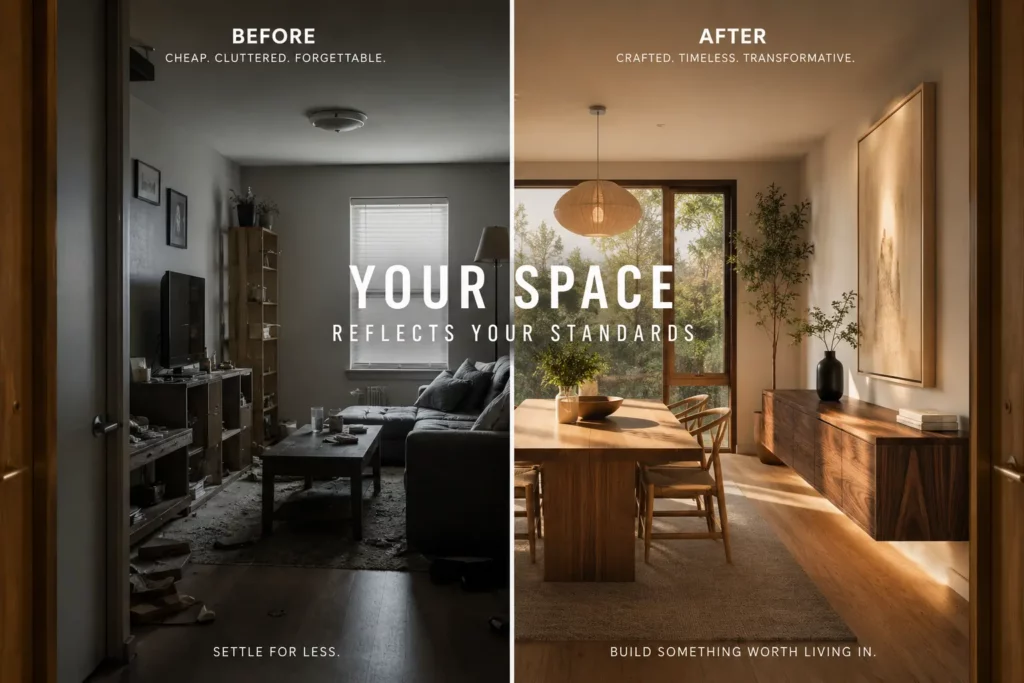
Japandi and Zen-inspired woodworking plans emphasize openness, horizontal movement, and visual quiet. The effect is subtle until you live around it for a while.
Then traditional bulky furniture starts feeling loud.
Designer Coffee Table Plans That Instantly Elevate a Room
Coffee tables are strange little powerhouses.
They occupy relatively little space, yet they often become the visual center of an entire living room.
That makes them one of the smartest entry points into luxury woodworking.
5. Waterfall Edge Coffee Table
A waterfall table lives or dies by grain continuity.
When the grain wraps seamlessly over the edge, the entire piece feels sculpted from a single slab. That visual flow creates the same aesthetic language found in boutique furniture galleries and high-end architectural homes.
Done poorly, it feels obvious.
Done well, people stare at it longer than they realize.
6. Mid-Century Walnut Coffee Table
This style never really disappeared.
Tapered legs. Thin profiles. Floating forms. Danish-inspired geometry.
Mid-century modern woodworking remains dominant because it balances warmth and restraint better than almost any other furniture movement.
Walnut pushes the design even further into luxury territory.
7. Marble-and-Walnut Hybrid Table
Humans instinctively associate material contrast with expense.
Stone against hardwood. Matte against polished surfaces. Warm textures beside cool ones.
That tension creates sophistication almost automatically.
Which explains why luxury interior designers continue pairing marble and walnut across modern furniture collections.
8. Sculptural Geometric Coffee Table
Some furniture pieces stop functioning purely as furniture.
They become conversation pieces.
Geometric woodworking plans blur the line between architecture and sculpture, especially when paired with minimalist interiors where every object carries more visual responsibility.
High-End Bedroom Furniture Plans
Bedrooms are emotional spaces before they’re functional ones.
The best luxury bedroom furniture doesn’t overwhelm the room. It softens it.
9. Floating Platform Bed Frame
The floating bed effect works because it creates visual impossibility.
Your brain understands the bed is supported. Emotionally, though, it still feels lighter than conventional furniture.
Luxury hotels use this constantly because spatial lightness changes how a room feels psychologically.
10. Integrated Nightstand Bed System
Built-ins always feel expensive.
Probably because they imply permanence.
Furniture that appears custom-designed for a specific space creates a subconscious association with wealth, architecture, and intentional living.
11. Upholstered Hardwood Bed Frame
Texture layering changes everything.
Linen against walnut. Leather beside white oak. Matte fabric softening sharp architectural lines.
The best luxury woodworking plans understand that emotional warmth matters just as much as technical precision.
12. Minimalist White Oak Dresser
Cabinetmakers obsess over drawer reveals for a reason.
Tiny inconsistencies become incredibly visible in minimalist furniture.
But when the spacing is perfect—when every line aligns cleanly—the entire piece develops a quiet confidence that cheaper furniture rarely achieves.
Executive Office Furniture Plans That Feel Architectural
Remote work changed furniture design permanently.
Home offices are no longer hidden corners of the house. They’ve become identity spaces.
And luxury woodworking plans adapted fast.
13. Executive Walnut Desk
A large walnut desk communicates authority almost immediately.
Not aggressively. Quietly.
The grain depth, weight, and scale create psychological signals tied to leadership, stability, and creative focus.
There’s a reason executives, architects, and designers consistently gravitate toward walnut furniture.
14. Floating Wall Desk
Minimalism works especially well in workspaces because clutter competes with cognition.
Floating desk systems reduce visual heaviness while making smaller rooms feel dramatically more open.
Perfect for:
- modern apartments
- creator studios
- minimalist home offices
Recommended reading: Free Woodworking Plans for a Floating Desk: A Beginner-Friendly Build With Cut List, Measurements, and Wall-Mounting Steps
15. Built-In Bookshelf System
Bookshelves function almost like psychological architecture.
They communicate:
- expertise
- curiosity
- permanence
- intellectual identity
Well-designed built-ins don’t just store books. They shape how a room feels socially.
Learn more: 15 Modern Bookshelf Woodworking Plans Ranked by Skill Level (From Absolute Beginner to Master Builder)
16. Acoustic Slat Wood Workspace
This category exploded alongside modern content creation.
Wood slat acoustic systems combine:
- sound treatment
- architectural texture
- visual warmth
- studio aesthetics
And they photograph exceptionally well, which partly explains their dominance across luxury interiors and creator spaces.
Luxury Storage Furniture & Statement Pieces
Some furniture exists primarily to organize.
Other pieces quietly define the personality of an entire room.
17. Mid-Century Walnut Credenza
This might be one of the most enduring furniture silhouettes ever created.
Inspired heavily by Danish modern design, the walnut credenza balances storage, proportion, and warmth in a way that still feels contemporary decades later.
18. Minimalist Entryway Console
Luxury homes rarely scream for attention.
They whisper.
That’s why understated entryway furniture often feels more expensive than oversized statement pieces. The restraint itself becomes the signal.
19. White Oak Wine Cabinet
Hospitality aesthetics matter.
Furniture associated with entertaining—wine storage, bar cabinetry, serving consoles—naturally carries a more elevated emotional tone because it connects to experience rather than utility alone.
20. Hidden Hardware Media Console
Push-to-open systems completely change visual perception.
The absence of visible hardware creates uninterrupted surfaces, making furniture feel custom-built instead of mass-produced.
Tiny detail. Massive difference.
Boutique Outdoor Furniture Plans
Outdoor luxury furniture remains strangely overlooked in woodworking.
Which makes it one of the best opportunities right now.
21. Teak Lounge Chair
Teak has become deeply associated with resort architecture, yacht design, and luxury hospitality.
Partly because it performs beautifully outdoors.
Mostly because it ages with dignity.
22. Modern Outdoor Sectional
Indoor-outdoor continuity dominates modern architecture right now.
The best outdoor woodworking plans mirror interior aesthetics rather than treating patios like separate environments.
That cohesion feels expensive immediately.
23. Slatted Cedar Privacy Bench
This is where landscaping and architecture begin overlapping with woodworking.
Slatted privacy structures create depth, shadow, and spatial layering that transform ordinary outdoor areas into intentional environments.
Architectural Statement Builds for Serious Woodworkers
Some projects stop feeling like woodworking and start feeling like design philosophy.
These are those builds.
24. Curved Lamination Lounge Chair
Bent lamination instantly signals craftsmanship because the process itself feels advanced.
The curves appear effortless, even though the build absolutely isn’t.
Which is precisely why these pieces command such attention.
25. Floating Staircase Console
Humans are fascinated by structural illusion.
Furniture that appears unsupported creates tension in the best possible way. Your brain keeps revisiting it, trying to understand how it works.
That lingering curiosity creates memorability.
26. Monolithic Cube Side Table
Brutalist minimalism has surged back into luxury interiors.
Heavy geometric forms. Thick material profiles. Quiet mass.
These pieces feel grounded, architectural, and strangely calming.
27. Gallery-Style Display Cabinet
Museum aesthetics carry immediate prestige associations.
Glass integration, controlled lighting, negative space, and precise shelving layouts transform ordinary objects into curated experiences.
That emotional framing changes how the entire room feels.
Where Serious Woodworkers Actually Find Premium Furniture Plans
Most high-end woodworking plans are not sitting on page one of search results.
Professionals usually find them deeper inside specialized ecosystems.
Open-Source Maker Communities
Some of the best luxury furniture blueprints online come from niche woodworking communities sharing:
- CAD files
- CNC templates
- SketchUp models
- architectural millwork drawings
These spaces tend to prioritize craftsmanship over content marketing.
Which is exactly why they’re valuable.
University Furniture Design Archives
Industrial design programs quietly publish extraordinary material.
Furniture experiments. Joinery studies. Prototype collections.
Buried inside those archives are ideas most mainstream woodworking sites never touch.
Boutique Furniture Forums
Small forums still matter.
Especially the ones populated by restoration specialists, custom cabinetmakers, and lifelong furniture builders.
The conversations tend to be slower, deeper, and far more technically useful than mass-market DIY sites.
Architectural Publications
Modern woodworking increasingly overlaps with architecture.
The best contemporary furniture plans often emerge from architectural thinking:
- spatial harmony
- material continuity
- negative space
- integrated design language
Understanding that overlap changes how you approach every build.
Why Some DIY Furniture Still Looks Homemade
This part matters more than most people realize.
Expensive materials alone won’t save a poorly refined build.
Over-Staining Kills Natural Depth
Luxury furniture rarely hides wood beneath thick pigment.
It reveals the grain instead.
That’s why hard wax oils and matte finishes dominate high-end woodworking right now.
Bulky Proportions Break Sophistication
Heavy aprons. Thick legs. Oversized trim.
These details create visual heaviness that instantly reduces elegance.
Luxury furniture feels balanced, not oversized.
Cheap Hardware Undermines Everything
Humans notice movement subconsciously.
Soft-close drawer slides, smooth hinges, and solid tactile feedback dramatically influence perceived quality even when people can’t explain why.
Bad Lighting Makes Great Furniture Look Average
Furniture photography matters.
A beautifully built walnut console can look amateurish under harsh overhead lighting. Meanwhile, soft side lighting and natural shadows can make simple builds feel editorial and architectural.
Presentation shapes perception.
Products / Tools / Resources
Recommended Hardwoods for Luxury Furniture Builds
- Black walnut
- White oak
- Rift-sawn oak
- Ash
- Teak
- Sapele mahogany
Finishes Cabinetmakers Consistently Trust
- Rubio Monocoat
- Osmo Polyx Oil
- General Finishes Arm-R-Seal
- Odie’s Oil
- Waterlox Original
Essential Tools for High-End Woodworking
- Track saw system
- Cabinet table saw
- Domino joiner
- Router table
- Random orbital sander
- Parallel clamps
- Precision marking gauges
Design Styles Worth Studying
- Scandinavian furniture
- Japandi interiors
- Danish modern
- Mid-century modern
- Minimalist architecture
- Brutalist interiors
Best Places to Explore Premium Plans
- SketchUp woodworking communities
- Open-source maker forums
- Furniture design archives
- Architectural design publications
- Boutique woodworking YouTube channels
- CNC furniture design repositories