
There’s a certain kind of satisfaction that only comes from building something with your own hands. Not buying it. Not assembling it from a flat-packed box with missing screws and vague instructions. Actually building it.
And pallet woodworking sits right at the center of that feeling.
Maybe it starts with a rough stack of weathered boards leaning behind a hardware store. Maybe it’s a single reclaimed pallet sitting in your garage because you thought, I could probably make something out of that someday. Then one small project turns into another. A floating shelf becomes a coffee table. A coffee table becomes a bed frame. Before long, you stop looking at discarded wood as waste and start seeing possibility everywhere.
That shift changes people.
What makes pallet woodworking different from other DIY hobbies is the strange collision of practicality and beauty. You’re taking forgotten material—wood meant to carry freight across warehouses—and turning it into furniture with warmth, texture, and character that expensive showroom pieces often can’t replicate.
And somewhere along the way, rustic décor stopped feeling old-fashioned and started feeling personal.
The grain matters. The imperfections matter. Even the scratches matter.
Because perfect furniture rarely tells a story.
Why Pallet Woodworking Feels So Different From Regular DIY
Walk into a modern furniture store and most pieces feel strangely interchangeable. Smooth surfaces. Manufactured finishes. Predictable symmetry.
Reclaimed pallet wood pushes in the opposite direction.
Every board carries variation:
- saw marks
- knots
- sun fading
- subtle warping
- grain patterns you couldn’t recreate if you tried
That texture creates emotional warmth inside a room. People respond to it instinctively, even when they don’t understand why.
Rustic interiors have exploded across farmhouse homes, industrial lofts, Scandinavian-inspired spaces, and modern minimalist interiors because reclaimed wood softens environments that might otherwise feel cold or overly polished.
Pallet woodworking also taps into something deeper than design trends: control.
You decide the stain. The dimensions. The finish. The flaws you keep and the ones you sand away.
That level of ownership changes how people connect to their homes.
Is Pallet Wood Actually Safe for Furniture?
This is usually the first question beginners ask—and honestly, it should be.
Not every pallet belongs inside your house.
The safest pallets are stamped:
- HT (Heat Treated)
- KD (Kiln Dried)
Those markings matter because they indicate the wood was treated with heat rather than harsh chemicals.
Avoid pallets marked:
- MB (Methyl Bromide)
- chemically treated imports
- oil-stained industrial pallets
- damp or moldy wood
If the pallet smells strange, feels greasy, or looks heavily contaminated, leave it alone.
There’s no shortage of clean pallets available through:
- garden centers
- furniture retailers
- local hardware stores
- appliance shops
And once you start paying attention, you’ll notice pallets everywhere.
The Beginner Tool Setup That Actually Makes Sense
One reason pallet woodworking grows so quickly is because the barrier to entry feels manageable.
You do not need a professional workshop to build beautiful rustic furniture.
A simple beginner setup usually includes:
Cutting Tools
- Circular saw
- Jigsaw
- Handsaw
Sanding Tools
- Orbital sander
- Sandpaper (80–220 grit)
Assembly Basics
- Drill and driver
- Wood screws
- Clamps
- Carpenter square
Safety Gear
- Eye protection
- Gloves
- Dust mask
That’s enough to build an impressive amount of furniture.
And unlike expensive hardwood projects, pallet wood gives beginners room to learn without feeling terrified of mistakes. That freedom matters more than most people realize. It lowers pressure. It keeps momentum alive.
Rustic furniture also has a built-in advantage: perfection isn’t the goal.
Slight texture variation? Beautiful.
Visible grain? Better.
Tiny inconsistencies? They often make the finished piece feel more authentic.
That’s why beginners progress unusually fast with reclaimed wood projects.
Beginner Pallet Woodworking Projects That Build Confidence Fast
The smartest way to improve woodworking skills isn’t by jumping into giant furniture builds.
It’s stacking small wins.
A quick project finished well teaches more than a half-completed “dream build” abandoned in frustration.
Rustic Floating Shelves
Floating shelves are usually where people realize pallet wood can look genuinely expensive.
They’re simple enough for beginners but visually powerful enough to transform a room.
A dark walnut stain paired with matte black brackets creates that clean industrial-rustic contrast designers love right now.
More importantly, shelves teach foundational skills:
- measuring accurately
- sanding evenly
- mounting securely
- working with level alignment
Small project. Huge confidence boost.
Farmhouse Entryway Signs
These projects matter because they teach finishing techniques without forcing beginners into complicated structural work.
You start learning:
- distressing
- staining
- sealing
- layering texture
And suddenly wood stops looking like construction material and starts feeling like décor.
That transition changes how beginners approach every future project.
Pallet Candle Trays
Simple projects often create the strongest momentum.
There’s something psychologically powerful about finishing a project in a single afternoon. You see immediate progress. Immediate transformation. Immediate reward.
That feeling keeps people coming back to the garage the next weekend.
When Pallet Projects Start Looking Like Designer Furniture
There’s a point where pallet woodworking shifts.
The projects stop looking “DIY” and start looking intentional.
That usually happens around furniture builds.
Rustic Coffee Tables
Coffee tables are often the first large-scale build that completely changes how people see reclaimed wood.
Done correctly, they don’t look homemade. They look curated.
Add:
- caster wheels
- hidden storage
- mixed wood tones
- steel accents
And suddenly you’ve built something that resembles boutique furniture selling for hundreds—sometimes thousands—of dollars.
Coffee tables also teach structural thinking:
- weight support
- frame stability
- balanced assembly
- surface finishing
You stop building décor and start building furniture that lives with people every day.
Blanket Ladders
Blanket ladders became wildly popular for a reason.
They create vertical warmth inside a room without overwhelming the space. They photograph beautifully. They soften sharp interiors.
And visually, they do something many furniture pieces don’t:
they make homes feel lived in.
Pair one with:
- woven throws
- linen textures
- neutral palettes
- matte black fixtures
and the entire room changes tone.
Wall-Mounted Wine Racks
Wine racks introduce precision.
Spacing matters. Symmetry matters. Weight distribution matters.
But they also sit at the intersection of several high-interest home décor categories:
- kitchen styling
- entertaining spaces
- rustic organization
- farmhouse aesthetics
That overlap is part of why rustic wine storage performs so well online. It combines beauty and function in a way people immediately visualize inside their own homes.
Advanced Pallet Furniture That Changes Entire Rooms
This is where things get addictive.
Not because the projects become easier—they don’t—but because the transformation becomes dramatic.
Farmhouse Bed Frames
Building a bed frame from reclaimed pallet wood changes the emotional scale of woodworking.
You’re no longer making accessories.
You’re shaping the atmosphere of an entire room.
Large wood headboards create visual gravity. Mixed stains create depth. Black steel hardware introduces contrast. Warm lighting against textured wood makes bedrooms feel grounded and intimate in a way mass-produced furniture rarely achieves.
Structurally, these projects demand more:
- reinforced joints
- center support systems
- hardwood integration
- precise leveling
But emotionally? They hit differently.
People sleep inside something they built themselves. That creates a level of connection store-bought furniture almost never reaches.
Outdoor Rustic Sectionals
Outdoor pallet furniture exploded because it solves multiple problems at once:
- affordability
- customization
- entertaining space
- visual impact
Most people underestimate how expensive quality outdoor furniture has become. Pallet sectionals allow homeowners to build oversized seating layouts for a fraction of retail costs.
But durability matters.
Use:
- exterior-grade screws
- waterproof sealants
- elevated feet
- weather-resistant cushions
The biggest mistake beginners make is allowing wood to sit directly against damp surfaces. Moisture destroys furniture from the bottom up long before the top shows visible damage.
Sliding Barn Doors
Few pallet projects transform a room faster than a barn door.
It changes movement. Texture. Acoustics. Even the feeling of space itself.
And visually, barn doors tap directly into modern rustic design language:
- reclaimed wood
- black steel
- exposed hardware
- natural texture
They create architectural presence.
That’s why these projects generate enormous engagement online. People don’t just see a door—they imagine an entirely different home environment.
The Difference Between Rustic Luxury and Cheap DIY
This is where many pallet projects fail.
The wood isn’t usually the problem.
The finishing is.
Sanding Is Everything
Cheap-looking furniture often feels rough before it even looks rough.
Professional finishes come from patience.
Progress through sanding gradually:
- 80 grit
- 120 grit
- 180 grit
- 220 grit
That smooth tactile finish changes how people perceive quality instantly.
Hardware Creates Contrast
Rustic luxury depends heavily on material contrast.
The warmth of reclaimed wood becomes dramatically stronger when paired with:
- matte black steel
- brushed brass
- iron hardware
That tension between raw and refined creates sophistication.
Stop Over-Distressing Furniture
One of the fastest ways to ruin rustic décor is trying too hard to make it look “old.”
Authentic wear feels subtle. Natural. Uneven.
Artificial distressing often feels theatrical.
The best rustic furniture leaves room for restraint.
The Wood Finishes That Make Pallet Furniture Look Expensive
Finishes completely change emotional tone.
Matte Polyurethane
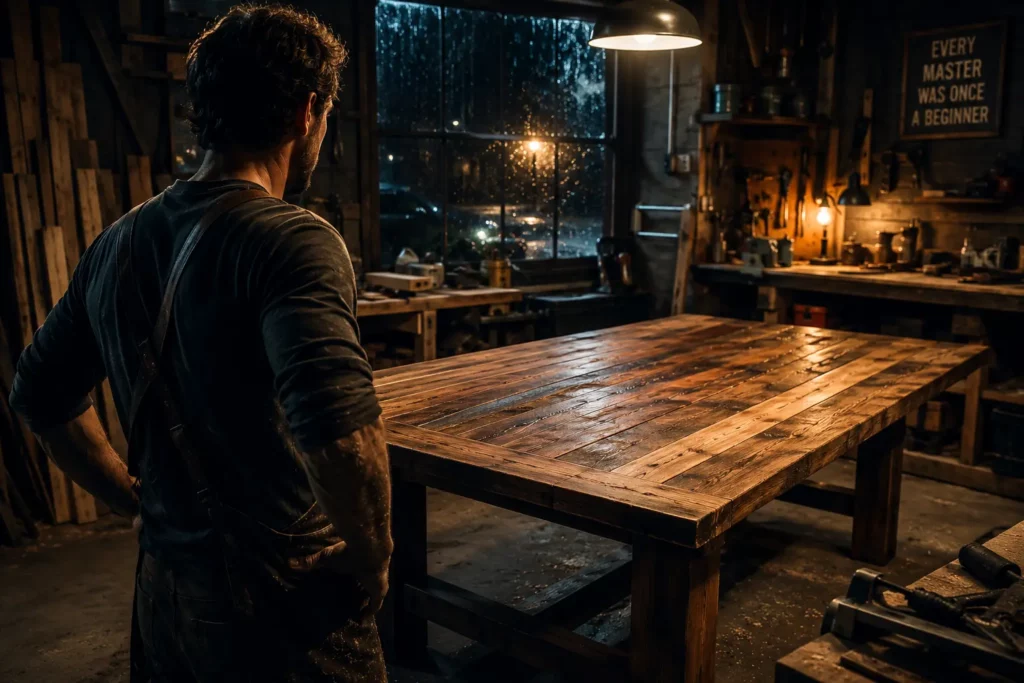
Soft, low-reflection finishes create warmth without making furniture look plastic-coated.
Perfect for:
- farmhouse interiors
- modern rustic spaces
- Scandinavian-inspired homes
Dark Walnut Stain
Still one of the strongest choices for reclaimed wood.
It deepens grain contrast and gives pallet boards a richer, heavier appearance that instantly feels more substantial.
Whitewash Finishes
Whitewashing works beautifully in:
- coastal rustic interiors
- bright farmhouse kitchens
- minimalist organic spaces
It preserves texture while keeping rooms visually light.
Burned Wood Finishes
Light charring creates dramatic depth and texture.
Used carefully, it gives reclaimed wood an almost sculptural quality.
The Mistakes Almost Every Beginner Makes
Most woodworking frustration comes from avoidable problems.
Using Damp Pallets
Wet wood warps as it dries.
That means:
- crooked tabletops
- unstable joints
- cracked finishes
Let reclaimed wood acclimate indoors before building anything important.
Ignoring Grain Direction
Wood naturally expands and contracts.
Beginners often attach boards without considering movement, which eventually weakens furniture over time.
Understanding grain changes everything structurally.
Using the Wrong Screws
Drywall screws are brittle. Furniture requires strength.
Use:
- wood screws
- structural fasteners
- exterior-rated hardware for outdoor projects
Small choices determine long-term durability.
Why Rustic Pallet Furniture Became a Legitimate Side Hustle
At some point, people started realizing handcrafted pallet furniture wasn’t just trendy—it sold.
And it sold well.
Consumers increasingly want homes that feel:
- personal
- sustainable
- textured
- human
Mass-produced furniture often lacks emotional identity. Handmade reclaimed wood furniture carries visible craftsmanship, and that authenticity has real value now.
Especially online.
Rustic coffee tables, farmhouse shelving, entryway benches, and custom wall décor continue performing well across:
- local marketplaces
- craft fairs
- Etsy shops
- custom furniture businesses
The demand exists because people want homes that feel less manufactured and more lived in.
Rustic Interior Trends That Pair Perfectly With Pallet Woodworking
Scandinavian Rustic
This style blends:
- pale wood tones
- minimalist forms
- organic materials
- soft textures
It feels calm without feeling sterile.
Industrial Farmhouse
Still incredibly popular.
Think:
- reclaimed lumber
- matte black steel
- exposed hardware
- oversized wood textures
This combination creates visual weight and warmth simultaneously.
Organic Modern Design
One of the fastest-growing interior aesthetics right now.
Organic modern spaces prioritize:
- natural materials
- warm neutrals
- handmade textures
- architectural simplicity
Which makes pallet woodworking surprisingly relevant to high-end interior design trends.
Questions People Usually Ask Right Before Starting
“Can I actually build furniture if I’ve never done woodworking before?”
Yes. And honestly, pallet projects are one of the best ways to learn.
Start small:
- shelves
- trays
- signs
- side tables
You build skills faster when projects feel achievable.
“Why does reclaimed wood furniture feel more expensive?”
Because texture creates emotional depth.
Mass-produced furniture often looks visually flat. Reclaimed wood has variation, grain movement, imperfections, and character that people subconsciously associate with craftsmanship.
Luxury rarely feels perfect.
It feels intentional.
“How do I keep outdoor pallet furniture from falling apart?”
Seal it properly.
Keep it elevated.
Protect it from trapped moisture.
Most outdoor furniture failures begin underneath where water collects unnoticed.
“What’s the best finish for rustic furniture?”
That depends on the mood you want.
Dark walnut feels rich and dramatic.
Whitewash feels airy and relaxed.
Matte finishes feel warm and natural.
The finish controls the emotional tone of the furniture almost as much as the design itself.
Products / Tools / Resources
Beginner-Friendly Tools Worth Buying First
- Orbital sander
- Cordless drill/driver
- Circular saw
- Wood clamps
- Carpenter square
- Pocket hole jig
Recommended Finishes for Rustic Pallet Furniture
- Matte polyurethane
- Dark walnut stain
- Whitewash stain
- Exterior waterproof sealant
- Furniture wax for soft finishes
Helpful Materials for Cleaner Builds
- Wood filler
- Sanding sponges
- Heavy-duty wood screws
- Matte black hardware kits
- Felt furniture pads
Best Places to Find Free Pallets
- Garden centers
- Appliance stores
- Hardware retailers
- Local warehouses
- Small furniture shops
Useful Project Ideas to Try Next
- Rustic entryway bench
- Pallet kitchen island
- Farmhouse dining table
- Outdoor pallet bar
- Reclaimed wood headboard
- Rustic wall shelving system