
Starting a woodworking shop doesn’t begin with buying the biggest table saw or clearing out an entire garage. It starts with a simple decision: you’re ready to build something with your hands—and maybe turn that skill into extra income.
The good news? You don’t need a massive workshop or a five-figure budget. Some of the most successful woodworking businesses began in a single-car garage, a basement corner, or a backyard shed with only a handful of reliable tools.
If you’re wondering where to begin, these ten steps will help you build a woodworking shop that fits your space, your budget, and your long-term goals.
Step 1: Start With a Clear Vision, Not a Shopping List
It’s tempting to buy tools first. After all, they’re exciting. But tools alone won’t build a successful woodworking business.
Before spending any money, decide what success looks like for you.
Maybe you want to sell handcrafted cutting boards on weekends. Perhaps you’re dreaming about building custom furniture full-time one day. Or maybe you simply want a hobby that eventually pays for itself.
That single decision influences everything else—from your workshop layout to the products you build and the customers you serve.
Ask yourself:
- Is this a hobby, a side hustle, or a future business?
- How many hours can I realistically dedicate each week?
- What types of woodworking projects genuinely excite me?
A clear destination makes every future decision easier.
Step 2: Make the Most of the Space You Already Have
Many beginners postpone starting because they think their workspace is too small.
In reality, an efficient workshop isn’t defined by square footage—it’s defined by organization.
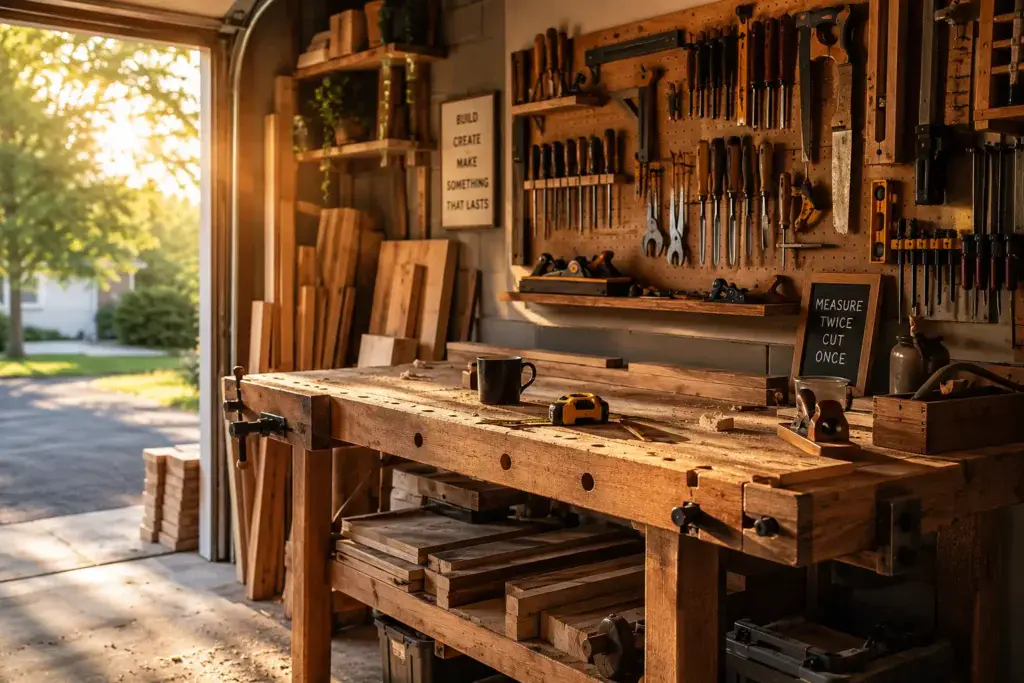
A garage, basement, shed, or even a spare room can become a productive woodworking shop when every area has a purpose.
Create simple work zones for:
- Lumber storage
- Cutting and measuring
- Assembly
- Sanding
- Finishing
When your materials naturally flow from one station to the next, you’ll work faster, stay organized, and enjoy the process much more.
Step 3: Buy the Right Tools—Not Every Tool
Walk into any woodworking store, and it’s easy to believe you need everything.
You don’t.
A small collection of quality tools will take you much farther than a garage filled with machines you rarely use.
Start with:
- Circular saw or compact table saw
- Cordless drill and driver
- Random orbital sander
- Jigsaw
- Clamps
- Measuring tape
- Combination or speed square
- Chisels
- Safety glasses
- Hearing protection
- Dust mask
These essentials are enough to build dozens of profitable beginner projects while keeping your investment manageable.
Every additional tool should solve a real problem—not satisfy a temporary impulse.
Step 4: Build Skills Before You Build Inventory
Every experienced woodworker remembers their first uneven cut, their first poorly applied finish, and the project that didn’t quite go as planned.
Those moments aren’t setbacks—they’re part of learning the craft.
Spend time practicing:
- Accurate measurements
- Straight cuts
- Sanding techniques
- Basic joinery
- Glue-ups
- Wood finishing
Small practice projects teach lessons that no tool or tutorial can replace. The confidence you gain here will show in every piece you eventually sell.
Step 5: Choose Products People Already Want to Buy
One of the easiest ways to gain momentum is by building products with proven demand.
Instead of tackling complex furniture right away, focus on practical pieces that are quick to make, affordable to ship, and attractive to buyers.
Great beginner products include:
- Cutting boards
- Floating shelves
- Charcuterie boards
- Wooden signs
- Entryway organizers
- Plant stands
- Dog bowl stands
- Decorative home accents
These projects allow you to refine your skills while generating income and building customer trust.
Step 6: Price Your Work Like a Business Owner
Pricing is where many beginners unintentionally undervalue themselves.
Materials are only one part of the equation.
Your time, experience, workshop expenses, finishing supplies, packaging, and equipment all contribute to the value of a finished piece.
A simple pricing formula looks like this:
Materials + Labor + Overhead + Desired Profit = Selling Price
Remember, customers who buy handmade woodworking products aren’t simply purchasing wood. They’re paying for craftsmanship, originality, and attention to detail.
Price accordingly.
Step 7: Build a Small Collection Instead of Random Projects
Imagine visiting a shop that sells one cutting board, one birdhouse, and one coffee table.
Now imagine another shop offering a coordinated collection of entryway furniture, matching shelves, key holders, and wall organizers.
Which feels more professional?
Collections create consistency. They strengthen your brand, simplify production, and encourage customers to purchase multiple products together.
Start with five to ten complementary items that share a similar style and material.
Step 8: Focus on Finding Your First Customers
You don’t need thousands of followers to make your first sale.
You need visibility and trust.
Begin where people already know you.
Share your work with friends, neighbors, community groups, and local markets. Attend craft fairs. Introduce yourself to boutique gift shops and interior designers. As your confidence grows, expand to online marketplaces and your own website.
Excellent customer service, clear communication, and professional product photography often outperform expensive advertising.
One happy customer frequently leads to another.
Step 9: Upgrade Slowly and Intentionally
It’s easy to believe that a new machine will instantly improve your woodworking business.
Sometimes it will.
Often, it won’t.
Before buying additional equipment, ask yourself:
- Will this save meaningful time?
- Will it improve quality?
- Will it increase production capacity?
- Will it quickly pay for itself?
If the answer is yes, it’s probably a smart investment.
If not, keep refining your workflow and let your business finance future upgrades.
Step 10: Think Beyond the Workshop
A successful woodworking shop is more than tools and lumber.
Behind every thriving maker is a system that keeps projects moving and customers happy.
Develop routines for:
- Ordering materials
- Organizing inventory
- Photographing finished products
- Packaging orders
- Responding to customer inquiries
- Tracking income and expenses
- Planning future product launches
These habits create consistency, reduce stress, and free up more time to do what you enjoy most—building.
Frequently Asked Questions
Can I really start a woodworking shop without spending thousands of dollars?
Absolutely. Many beginners build a capable workshop for $500–$2,000 by focusing on essential tools and choosing projects that don’t require specialized equipment. Starting small often leads to smarter purchasing decisions as your skills and business grow.
What woodworking projects are easiest to sell when you’re just starting out?
Products like cutting boards, floating shelves, charcuterie boards, wooden signs, plant stands, and entryway organizers tend to perform well because they’re practical, giftable, and relatively simple to produce consistently.
Is a garage the only good place for a woodworking shop?
Not at all. Basements, backyard sheds, workshops, and even spare rooms can become productive workspaces with thoughtful organization, good lighting, and proper dust management.
When should I start selling my woodworking projects?
Once you’re consistently producing work you’re proud of and would confidently recommend to someone else, it’s a good time to begin. You don’t need perfection—you need quality, reliability, and the willingness to keep improving with every project.
How do I know when it’s time to buy better tools?
When a tool solves a recurring problem, improves efficiency, or helps you produce better work consistently, it’s usually a worthwhile upgrade. Let your business needs—not impulse—guide your purchases.
Products / Tools / Resources
If you’re building your first woodworking shop, these essentials will provide a solid foundation without overwhelming your budget.
Essential Workshop Tools
- Circular saw or compact table saw
- Cordless drill and impact driver
- Random orbital sander
- Jigsaw
- Pocket-hole jig
- Router (when you’re ready to expand)
Measuring & Layout
- Tape measure
- Speed square
- Combination square
- Marking knife
- Carpenter’s pencils
- Digital angle finder
Safety Equipment
- Safety glasses
- Hearing protection
- Dust mask or respirator
- First-aid kit
- Push sticks
- Fire extinguisher
Workshop Organization
- Heavy-duty workbench
- Clamp rack
- Wall-mounted tool storage
- Mobile tool cart
- Lumber storage rack
- Dust collection system or shop vacuum
Consumables
- Wood glue
- Sandpaper (multiple grits)
- Wood screws
- Finishing oil
- Polyurethane finish
- Paint brushes and foam applicators
Skill-Building Resources
- Beginner woodworking books
- Project plan libraries
- Joinery reference guides
- Finishing tutorials
- Wood species identification charts
- Business pricing worksheets
Related Guides to Explore
- Best Woodworking Projects That Sell
- How to Price Handmade Wood Products
- Small Workshop Layout Ideas
- Beginner Woodworking Tool Buying Guide
- Product Photography Tips for Handmade Businesses
- How to Sell Woodworking Projects Online