
Most People Don’t Fail at Woodworking—They Never Really Start
Walk through almost any neighborhood on a warm summer evening and you’ll see it.
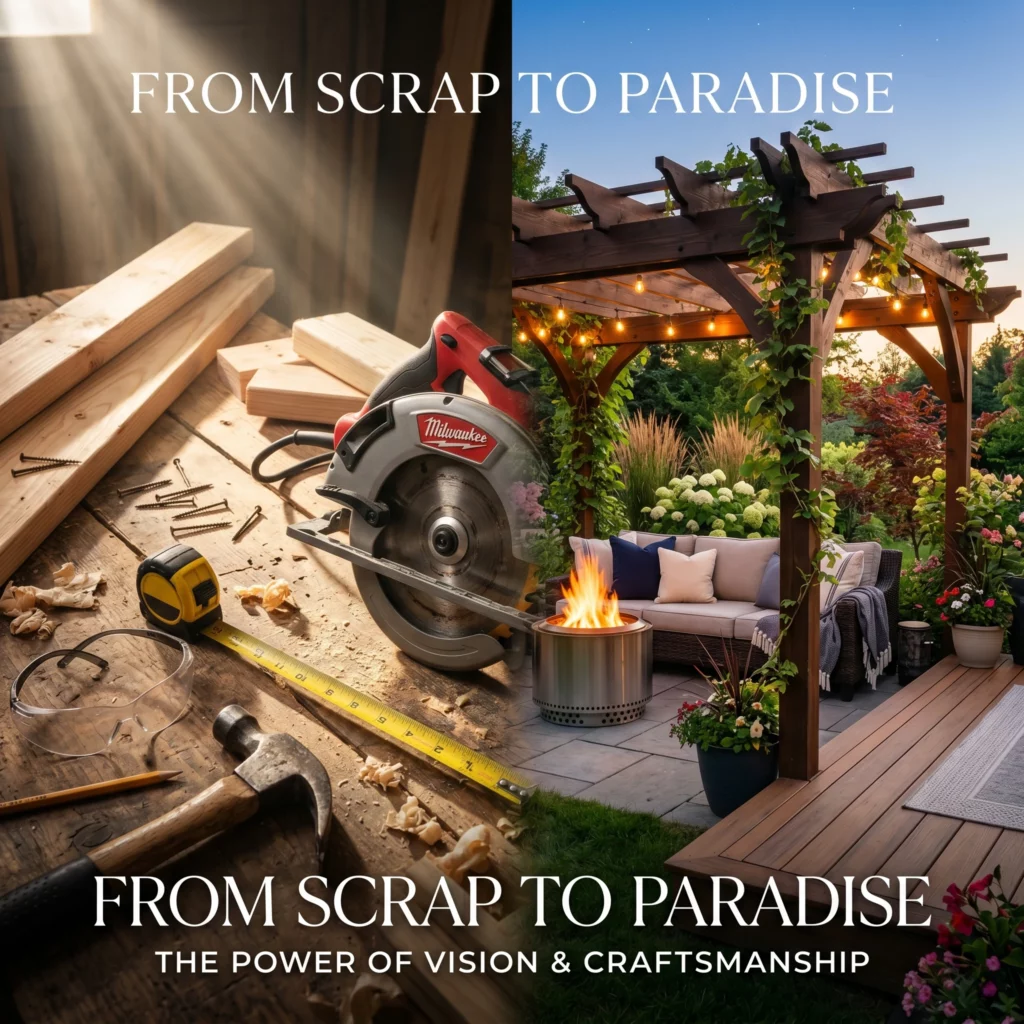
A shaded pergola tucked into a backyard.
A sturdy outdoor table surrounded by chairs.
A bench sitting quietly beneath a tree.
From a distance, those projects seem to belong to another category of people. The handy ones. The experienced ones. The people with garages full of expensive tools and years of workshop knowledge behind them.
That’s the story many beginners tell themselves.
It’s also the story that keeps countless projects trapped inside notebooks, Pinterest boards, and late-night searches for “easy pergola plans.”
The truth looks very different.
Most successful woodworkers began exactly where you are now—with a handful of basic tools, more questions than answers, and a project they weren’t entirely sure they could finish.
The difference wasn’t talent.
It was momentum.
One simple build became another. A small outdoor table turned into a bench. A bench became a chair. Before long, projects that once felt impossible started looking surprisingly achievable.
That’s the path we’re going to follow.
Not the fastest path.
The smartest one.
Can a Beginner Really Build a Pergola?
Short answer?
Absolutely.
A beginner can build a pergola with basic tools, beginner-friendly plans, and a willingness to learn a few fundamental woodworking skills.
In fact, many first-time builders are surprised by how approachable pergola construction actually is.
A simple pergola isn’t built from complex joinery or advanced furniture-making techniques. It’s built from measurements, straight cuts, structural fasteners, and repetition.
The same skills used to build a small patio bench eventually scale into something much larger.
Most beginner pergola projects require only:
- Circular saw
- Cordless drill
- Tape measure
- Speed square
- Clamps
- Level
That’s it.
No elaborate workshop.
No industrial equipment.
No master craftsman credentials required.
What matters more than tools is understanding how the learning process unfolds.
And that’s where most people get it backwards.
Why Outdoor Woodworking Is the Perfect Place to Begin
Indoor furniture can be unforgiving.
A cabinet door that’s off by a fraction of an inch can refuse to close properly. A dining table with minor alignment issues can draw attention every time someone sits down.
Outdoor woodworking operates differently.
Pergolas, patio furniture, garden benches, and outdoor tables are designed around strength, function, durability, and comfort.
That creates breathing room for beginners.
Small imperfections disappear into the natural character of the project.
A slightly uneven board doesn’t matter nearly as much when it’s supporting a backyard gathering instead of sitting beneath bright kitchen lighting.
And something interesting happens when that pressure disappears.
Learning becomes enjoyable.
Instead of obsessing over mistakes, you start noticing progress.
You become more comfortable using a drill. Cuts become straighter. Measurements become faster. Confidence begins replacing hesitation.
That confidence compounds.
Every successful project quietly teaches skills that carry forward into the next one.
Core Woodworking Skills You’ll Develop
Every beginner project strengthens a foundation built around:
- Measuring accurately
- Reading woodworking plans
- Cutting lumber safely
- Drilling and fastening
- Sanding surfaces
- Applying outdoor finishes
- Understanding structural support
These aren’t isolated skills.
They’re connected.
Learning one naturally strengthens the others.
By the time you’re ready to build a pergola, you’ll realize you’ve already practiced most of the techniques dozens of times.
The Beginner Woodworking Roadmap: Build Skills Before You Build Big
One of the biggest mistakes new woodworkers make is starting with their dream project.
It’s understandable.
The pergola is exciting.
The outdoor living space is exciting.
The vision of transforming an empty backyard into something beautiful is incredibly motivating.
But confidence grows faster when success comes early.
That’s why experienced builders often recommend a progression.
Not because you can’t build a pergola first.
Because building smaller projects first makes the pergola dramatically easier.
Project #1: The Outdoor Side Table
Every woodworking journey deserves a manageable starting point.
An outdoor side table delivers exactly that.
Small enough to complete in a single afternoon.
Useful enough to earn a permanent place on your patio.
Simple enough to build without feeling overwhelmed.
At first glance, it might seem almost too basic.
But don’t underestimate what you’re learning.
A side table introduces the rhythm of woodworking.
Measure.
Mark.
Cut.
Assemble.
Adjust.
Finish.
For the first time, you’ll experience the satisfaction of turning raw lumber into something functional.
That moment matters.
Because once you’ve built one useful thing, building another becomes easier to imagine.
Skills You’ll Practice
- Measuring and marking
- Straight cuts
- Basic assembly
- Surface preparation
- Exterior finishing
Estimated Build Time
2 to 4 hours
Difficulty Level
Beginner
Project #2: The Patio Storage Bench
The leap from a side table to a storage bench feels significant.
In reality, it’s simply a larger conversation with the same skills.
Now you’re working with longer boards.
Heavier assemblies.
Components that need to support real weight.
Suddenly, structural thinking enters the picture.
How should the frame distribute load?
Where should supports be placed?
What makes a bench feel solid instead of wobbly?
This is where woodworking starts becoming more than cutting lumber.
You begin understanding how structures work.
That understanding becomes invaluable later when building pergolas.
Why Storage Benches Are Ideal Learning Projects
They combine multiple functions into a single build:
- Outdoor seating
- Hidden storage
- Structural framing practice
- Weather-resistant construction
Few beginner projects provide as much practical value.
And unlike decorative projects, you’ll use it constantly.
Every time you sit down or lift the lid, you’ll see evidence of skills that didn’t exist a few weekends earlier.
Common Lumber Choices
Most beginners choose between:
- Cedar
- Pressure-treated lumber
- Redwood
Each offers different advantages in durability, appearance, and cost.
We’ll explore those materials in detail later.
Estimated Build Time
One weekend
Difficulty Level
Beginner to Intermediate
Project #3: The Adirondack Chair
This is where things start feeling real.
Ask experienced woodworkers about their first outdoor furniture project and the Adirondack chair comes up again and again.
There’s a reason for that.
Unlike tables and benches, chairs introduce comfort.
They introduce angles.
Curves.
Human ergonomics.
For the first time, you’re building around the shape of a person instead of the shape of a structure.
That subtle shift teaches valuable lessons.
You’ll learn why dimensions matter.
Why angles affect comfort.
Why design and function are inseparable.
And perhaps most importantly, you’ll build something people immediately connect with emotionally.
Nobody casually sits in an Adirondack chair.
They settle into it.
Coffee in hand.
Sun setting.
Conversation slowing down.
Projects start feeling different when they become part of people’s lives.
Skills You’ll Develop
- Angled cuts
- Template-based construction
- Comfort-focused design
- Precision sanding
- Finishing techniques
Difficulty Level
Intermediate Beginner
Estimated Build Time
1 to 2 weekends
The skills developed here create the perfect bridge toward larger outdoor woodworking projects.
And that’s where the transformation begins to accelerate.
Easy Pergola Plans for First-Time Builders
There comes a moment in every woodworking journey when the project that once felt intimidating suddenly starts looking possible.
Not easy.
Possible.
That’s an important distinction.
By the time you’ve built a few smaller outdoor projects, something shifts. You stop looking at a pergola as one giant structure and begin seeing it for what it really is—a series of manageable steps assembled in the right order.
Posts.
Beams.
Rafters.
Fasteners.
Measurements.
The same building blocks you’ve already been practicing.
And once you understand that, the entire project feels less like a leap and more like the next logical step.
The Freestanding Pergola: The Best First Pergola for Beginners
If you’re building your first pergola, start here.
A freestanding pergola offers something every beginner needs: flexibility.
Because it stands independently, you’re not tying into your home’s structure. You don’t need to worry about attaching ledger boards to exterior walls or navigating the complexities of roof integration.
You simply create a stable structure exactly where you want it.
That freedom makes planning dramatically easier.
Why Beginners Love Freestanding Pergolas
They’re predictable.
Each component is visible.
Every connection is accessible.
Mistakes are easier to correct because you’re not working against existing architecture.
A simple freestanding pergola typically includes:
- Four support posts
- Horizontal beams
- Decorative rafters
- Structural fasteners
- Concrete footings or anchored post bases
Nothing about that list requires advanced woodworking knowledge.
The challenge lies in patience, accuracy, and preparation.
Ideal Locations
Freestanding pergolas work beautifully in:
- Backyard seating areas
- Outdoor dining spaces
- Garden retreats
- Poolside gathering zones
- Fire pit areas
Because they’re visually striking, they often become the focal point of the entire outdoor space.
And that’s exactly why so many homeowners choose them as their first major woodworking project.
Wall-Mounted Pergolas: A Natural Patio Extension
Not every backyard needs a standalone structure.
Sometimes the most effective pergola feels like a natural continuation of the home itself.
That’s where wall-mounted pergolas shine.
Instead of standing independently, one side connects directly to the house.
The result feels intentional—almost architectural.
As though the pergola was always meant to be there.
Advantages of Wall-Mounted Designs
- Fewer support posts
- Reduced material costs
- Enhanced shade coverage
- Seamless connection to existing patios
For homeowners with limited outdoor space, this style can dramatically increase usability without consuming valuable square footage.
Important Considerations
Wall-mounted pergolas require greater attention to:
- Structural attachment
- Load distribution
- Water management
- Building code compliance
They’re still beginner-friendly, but they demand more planning than freestanding designs.
Think of them as the next step after gaining confidence with basic woodworking and outdoor construction.
Small-Space Pergolas That Transform Tight Backyards
One of the biggest misconceptions surrounding pergolas is the belief that they require enormous outdoor spaces.
They don’t.
Some of the most inviting outdoor environments are surprisingly compact.
A thoughtfully designed pergola can transform:
- Small patios
- Courtyards
- Urban backyards
- Side-yard retreats
- Townhome outdoor spaces
In fact, smaller pergolas often create a stronger sense of intimacy.
The structure defines the space.
It creates boundaries.
It gives purpose to areas that might otherwise feel forgotten.
An 8×8 pergola can completely change how a backyard feels.
Not because of its size.
Because of the atmosphere it creates.
Shade Pergolas: Turning Structure Into Comfort
Traditional pergolas offer filtered sunlight.
That’s part of their appeal.
But depending on climate and sun exposure, many homeowners want more protection.
The good news is that modern pergola designs offer plenty of flexibility.
Popular Shade Enhancements
Retractable Canopies
Perfect for adjusting sunlight throughout the day.
Shade Cloth Systems
Affordable, durable, and easy to install.
Polycarbonate Roof Panels
Provide protection from both sun and rain.
Climbing Plants and Vines
Perhaps the most beautiful option.
Over time, nature becomes part of the structure itself.
Wisteria, grapevines, climbing roses, and jasmine can transform a simple pergola into a living centerpiece.
And unlike manufactured shade solutions, these additions become more beautiful with age.
Patio Furniture Projects That Build Real Woodworking Confidence
A pergola creates the destination.
Furniture determines how people experience it.
Without seating, tables, or gathering spaces, even the most beautiful pergola feels unfinished.
That’s why patio furniture projects deserve equal attention.
They’re practical.
They’re rewarding.
And they teach woodworking lessons that directly improve larger construction projects.
The Outdoor Farmhouse Table
Few projects deliver satisfaction quite like a large dining table.
It’s the kind of build that immediately changes how people use a space.
Suddenly, meals move outdoors.
Family gatherings linger longer.
Weekends feel different.
Why This Project Matters
Large furniture teaches lessons smaller builds can’t.
You’ll learn:
- Surface alignment
- Structural reinforcement
- Consistent measurements
- Material stability
Those lessons become especially valuable when working with pergola beams and larger framing components.
Difficulty Level
Beginner to Intermediate
Estimated Build Time
One weekend
For many woodworkers, this becomes the first project that truly feels substantial.
Not because it’s difficult.
Because it becomes part of daily life.
Outdoor Sofa Plans That Feel Surprisingly Achievable
At first glance, outdoor sofas look complicated.
They aren’t.
Most modern outdoor sofa designs rely on straightforward construction methods and repetitive cuts.
The visual impact is high.
The technical difficulty is manageable.
That’s a combination beginners should actively seek.
Common Design Features
- Modular sections
- Straight-line construction
- Replaceable cushions
- Hidden fasteners
- Simple joinery
A well-built outdoor sofa can anchor an entire seating area beneath a pergola while reinforcing core woodworking skills.
And unlike indoor furniture, outdoor cushions provide flexibility if dimensions vary slightly.
That’s another reason they’re ideal learning projects.
Storage Benches: The Ultimate Backyard Multitasker
Some projects earn their popularity.
Storage benches are one of them.
They solve multiple problems simultaneously.
Need seating?
A bench provides it.
Need storage?
The bench provides that too.
Need a visual anchor along a fence, pergola, or garden path?
Again, the bench delivers.
Why Beginners Love Storage Benches
The design is approachable.
The functionality is immediate.
And every completed bench reinforces essential woodworking fundamentals:
- Framing
- Lid construction
- Hardware installation
- Structural support
- Outdoor finishing
Few projects provide such a strong return on effort.
Modular Sectional Seating: Build Once, Expand Forever
One of the smartest trends in outdoor furniture design is modular construction.
Instead of building one large piece, you build smaller components that work together.
The advantages are significant.
Benefits of Modular Designs
- Easier construction
- Simpler transportation
- Flexible layouts
- Future expansion opportunities
Start with one section.
Add another later.
Expand the arrangement as your outdoor living space evolves.
This approach feels especially appealing for beginners because it removes pressure.
You don’t need to complete everything at once.
You simply keep building.
The Beginner’s Tool Kit: What You Actually Need
Walk into any woodworking store and you’ll encounter a familiar temptation.
Rows of shiny tools.
Specialized equipment.
Machines promising faster cuts and professional results.
It’s exciting.
It’s also where many beginners overspend.
The reality is refreshingly simple.
Most successful outdoor woodworking projects can be completed using a surprisingly small collection of tools.
Focus on mastering a few essentials rather than collecting dozens of gadgets.
The Circular Saw: The Workhorse of Beginner Woodworking
If you could own only one major cutting tool, a circular saw would be difficult to beat.
It’s versatile.
Portable.
Affordable.
And capable of handling the vast majority of cuts required for pergolas and patio furniture.
You’ll use it for:
- Crosscuts
- Rip cuts
- Framing lumber
- Deck boards
- Furniture components
Master this tool and your woodworking capabilities expand dramatically.
Why a Cordless Drill Becomes Your Most Used Tool
Few tools work harder than a drill.
Every project relies on it.
Pilot holes.
Fasteners.
Hardware installation.
Assembly.
Adjustments.
The drill quietly appears at nearly every stage of construction.
Investing in a quality cordless model often pays dividends long before upgrading any cutting equipment.
Small Tools That Make a Huge Difference
The glamorous tools get attention.
The simple tools create accuracy.
Essential Supporting Tools
- Tape measure
- Speed square
- Clamps
- Carpenter’s pencil
- Level
- Orbital sander
These tools don’t generate excitement.
They generate precision.
And precision creates confidence.
Tools You Can Wait to Buy
Many beginners assume professional-looking results require professional-grade workshops.
That’s rarely true.
Before purchasing expensive equipment, ask yourself a simple question:
“Will this tool help me complete the project I’m building right now?”
If the answer is no, wait.
Most beginners can postpone buying:
- Table saws
- Jointers
- Planers
- Band saws
- Lathes
Those tools may become valuable later.
For now, skill matters more than equipment.
Choosing the Right Wood for Outdoor Projects
Every outdoor woodworking project begins with a material decision.
And that decision affects far more than appearance.
Durability.
Maintenance.
Cost.
Workability.
Longevity.
Each wood species tells a different story.
Choosing wisely can make building easier and ownership more enjoyable.
The good news?
You don’t need exotic hardwoods or premium materials to create beautiful outdoor projects.
Understanding a few core options is usually enough.
Cedar, Pressure-Treated Lumber, Redwood, or Hardwood? Choosing the Right Wood for Outdoor Projects
The wood you choose today determines how your project looks, feels, and ages years from now.
That’s why material selection deserves more attention than most beginners give it.
Walk through any lumber yard and you’ll see rows of possibilities. Some boards look beautiful but cost a premium. Others are budget-friendly but require more maintenance. A few strike a balance between performance and affordability.
The goal isn’t finding the “best” wood.
It’s finding the right wood for your project, your climate, and your budget.
Cedar: The Beginner-Friendly Favorite
Ask experienced outdoor woodworkers which material they recommend most often, and cedar almost always enters the conversation.
There’s a reason.
Actually, several reasons.
Cedar is lightweight, naturally resistant to rot, easy to work with, and attractive enough to look good even before finishing.
For beginners, those advantages add up quickly.
Cuts tend to feel cleaner. Boards are easier to maneuver. Projects become less physically demanding.
Why Cedar Works So Well
- Naturally resistant to insects
- Handles moisture better than many softwoods
- Beautiful grain patterns
- Relatively easy to sand and finish
- Available in most lumber yards
Over time, untreated cedar develops a soft silver-gray patina that many homeowners intentionally seek.
Others prefer preserving its warm honey tones with exterior sealers and UV-protective finishes.
Either approach works.
It’s mostly a matter of personal preference.
Best Uses for Cedar
- Pergolas
- Outdoor benches
- Adirondack chairs
- Patio tables
- Garden structures
For many beginners, cedar represents the sweet spot between beauty, durability, and ease of construction.
Pressure-Treated Lumber: The Budget-Friendly Workhorse
If cedar is the crowd favorite, pressure-treated lumber is the practical workhorse.
It’s affordable.
Widely available.
Built to withstand moisture and outdoor exposure.
And for larger projects like pergolas, those advantages matter.
Where Pressure-Treated Lumber Excels
- Structural framing
- Pergola posts
- Deck construction
- Ground-contact applications
- Large outdoor projects
Because it’s chemically treated, the wood resists rot and insect damage more effectively than untreated lumber.
That durability often makes it the most economical choice for beginners working within a budget.
One Important Consideration
Fresh pressure-treated lumber tends to contain more moisture than cedar.
That means boards can shrink slightly as they dry.
Understanding this helps prevent frustration later.
Allow the material time to acclimate, follow recommended spacing guidelines, and you’ll avoid many common issues.
Redwood: Beauty That Gets Better With Time
There’s something distinctive about redwood.
Even people who know very little about lumber often recognize it immediately.
The rich color.
The texture.
The visual warmth.
It feels premium because it is premium.
Advantages of Redwood
- Exceptional appearance
- Natural resistance to insects
- Strong weather durability
- Long lifespan when maintained properly
Many luxury pergolas and high-end outdoor furniture pieces rely on redwood because of its visual impact.
The downside?
Cost.
For some beginners, the price difference is difficult to justify on a first project.
Still, if aesthetics are a top priority, few materials create the same immediate impression.
Hardwood Options: Built for the Long Haul
Hardwoods occupy a different category altogether.
Species like teak and white oak have earned their reputations through decades of outdoor performance.
They’re incredibly durable.
Often stunning.
And capable of lasting for years under demanding conditions.
Common Outdoor Hardwoods
- Teak
- White oak
- Ipe
- Mahogany
The tradeoff is complexity.
Hardwoods can be heavier, denser, and more challenging to work with.
For beginners, they often introduce unnecessary difficulty.
That doesn’t mean you shouldn’t use them.
Only that they’re usually better appreciated after developing confidence with softer materials.
The Beginner Mistakes That Cause Most Outdoor Projects to Fail
Most woodworking mistakes aren’t dramatic.
They’re subtle.
Small decisions made early that reveal themselves months later.
A board warps.
A joint loosens.
A finish begins peeling.
And suddenly the project that looked fantastic on completion day starts showing signs of trouble.
The encouraging news?
Most of these issues are completely avoidable.
Ignoring Wood Movement
Wood never stops moving.
Even after it’s cut, sanded, assembled, and finished.
Humidity changes.
Temperatures fluctuate.
Seasons shift.
Wood responds to all of it.
Beginners often assume boards remain perfectly stable forever.
They don’t.
What Happens When Movement Is Ignored?
- Cracking
- Splitting
- Warping
- Joint failure
Good woodworking plans account for expansion and contraction from the beginning.
That’s one reason following proven plans matters so much.
Using the Wrong Fasteners Outdoors
This mistake is incredibly common.
A project looks beautiful on day one.
A few months later, rust stains begin appearing around screws and hardware.
The culprit?
Interior fasteners.
Outdoor woodworking demands materials designed for outdoor conditions.
Choose Hardware Designed for Exterior Use
- Stainless steel screws
- Galvanized fasteners
- Exterior-rated brackets
- Corrosion-resistant hardware
It’s a small investment that protects a much larger one.
Treating Finishing as an Afterthought
Many beginners view finishing as the final step.
Experienced builders know better.
Finishing is protection.
Without it, sunlight, moisture, and temperature changes begin attacking the project immediately.
Outdoor Protection Options
- Exterior stain
- Penetrating oil finishes
- Water repellents
- UV-resistant sealers
A few extra hours spent protecting your project can add years to its lifespan.
Building Before Planning the Space
This mistake happens before the first board is cut.
Someone falls in love with a pergola design.
They build it.
Then realize it blocks a pathway, receives too much afternoon sun, or doesn’t leave enough room for furniture.
The structure is fine.
The placement isn’t.
Before Building, Consider:
- Sun direction
- Wind exposure
- Traffic flow
- Furniture layout
- Landscaping
- Future expansion plans
Thoughtful planning often produces better results than more expensive materials.
How to Make DIY Projects Look Professionally Built
People often assume professional-looking woodworking comes from professional-level tools.
It usually doesn’t.
More often, the difference comes from attention to details most beginners overlook.
The good news?
These details are learnable.
And they cost very little.
Focus on Proportion Before Decoration
A simple project with balanced proportions almost always looks better than a complicated project with awkward dimensions.
Professional builders understand this instinctively.
Everything feels intentional.
The widths relate to the heights.
The spacing feels consistent.
Nothing looks accidental.
When in doubt, simplify.
Clean proportions create timeless results.
Hide Fasteners Whenever Possible
Visible screws aren’t necessarily wrong.
But hidden fasteners create a cleaner appearance.
A more refined appearance.
One that immediately feels closer to custom furniture than DIY construction.
Popular Approaches
- Pocket-hole joinery
- Hidden brackets
- Plugged screw holes
- Concealed fastening systems
Small details create disproportionate visual impact.
Sand More Than Feels Necessary
Ask experienced woodworkers how much sanding is enough.
Most will smile before answering.
Because the answer is almost always:
“More.”
The projects people describe as “professional” often aren’t built differently.
They’re finished differently.
Sharp edges are softened.
Surfaces feel smooth.
Transitions disappear.
The project feels intentional when touched.
And touch matters.
More than most builders realize.
Create a Consistent Outdoor Design Language
Imagine a pergola built in a sleek modern style.
Now place rustic furniture beneath it.
Then add traditional planters nearby.
None of the individual pieces are necessarily bad.
They simply don’t belong together.
Strong outdoor spaces feel cohesive.
The pergola, seating, tables, benches, and accessories all speak the same visual language.
That’s what creates the polished look people often attribute to professional designers.
Questions Real Beginners Usually Ask
“What’s the easiest woodworking project I can build this weekend?”
An outdoor side table is hard to beat.
It’s small enough to finish quickly, useful enough to keep forever, and simple enough to teach the fundamentals without becoming frustrating.
Many woodworkers trace their entire hobby back to a project almost exactly like this.
“Do I really need advanced skills before building a pergola?”
Not at all.
You need patience more than expertise.
Most beginner pergolas rely on straightforward cuts, accurate measurements, and careful assembly rather than complex woodworking techniques.
The skills feel much more approachable once you’ve completed a few smaller projects first.
“If I only buy one type of wood, what should it be?”
For many beginners, cedar remains the easiest recommendation.
It’s durable, forgiving, attractive, and pleasant to work with.
There are cheaper options.
There are more luxurious options.
Few strike the same balance.
“How expensive is a DIY pergola?”
Costs vary widely based on size and materials.
A simple pergola might cost several hundred dollars.
A larger custom structure with premium lumber and upgraded finishes can reach several thousand.
Even then, DIY construction is often dramatically less expensive than professional installation.
“How long does a pergola take to build?”
For most beginners, a straightforward pergola can be completed over one or two weekends.
Larger projects may require additional time, especially when concrete footings, staining, or custom details are involved.
“What’s the one tool I shouldn’t skip?”
If forced to choose only one major tool, most builders would select a quality circular saw.
Combined with a drill, it unlocks an enormous range of outdoor woodworking projects.
Those two tools alone can take you surprisingly far.
Products / Tools / Resources
Recommended Beginner Tools
Circular Saw
The foundation of most beginner woodworking setups. Look for models with easy blade adjustments and comfortable handling.
Cordless Drill and Driver Combo
One of the most frequently used tools in pergola and patio furniture construction.
Random Orbital Sander
Makes a dramatic difference in the final appearance and feel of outdoor projects.
Speed Square
A simple tool that improves accuracy on nearly every cut.
Clamps
Often overlooked until the first project begins. Extra clamps almost always prove useful.
Tape Measure
Choose one with clear markings and a durable blade.
Recommended Materials
Cedar Lumber
Ideal for pergolas, benches, chairs, and patio furniture where appearance matters.
Pressure-Treated Lumber
Excellent for structural components and budget-conscious projects.
Exterior Deck Screws
Designed to withstand moisture and seasonal weather changes.
Outdoor Wood Stain
Protects against moisture while enhancing natural grain patterns.
UV-Resistant Sealer
Helps preserve color and reduce weathering.
Helpful Project Resources
Printable Pergola Plans
Detailed cut lists, dimensions, and assembly instructions simplify the building process significantly.
Patio Furniture Templates
Especially useful for Adirondack chairs and ergonomic seating projects.
Material Calculators
Helpful for estimating lumber quantities before purchasing.
Outdoor Design Planning Tools
Allow you to visualize pergola placement, furniture layouts, and backyard traffic flow before construction begins.
Woodworking Communities and Forums
An invaluable source of real-world advice, troubleshooting tips, and project inspiration from builders who started exactly where you are now.