
There’s a strange kind of satisfaction that comes from building something with your own hands.
Not assembling it. Not unpacking it from a cardboard box with missing screws and instructions that read like a puzzle written in another language. Actually building it.
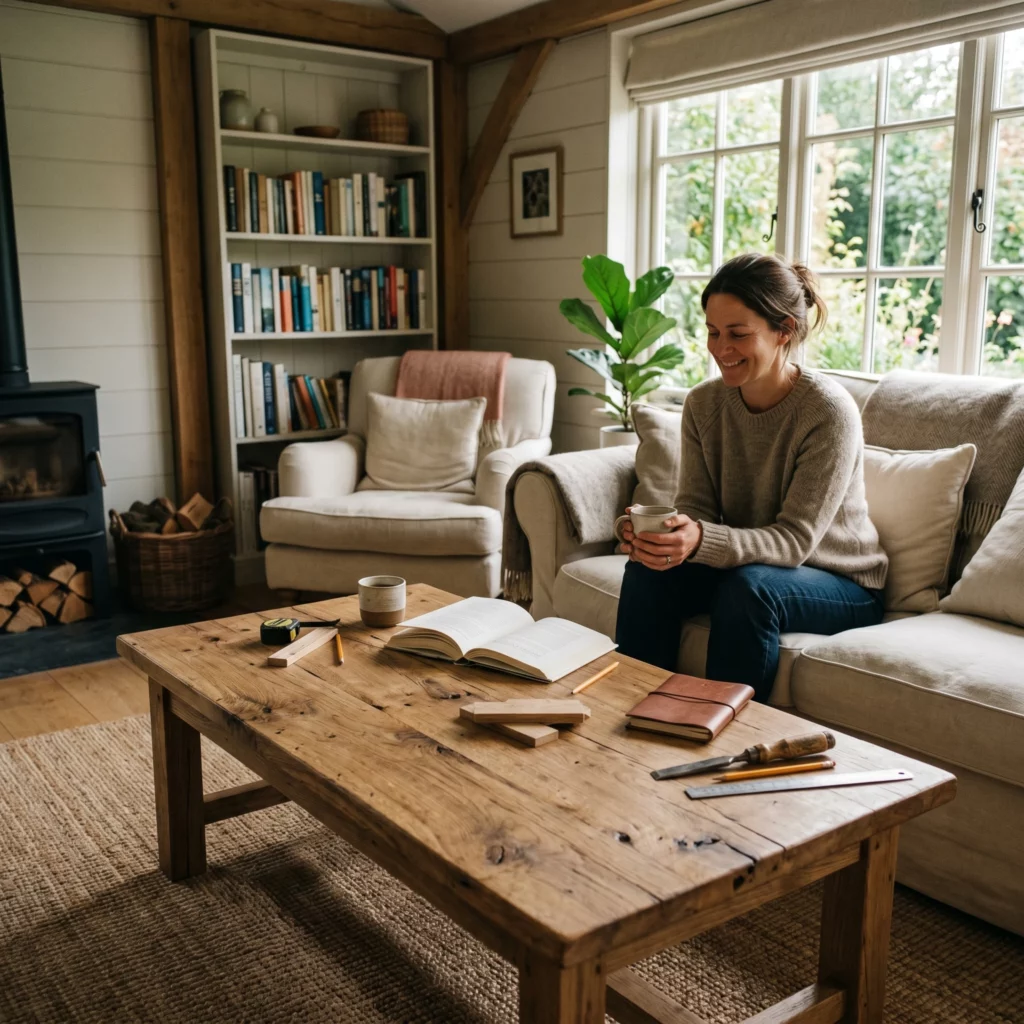
A rustic coffee table is often where that shift begins.
Maybe it’s because the project feels approachable. Four legs. A tabletop. Some screws. A little stain. Or maybe it’s because rustic furniture carries imperfections beautifully. A knot in the wood doesn’t ruin the piece — it gives it character. Slight variation becomes charm.
And that’s exactly why so many first-time builders search for free rustic coffee table woodworking plans.
They’re not just looking for measurements.
They’re looking for proof that they can create something solid, useful, and unexpectedly beautiful without spending $900 at a boutique furniture store.
Why Rustic Coffee Tables Took Over DIY Woodworking
Walk into almost any modern living room right now and you’ll see traces of rustic design everywhere.
Weathered wood. Matte black hardware. Farmhouse textures. Warm grain patterns that soften minimalist interiors.
Rustic furniture sits in a sweet spot most design styles never reach. It feels timeless without looking old-fashioned. Clean without feeling sterile. Handmade without trying too hard.
That balance is exactly why farmhouse coffee table plans and reclaimed wood furniture projects exploded across Pinterest, YouTube, and woodworking forums over the last few years.
But there’s another reason beginners gravitate toward coffee tables specifically.
They’re forgiving.
A dining table can feel intimidating. Cabinets require precision. Built-ins demand experience.
A rustic coffee table, though? It teaches the fundamentals without punishing every tiny mistake.
And because rustic style naturally embraces texture, distressing, and variation, first-time builders end up with furniture that actually looks intentional.
What It Really Costs to Build a Rustic Coffee Table
Here’s the part most people don’t realize until they start pricing furniture.
The rustic coffee table sitting under warm lighting in a trendy home store often costs between $400 and $1,200.
The materials to build something visually similar?
Usually under $80.
Especially if you use pine.
Pine remains one of the best woods for beginner woodworking projects because it’s affordable, widely available, easy to cut, and takes stain surprisingly well. It also dents slightly easier than hardwoods, which works in your favor if you’re aiming for an authentic rustic finish.
For a standard farmhouse-style coffee table, you’ll typically need:
- 2×4 lumber for the base
- Pine boards for the tabletop
- Pocket hole screws
- Wood glue
- Sandpaper
- Wood stain
- Polyurethane or matte sealer
That’s it.
No industrial workshop. No elite-level carpentry background.
Just patience, decent measurements, and a willingness to learn as you go.
The Rustic Coffee Table Build Plan That Beginners Actually Finish
Some woodworking plans look impressive right up until the moment you open them.
Then suddenly there are seventeen diagrams, complicated joinery techniques, and a materials list that sounds like it belongs inside a professional cabinet shop.
This isn’t that.
The best beginner-friendly rustic coffee table woodworking plans are surprisingly straightforward.
Step 1: Start With the Right Dimensions
A comfortable standard size for most living rooms is:
- 48 inches long
- 24 inches wide
- 18 inches high
Those proportions work beautifully in apartments, family rooms, and open-concept spaces.
If your sofa is oversized, you can stretch the length slightly. Smaller room? Reduce the width.
Rustic furniture adapts well because visual texture carries the design more than exact geometry.
Step 2: Build the Base First
The base creates the visual weight of the table.
Most farmhouse coffee table plans use either:
- X-frame legs
- Straight square legs
- Trestle-style supports
For beginners, square legs with apron supports are the easiest place to start.
Pocket hole joinery makes assembly dramatically simpler. If you’ve never used a pocket hole jig before, don’t overthink it. Once you make a few test holes, the process becomes almost automatic.
This is where confidence starts building.
The moment loose boards begin resembling furniture, something shifts mentally.
The project stops feeling theoretical.
Step 3: Assemble the Tabletop
This is the stage where rustic furniture starts becoming visually addictive.
Wood grain variation begins to emerge. The surface starts reflecting light differently. Tiny imperfections suddenly look intentional instead of flawed.
Lay your tabletop boards side by side and experiment with grain patterns before attaching them.
That detail matters more than people think.
Alternating grain direction creates a more organic, balanced appearance once stain is applied.
Secure the boards using wood glue and clamps first. Then reinforce from underneath.
And don’t panic if everything isn’t mathematically perfect.
Rustic design rewards authenticity.
The Secret Behind That Aged Barnwood Look
This is usually the moment people fall in love with woodworking.
Not during cutting.
Not during drilling.
During finishing.
Because raw lumber rarely looks impressive at first.
Then stain touches the grain.
Suddenly the wood develops depth.
Texture emerges. Contrast appears. The project starts looking expensive.
How to Create a Real Rustic Finish
The mistake beginners make most often is over-sanding.
Perfectly smooth wood rarely feels rustic.
Instead:
- Lightly soften edges
- Leave subtle saw texture intact
- Add minor distress marks sparingly
- Use layered stain tones for depth
One of the easiest techniques involves applying a darker stain first, wiping it back unevenly, then adding a lighter layer over top.
The result mimics naturally aged wood instead of artificially damaged lumber.
And restraint matters.
Good rustic furniture feels weathered.
Bad rustic furniture looks attacked.
Matte vs Satin Finish
If your goal is modern farmhouse style, matte or satin polyurethane almost always looks better than glossy finishes.
Gloss reflects too much light and removes the soft organic texture that makes rustic furniture appealing in the first place.
A satin finish protects the table while still allowing the wood to feel natural.
Rustic Coffee Table Styles That Always Look Custom
One of the reasons rustic coffee table plans perform so well in search is because the style branches endlessly into adjacent aesthetics.
A single build can lean:
- farmhouse
- industrial rustic
- Scandinavian rustic
- cabin lodge
- minimalist modern rustic
That flexibility keeps the project emotionally engaging.
People aren’t just building furniture.
They’re building a version of their home identity.
The Farmhouse X-Frame Coffee Table
This remains one of the most searched farmhouse furniture projects online.
The crossed-leg design instantly communicates handcrafted authenticity.
It photographs beautifully. It works in almost every living room style. And despite appearances, it’s easier to build than most people assume.
Reclaimed Wood Coffee Tables
Reclaimed wood carries emotional weight that new lumber simply can’t replicate.
Old nail holes. Weathered grain. Surface inconsistencies.
Every mark suggests history.
Even if you’re using fresh pine, you can recreate elements of that visual language through distressing and layered stain techniques.
Rustic Coffee Tables With Storage
This is where informational intent starts blending into transactional intent.
Storage coffee tables rank exceptionally well because they solve a practical problem while still feeding aesthetic desire.
Lower shelves, hidden compartments, and lift-top designs dramatically increase perceived value.
And from a user psychology standpoint, multifunctional furniture feels smarter.
More intentional.
The Beginner Mistakes That Instantly Make DIY Furniture Look Cheap
There’s a difference between handmade and unfinished.
The line separating those two outcomes is usually attention to detail.
Uneven Stain Application
Most stain problems happen because people rush.
Wood absorbs color inconsistently if it hasn’t been cleaned properly or sanded evenly.
Use wood conditioner on pine before staining.
That one step alone can dramatically improve the final appearance.
Weak Table Bases
Rustic furniture should feel substantial.
Even visually light designs need structural confidence.
If the table wobbles, the entire illusion collapses.
Use diagonal supports where necessary and check for levelness before final assembly.
Overcomplicated Designs
A lot of beginners sabotage projects by chasing complexity too early.
Simple rustic coffee table plans usually outperform complicated builds aesthetically because the focus stays on texture, proportion, and finish quality.
Not unnecessary ornamentation.
The Tools Worth Buying — And the Ones You Can Skip
This is where new woodworkers often waste money.
You do not need a garage full of professional-grade equipment to build beautiful furniture.
For beginner woodworking projects, a few reliable tools matter far more than owning everything.
Tools That Actually Make a Difference
- Circular saw
- Pocket hole jig
- Cordless drill
- Orbital sander
- Clamps
- Tape measure
- Speed square
That combination alone can build an enormous percentage of DIY farmhouse furniture.
Tools Beginners Usually Don’t Need Yet
- Table saw
- Router table
- Planer
- Track saw systems
- Advanced joinery equipment
Eventually, maybe.
But not now.
The biggest breakthrough for most people isn’t buying more tools.
It’s realizing they already have enough to begin.
Why Rustic Furniture Feels So Emotionally Satisfying
There’s something deeply grounding about physical craftsmanship.
You measure. Cut. Adjust. Sand. Build.
The process slows your attention down in a world constantly trying to fracture it.
And unlike digital work, woodworking leaves visible evidence behind.
A finished rustic coffee table becomes more than furniture.
It becomes proof.
Proof you learned something.
Proof you stayed patient.
Proof you created value instead of only consuming it.
That emotional payoff is part of why DIY rustic furniture content performs so well algorithmically.
People don’t just skim it.
They stay.
They imagine.
They visualize the finished table in their own living room.
And every extra second spent mentally inhabiting that future strengthens engagement signals search engines increasingly care about.
Questions People Quietly Ask Before Starting Their First Build
“What if I’ve never used a power tool before?”
Then you’re exactly where most woodworkers started.
Nobody begins with confidence.
Confidence usually arrives halfway through the first successful project.
“What’s the easiest wood to work with?”
Pine.
Affordable, forgiving, easy to stain, and widely available.
It remains one of the best choices for rustic coffee table woodworking plans.
“Can I build this in a weekend?”
Yes.
Especially simpler farmhouse coffee table designs.
Most beginners complete the structural build in a single weekend and apply finish afterward.
“Do I need expensive tools?”
Not even close.
Good technique matters far more than expensive equipment.
“How much money can I realistically save?”
Depending on the design, anywhere from several hundred dollars to over a thousand compared to high-end retail furniture.
And in many cases, the handmade version feels more personal anyway.
Products / Tools / Resources
If you’re planning to build your own rustic coffee table, these are the tools and materials most beginners end up genuinely appreciating after the first project:
- Kreg Pocket Hole Jig — Makes assembly dramatically easier for beginner furniture builds
- DeWalt Orbital Sander — Fast, smooth sanding without destroying wood texture
- Minwax Early American Stain — One of the most reliable rustic stain tones for farmhouse furniture
- Varathane Matte Polyurethane — Protective without creating an artificial glossy finish
- Bessey Clamps — Essential during tabletop glue-ups
- Pine 2×4 Lumber — Affordable and beginner-friendly for rustic builds
- Reclaimed Wood Suppliers — Ideal if you want authentic weathered texture
- Wood Conditioner for Pine — Helps prevent blotchy stain absorption
- Printable Cut List Templates — Keeps measurements organized during assembly
- Farmhouse Furniture Inspiration Boards on Pinterest — Surprisingly useful for finish and styling ideas
- DIY Woodworking Forums — Helpful for troubleshooting beginner mistakes in real time
- Mobile Workshop Apps — Convenient for storing measurements and project plans beside your workspace