There’s a moment every woodworker remembers.
Usually, it starts with a crooked board, a tape measure balanced on the edge of a garage workbench, and a quiet conviction that says:
I think I can make this myself.
Not perfectly. Not professionally. Just… with your own hands.
That feeling is why woodworking keeps pulling people back in.
Not because everyone wants to become a master carpenter. Most don’t. What they want is simpler than that. They want shelves that fit the wall exactly right. A dining table that doesn’t feel disposable. A workbench built to survive real use. A backyard chair where summer evenings somehow last longer.
The problem is that most free woodworking plans online aren’t built for real people.
They skip measurements. They assume experience. They leave out material lists. They gloss over the difficult part—the part where someone standing in a hardware aisle is trying to figure out whether they need two boards or six.
That’s where projects fall apart.
This library was built to solve that.
Inside, you’ll find more than 100 free woodworking plans covering beginner builds, furniture projects, outdoor structures, workshop storage systems, and DIY home upgrades—each organized around what people actually need:
- clear dimensions
- cut lists
- lumber guidance
- practical build sequencing
- realistic tool requirements
No fluff. No mystery measurements. No “figure it out as you go.”
Just projects designed to move from idea to finished build without wasting half a weekend fixing avoidable mistakes.
Why Most Free Woodworking Plans Quietly Fail
The internet is crowded with DIY tutorials. Some look beautiful at first glance. Clean photos. Stylish finished pieces. Perfect lighting.
Then you start building.
Suddenly, details disappear.
The plans never mention lumber thickness. The dimensions don’t line up. The cut list is incomplete. One step assumes you already know three others.
And somewhere around the second incorrect cut, frustration takes over.
That frustration matters more than people realize.
Because woodworking isn’t only technical—it’s psychological.
A bad first experience convinces people they’re “not handy.” A good one creates momentum that lasts for years.
That’s why professional woodworking plans feel different from random Pinterest instructions. They reduce uncertainty before uncertainty has a chance to grow.
What Actually Makes a Woodworking Plan Useful?
A solid woodworking plan doesn’t just tell you what to build.
It tells you what could go wrong before it happens.
That distinction changes everything.
Exact Dimensions Matter More Than Inspiration
A beautiful project photo means nothing if the measurements are vague.
Professional woodworking plans specify:
- exact board sizes
- lumber thickness
- hardware placement
- spacing tolerances
- final dimensions
Instead of:
“Attach the side pieces.”
A useful plan says:
“Attach two 32-inch side panels cut from 3/4-inch birch plywood using 1 1/4-inch pocket screws.”
That level of clarity removes hesitation. And hesitation is where most beginner mistakes begin.
Material Lists Save More Than Money
A complete material list does something subtle but powerful:
It creates confidence before the build even starts.
You know what to buy. You know how much lumber you need. You stop second-guessing yourself halfway through the project.
The best woodworking plans include:
- lumber quantities
- board dimensions
- hardware requirements
- fastener types
- finishing supplies
- adhesives
- optional upgrades
That preparation dramatically reduces waste—and even more importantly, mental fatigue.
Cut Lists Are the Difference Between Chaos and Flow
Experienced woodworkers think in sequence.
Beginners usually don’t. And that’s normal.
A proper cut list organizes every board before the first saw blade touches wood. It helps optimize material usage, minimize waste, and speed up assembly.
Without one, projects become reactive.
With one, the build feels controlled.
Beginner Woodworking Projects That Build Confidence Fast
The fastest way to improve woodworking skills isn’t by chasing difficult projects.
It’s by finishing projects.
Completion creates momentum. Momentum creates identity.
That’s why beginner woodworking plans matter so much.
DIY Floating Shelves
Floating shelves are one of the smartest first projects you can build.
They look high-end. They require relatively few materials. And they teach several foundational woodworking skills at once:
- measuring
- leveling
- wall anchoring
- clean edge finishing
- precision alignment
Typical Shelf Dimensions
- Length: 24”–48”
- Depth: 8”–12”
- Thickness: 1.5”–2”
Recommended Materials
- Pine
- Oak
- Birch plywood
- Pocket hole screws
- Wood glue
Average Build Time
2–4 hours
What makes floating shelves so satisfying is the visual payoff. A simple wall changes instantly. The room feels intentional afterward.
That emotional reward keeps beginners building.
Coffee Table Plans That Actually Feel Custom
Coffee tables sit at the center of a room, which means every detail becomes visible.
That sounds intimidating until you realize something important:
Simple woodworking often looks more expensive than complicated woodworking.
A clean coffee table with strong proportions can completely transform a living space.
Popular styles include:
- farmhouse coffee tables
- modern minimalist builds
- industrial wood-and-metal designs
- rustic reclaimed wood tables
Standard Coffee Table Dimensions
- Height: 16”–18”
- Width: 18”–24”
- Length: 36”–48”
These projects teach:
- tabletop assembly
- structural stability
- symmetry
- finishing technique
And unlike tiny beginner projects, you end up with something you’ll use every single day.
Wooden Crates, Storage Boxes, and Simple Utility Builds
Some woodworking projects aren’t glamorous.
They’re useful.
And usefulness has its own kind of satisfaction.
Wooden storage crates are ideal for beginners because they introduce:
- repetitive cuts
- square assembly
- nail spacing
- basic joinery
- stain testing
They’re also surprisingly profitable.
At craft fairs and online marketplaces, simple wooden storage projects consistently outperform more complicated builds because people immediately understand their value.
DIY Plant Stands and Indoor Decor Projects
Plant stands exploded in popularity for a reason.
They combine woodworking with interior design, which creates a different kind of emotional appeal. People aren’t just building furniture—they’re shaping atmosphere.
Minimalist plant stands, ladder shelves, and small-space decor builds perform especially well because they:
- require less lumber
- fit apartment living
- photograph beautifully
- work well for gifts
These projects also generate massive visibility on visual platforms like Pinterest and Instagram, making them ideal for woodworking blogs or Etsy shops looking for organic traffic.
Furniture Woodworking Plans That Change Entire Rooms
Furniture projects carry emotional weight in a way smaller builds don’t.
A handmade dining table becomes part of family routines. A bed frame changes the feeling of a bedroom. A media console quietly anchors an entire living space.
That’s why furniture-related woodworking searches remain consistently competitive.
People aren’t searching for objects.
They’re searching for permanence.
Farmhouse Dining Table Plans
Few woodworking projects have remained as consistently popular as farmhouse dining tables.
They represent something deeper than style:
- gathering
- durability
- tradition
- craftsmanship
And despite how impressive they look, many farmhouse table plans are surprisingly approachable.
Standard Dining Table Dimensions
| Seating Capacity | Length | Width |
|---|---|---|
| 4 People | 48” | 36” |
| 6 People | 72” | 38” |
| 8 People | 96” | 40” |
Recommended Woods
- Pine
- Douglas fir
- Oak
- Maple
The beauty of farmhouse woodworking plans is that imperfections often add character rather than subtract from it.
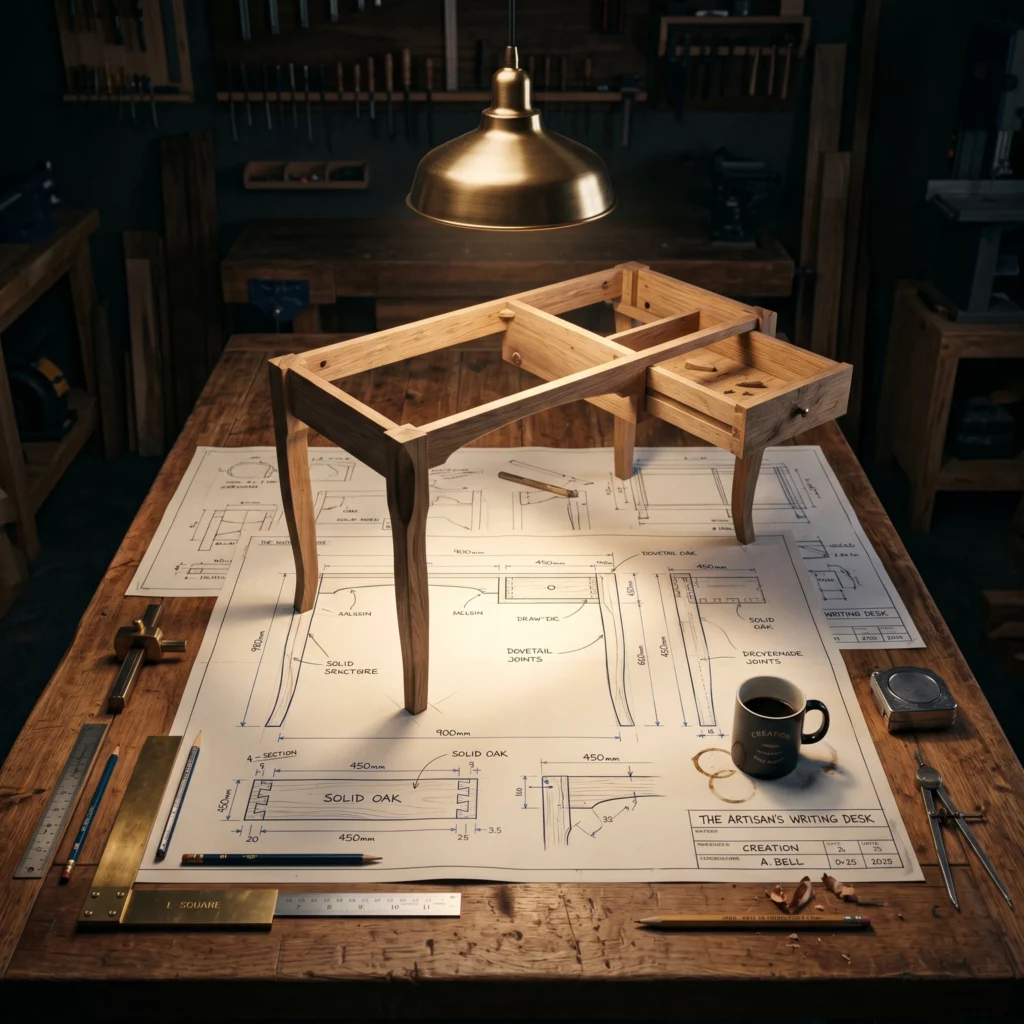
That makes them ideal confidence-builders for intermediate woodworkers.
DIY Bed Frame Plans
Bed frames introduce a different challenge entirely: structural integrity.
Unlike decorative furniture, a bed frame has to hold weight consistently without movement or instability.
That means builders begin learning:
- load distribution
- support spacing
- long-board alignment
- advanced fastening methods
Common Bed Frame Dimensions
| Mattress Size | Frame Width | Frame Length |
|---|---|---|
| Twin | 41” | 76” |
| Queen | 62” | 82” |
| King | 78” | 82” |
Platform beds, especially modern minimalist styles, continue dominating woodworking searches because they blend simplicity with premium aesthetics.
TV Consoles, Media Cabinets, and Storage Furniture
Media consoles solve a modern problem:
how to make technology feel less chaotic.
The best woodworking plans in this category combine:
- hidden cable management
- adjustable shelving
- minimalist styling
- storage optimization
Search trends consistently show strong demand for:
- floating TV consoles
- mid-century modern entertainment centers
- sliding barn-door cabinets
- low-profile media stands
These builds also create excellent opportunities for advanced woodworking techniques like dado joints, edge banding, and soft-close hardware installation.
Outdoor Woodworking Projects That Transform Backyards
Outdoor projects tap into aspiration differently than indoor furniture does.
People imagine:
- quiet evenings
- backyard gatherings
- coffee on a porch
- summer dinners outside
That emotional visualization makes outdoor woodworking content incredibly engaging.
Adirondack Chair Plans
Adirondack chairs have become almost symbolic within DIY culture.
They’re timeless. Instantly recognizable. Comfortable in a way modern furniture rarely is.
Best Woods for Adirondack Chairs
Key Build Considerations
- weather resistance
- UV-protective finishes
- rust-resistant screws
- ergonomic back angles
They also teach advanced shaping techniques without requiring highly specialized tools.
Raised Garden Beds and Backyard Builds
Garden woodworking projects continue growing because they connect craftsmanship with sustainability.
People want:
- fresh food
- outdoor rituals
- self-sufficiency
- calmer environments
Common Raised Bed Sizes
- 2’ x 4’
- 4’ x 4’
- 4’ x 8’
Recommended Woods
- Cedar
- Redwood
Avoid chemically treated lumber when building for edible gardens.
Simple detail. Important consequence.
Pergola Plans and Large Outdoor Structures
Pergolas sit in a category of their own.
They’re less about utility and more about transformation.
A pergola changes how an outdoor space feels. It creates structure, shade, atmosphere, and visual focus all at once.
That’s why pergola woodworking plans attract strong engagement and high backlink potential—they’re inherently aspirational.
Workshop Storage Projects That Eliminate Frustration
Every woodworker eventually reaches the same point:
The workshop becomes harder to manage than the projects themselves.
That’s when storage builds become addictive.
Because organization creates speed. Speed creates better work.
DIY Workbench Plans
A proper workbench changes woodworking immediately.
Cuts become cleaner. Clamping improves. Measuring feels easier. Assembly stops wobbling.
Ideal Workbench Heights
| User Height | Recommended Bench Height |
|---|---|
| Under 5’8” | 34” |
| 5’8”–6’0” | 36” |
| Over 6’0” | 38” |
A good workbench isn’t just furniture.
It’s infrastructure.
Clamp Racks and Tool Organization Systems
Small workshop projects create outsized improvements.
Clamp racks, French cleat systems, and wall-mounted tool storage projects:
- free up floor space
- improve workflow
- reduce clutter
- protect equipment
They also provide fast wins between larger furniture builds.
Lumber Storage Systems
Poor lumber storage quietly destroys projects before they begin.
Warped boards create:
- uneven assemblies
- alignment problems
- wasted cuts
- unstable furniture
A simple lumber rack can save hundreds of dollars in material over time.
Printable PDF Woodworking Plans Still Matter
Even in a digital world, printable woodworking plans remain incredibly popular.
Why?
Because workshops aren’t ideal places for scrolling through phone screens with dusty hands.
The best printable woodworking plans include:
- exploded diagrams
- labeled measurements
- material lists
- cut diagrams
- assembly sequencing
Clear formatting matters more than flashy design.
Understanding Woodworking Material Costs
One of the biggest beginner mistakes is underestimating lumber cost.
Wood species dramatically affect:
- durability
- appearance
- workability
- finishing quality
- final budget
A simple bookshelf might cost:
- $40–$90 using pine
- $120–$250 using oak
That difference surprises people until they start building regularly.
The Board Foot Formula Every Woodworker Should Know
Estimating lumber volume becomes easier once you understand board feet.
Board Feet=144Thickness×Width×Length
It looks technical at first. Then suddenly it becomes second nature.
And once it does, buying lumber feels far less intimidating.
Choosing the Right Wood for the Right Project
Not every wood behaves the same way.
That’s part of woodworking’s challenge—and part of its appeal.
Pine
Affordable. Soft. Beginner-friendly.
Perfect for:
- painted furniture
- utility builds
- starter projects
Oak
Dense, durable, and beautifully grained.
Ideal for:
- furniture
- dining tables
- heirloom builds
Birch Plywood
Stable, smooth, and versatile.
Excellent for:
- cabinetry
- shelves
- modern furniture
Cedar
Naturally weather-resistant.
Best for:
- outdoor furniture
- raised garden beds
- patio projects
Essential Woodworking Tools for Beginners
People often assume woodworking requires expensive equipment.
It doesn’t.
A small set of reliable tools can build an enormous range of projects.
Measuring and Layout Tools
- tape measure
- speed square
- combination square
- marking gauge
Cutting Tools
- circular saw
- jigsaw
- miter saw
Assembly Tools
- cordless drill
- clamps
- pocket hole jig
Finishing Tools
- orbital sander
- sanding blocks
- stain brushes
Good technique matters more than expensive gear.
Every experienced woodworker learns that eventually.
The Mistakes Almost Everyone Makes Early On
Some woodworking lessons only arrive after ruining a board.
Or three.
Tiny Measuring Errors Become Big Problems
A 1/16-inch mistake doesn’t seem serious until it compounds across an assembly.
That’s why experienced builders constantly re-check alignment before fastening anything permanently.
Warped Lumber Creates Invisible Frustration
Always inspect boards before buying them.
Look for:
- twisting
- bowing
- cupping
- edge warping
Straight lumber saves enormous frustration later.
Wood Movement Is Real
Wood expands and contracts with humidity changes.
Ignoring movement leads to:
- cracks
- warped tabletops
- joint separation
- structural stress
Understanding wood movement is one of the moments where beginners begin thinking like craftsmen.
Woodworking Projects That Actually Sell
A surprising number of people searching for free woodworking plans are quietly exploring side-income ideas.
And honestly, it makes sense.
Handmade furniture carries emotional value mass-produced products can’t replicate.
Best-Selling Woodworking Projects
High-performing categories include:
- floating shelves
- farmhouse decor
- planter boxes
- entryway benches
- cutting boards
- rustic signs
These projects work well because they balance:
- low material cost
- high perceived value
- easy shipping
- strong visual appeal
Simple products often outperform overly complicated ones.
Questions People Usually Ask Right Before They Start
“What’s the easiest woodworking project if I’ve never built anything before?”
Floating shelves, storage crates, and simple benches are ideal because they teach foundational skills without requiring advanced tools or complicated joinery.
“Do I need expensive tools to get into woodworking?”
Not at all.
A drill, circular saw, clamps, and accurate measuring tools can handle an enormous number of beginner woodworking projects.
Skill develops long before expensive equipment becomes necessary.
“What’s the cheapest wood for furniture projects?”
Pine remains one of the most affordable and beginner-friendly choices for DIY furniture.
It’s forgiving, widely available, and easy to work with.
“Why do experienced woodworkers care so much about cut lists?”
Because cut lists eliminate guesswork.
They reduce wasted lumber, speed up assembly, and create cleaner workflow from the beginning of the project.
“Where do people find reliable printable woodworking plans?”
Many woodworking blogs, maker communities, and DIY forums offer downloadable PDF plans with dimensions, diagrams, and material breakdowns.
The best plans prioritize clarity over decoration.
Products / Tools / Resources
Recommended Woods for Beginners
- Pine boards
- Birch plywood
- Cedar for outdoor projects
- Oak for furniture builds
Helpful Beginner Tools
- Cordless drill/driver
- Circular saw
- Pocket hole jig
- Random orbital sander
- Bar clamps
- Speed square
Useful Workshop Accessories
- Adjustable sawhorses
- Dust collection hose kit
- Magnetic tool holders
- Wood glue bottles with precision tips
- Digital angle finder
Best Project Types for Skill Building
- Floating shelves
- Coffee tables
- Storage benches
- Raised garden beds
- Workbenches
- Adirondack chairs
Printable Planning Resources Worth Using
- Cut list templates
- Lumber calculators
- Board foot calculators
- Workshop layout planners
- Printable measurement charts
Great Woodworking Skills to Learn Next
- Pocket hole joinery
- Dado joints
- Mortise and tenon joinery
- Cabinet building
- Wood finishing techniques
- Spray finishing systems