
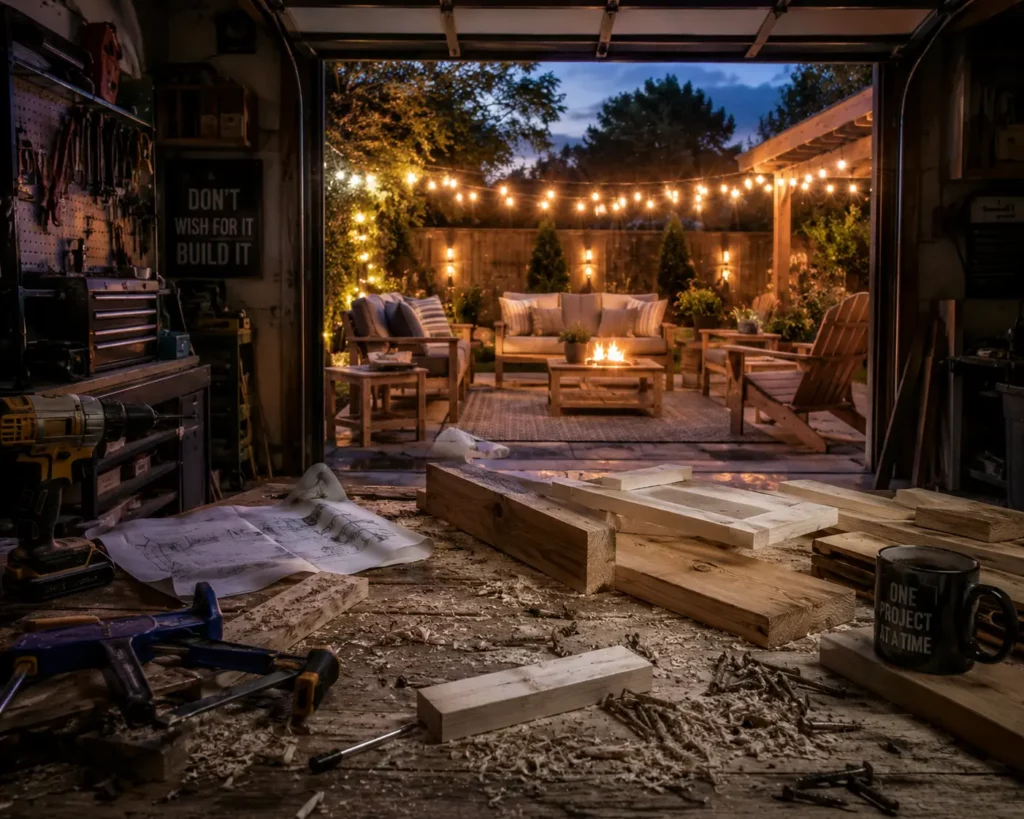
There’s a particular kind of satisfaction that comes from sitting outside in a chair you built with your own hands.
Not bought. Not assembled from a cardboard box with mystery screws and instructions that somehow skip Step 4. Built.
You notice it in small ways at first. The grain in the wood catches the evening light differently. The armrest feels familiar because you sanded it smooth yourself. Even your backyard changes character. It stops feeling temporary.
That’s the real reason beginner outdoor woodworking keeps pulling people in.
Yes, building your own patio furniture can save hundreds—sometimes thousands—of dollars. But somewhere between the first cut and the final coat of exterior stain, something else happens. The project becomes personal.
And the truth is, you don’t need a giant workshop or years of woodworking experience to get there.
A handful of basic tools. The right free outdoor woodworking plans. One weekend where you finally decide to start.
That’s enough.
Why Outdoor Woodworking Is Easier Than Most Beginners Expect
Indoor furniture can feel intimidating. Tight tolerances. Perfect joinery. Every flaw sitting under bright lighting for years.
Outdoor furniture plays by different rules.
Patio projects are naturally more forgiving. Rustic textures work. Slight imperfections disappear into the grain, the cushions, the surrounding plants, the warm unevenness of real outdoor spaces.
That’s why beginner outdoor woodworking projects tend to build confidence quickly.
You can make something beautiful before you fully understand why it works.
And honestly? That matters.
Because momentum is what turns curiosity into skill.
The Best Wood for Outdoor Furniture (Especially If You’re New to This)
Choosing the right wood changes everything. Some woods fight you. Others almost seem to cooperate.
For beginners, that difference matters more than people realize.
Cedar: The Beginner Favorite for a Reason
Cedar is lightweight, weather-resistant, and forgiving to work with. It cuts cleanly, smells incredible when sanded, and naturally resists moisture and insects.
If you’re building your first outdoor bench, patio chair, or coffee table, cedar makes the learning curve feel softer.
It’s the wood that quietly helps beginners succeed.
Pressure-Treated Pine: Affordable and Tough
Pressure-treated pine isn’t glamorous, but it’s dependable.
For larger builds like picnic tables, storage benches, or outdoor sectional frames, it keeps costs manageable without sacrificing durability.
Just make sure the lumber has dried properly before staining or sealing.
Redwood: Beautiful Without Trying Too Hard
There’s something understated about redwood furniture. It doesn’t scream for attention. It settles into a space naturally.
It’s more expensive than pine, but for visible statement pieces—modern patio chairs, slatted benches, outdoor dining tables—it creates a polished look with surprisingly little effort.
Teak: The Dream Material
Teak is what people imagine when they picture luxury outdoor furniture.
Dense. Rich. Nearly indestructible.
But for most beginners, the cost alone makes it better suited for future projects once skills and confidence catch up with ambition.
The Only Woodworking Tools Most Beginners Actually Need
A lot of people postpone woodworking because they assume they need a professional garage setup.
You don’t.
Most beginner patio furniture plans can be built with a small collection of reliable tools.
Essential Beginner Woodworking Tools
- circular saw
- drill and driver
- orbital sander
- measuring tape
- speed square
- clamps
That’s enough to build the majority of outdoor woodworking projects beginners search for online.
Seriously.
Everything else is optional at first.
Tools That Make Life Easier Later
Once the projects start multiplying—and they usually do—you may want to add:
- miter saw
- jigsaw
- pocket hole jig
- trim router
Not because you need them immediately. Because eventually you’ll want cleaner cuts, faster assembly, smoother edges.
Woodworking has a strange way of expanding quietly into your life.
15 Foolproof Free Outdoor Woodworking Plans for Beginners
Some projects teach technique.
Others teach confidence.
The best beginner woodworking plans do both at the same time.
1. The Simple Outdoor Bench
This is where a lot of people begin.
A basic outdoor bench introduces almost every foundational woodworking skill without overwhelming you:
- measuring
- straight cuts
- assembling square frames
- sanding
- fastening
And when it’s finished, you instantly have something useful.
That matters psychologically. The reward arrives quickly.
Most beginners can build one in an afternoon using cedar or pressure-treated lumber.
2. Adirondack Chairs That Actually Look Expensive
Adirondack chairs carry a strange emotional weight. Maybe it’s because they remind people of cabins, lakes, summers that felt slower.
Whatever the reason, they never go out of style.
The good news is beginner-friendly Adirondack chair plans simplify the intimidating curves into manageable cuts without losing the iconic silhouette.
A few practical tips make a huge difference here:
- pre-drill every screw hole
- sand the armrests carefully
- use exterior-rated screws only
Those small details separate “homemade” from handcrafted.
3. A Patio Coffee Table That Pulls the Whole Space Together
You don’t really notice how important a coffee table is until one exists.
Suddenly the patio feels intentional.
A slatted outdoor coffee table works especially well for beginners because the construction stays simple while still looking clean and modern.
The spacing between boards also allows rainwater to drain naturally—a detail many first-time builders overlook.
4. The Small Patio Side Table Everyone Ends Up Using
This project is deceptively satisfying.
It’s fast. Cheap. Hard to mess up.
And somehow it becomes the piece everyone reaches for constantly—holding drinks, books, planters, lanterns.
If you’ve never built anything before, start here.
You’ll learn more in two hours than you expect.
5. Rustic Picnic Tables That Feel Built for Real Life
Picnic tables are wonderfully honest pieces of furniture.
They aren’t delicate. They don’t need styling tricks. They simply work.
For beginners, they’re an excellent introduction to larger structural woodworking projects because they teach:
- weight distribution
- long-board alignment
- outdoor stability
Pressure-treated pine keeps the build affordable, especially for families building backyard gathering spaces on a budget.
6. Planter Bench Combos That Make Patios Feel Designed
This is where woodworking starts blending into outdoor design.
A planter bench changes the atmosphere of a patio almost immediately. Seating and greenery become one connected feature instead of separate elements fighting for space.
These builds perform incredibly well visually because they solve two emotional problems at once:
- the patio feels empty
- the patio feels unfinished
Suddenly neither is true.
7. Outdoor Storage Benches That Hide the Chaos
There’s something deeply satisfying about furniture that quietly solves clutter.
Outdoor storage benches create hidden space for:
- cushions
- gardening supplies
- pool accessories
- kids’ toys
And unlike plastic storage bins, they actually improve the look of the patio instead of competing with it.
For many homeowners, this becomes the project where woodworking starts feeling genuinely practical.
8. DIY Outdoor Sofas That Look Far More Expensive Than They Are
Outdoor sofas change the emotional tone of a backyard.
Not subtly, either.
A patio with chairs feels functional. A patio with a sofa feels lived in.
The simplest beginner approach uses modular box-style frames with straight cuts only. No curves. No advanced joinery. Just clean geometry and solid construction.
Add thick neutral cushions and suddenly the entire space shifts toward luxury backyard territory.
9. Crate-Style Patio Tables With Rustic Character
Crate furniture works because it embraces imperfection instead of hiding it.
Minor inconsistencies disappear into the rustic style naturally, which makes this project ideal for beginners still developing precision.
A matte exterior stain gives the finished piece that relaxed modern farmhouse look people keep searching for year after year.
10. Outdoor Bar Carts That Turn Small Gatherings Into Events
A bar cart introduces movement into outdoor furniture design.
Wheels. Shelves. Utility.
It feels interactive.
That’s partly why searches for DIY outdoor bar carts have surged alongside backyard entertaining trends. People want patios that encourage connection, not just decoration.
11. Folding Patio Chairs for Small Outdoor Spaces
Not everyone has a sprawling backyard.
A lot of beginners are working with:
- apartment balconies
- compact decks
- narrow patios
Foldable outdoor chairs solve that beautifully.
They store easily, travel well, and make smaller spaces feel flexible instead of cramped.
12. Pergola Swing Benches That Slow Everything Down
Some projects create furniture.
Others create moments.
A pergola swing bench belongs in the second category.
There’s a reason people stop scrolling when they see one online. It taps into something emotional immediately—comfort, nostalgia, stillness.
The motion matters. The shade matters. The feeling of suspension matters.
Even unfinished, these projects carry atmosphere.
13. Outdoor Chaise Lounges Inspired by Resort Spaces
Luxury hotels accidentally trained people to associate chaise lounges with escape.
You see one and instantly imagine:
- quiet mornings
- poolside afternoons
- uninterrupted rest
The smartest beginner shortcut here is using pre-made adjustable backrest hardware instead of building custom hinge systems from scratch.
Less frustration. Better results.
14. Vertical Garden Benches for Multi-Functional Patios
Outdoor spaces are shrinking. Expectations aren’t.
That’s why vertical garden benches continue gaining popularity. They combine seating with upward-growing greenery, making compact patios feel layered and alive.
They also align perfectly with modern homeowner priorities:
- sustainability
- small-space optimization
- edible gardening
- visual warmth
15. Modern Slatted Patio Chairs With Clean Architectural Lines
Minimalist patio furniture has become incredibly popular because it photographs beautifully and feels timeless.
Straight lines. Open spacing. Natural wood tones.
For beginners, slatted chair designs are surprisingly approachable because the geometry stays simple while the final look feels high-end.
Natural cedar oil finishes work especially well here.
The grain becomes part of the design itself.
The Beginner Mistakes That Quietly Ruin Outdoor Furniture
Most outdoor furniture doesn’t fail dramatically.
It deteriorates slowly through small avoidable decisions.
Using the Wrong Screws Outdoors
Indoor screws and outdoor weather are enemies.
Rain, humidity, and temperature swings eventually cause rust, staining, and structural weakness.
Use:
- stainless steel screws
- galvanized fasteners
- exterior-rated hardware
Every time.
Skipping Exterior Wood Sealer
Water always wins eventually.
Without proper outdoor finishes, even beautiful furniture starts absorbing moisture, swelling, cracking, and softening over time.
Reliable options include:
- spar urethane
- marine-grade sealers
- exterior deck stains
One afternoon of sealing can add years to a project’s lifespan.
Forgetting That Wood Moves
Outdoor wood expands and contracts constantly with temperature and moisture changes.
Beginners often install boards too tightly together, which traps water and increases the risk of warping.
Tiny gaps matter more than they seem.
Rushing Through Sanding
This might be the single biggest difference between beginner-looking furniture and professional-looking furniture.
Not expensive tools. Not advanced joinery.
Sanding.
Take your time here.
People feel smooth craftsmanship before they consciously notice it.
How to Make DIY Patio Furniture Look Professionally Built
Small details carry disproportionate visual impact.
Hide the Fasteners Whenever Possible
Pocket hole joinery instantly elevates outdoor furniture aesthetically because the surfaces feel cleaner and more intentional.
Ease the Sharp Edges
Furniture with softened corners simply feels better.
Even light edge sanding changes how a project catches light and how people physically interact with it.
Use Consistent Outdoor Finishes
When benches, tables, and chairs share the same stain tone or finish, the patio starts feeling cohesive instead of pieced together over time.
That consistency creates subconscious “designer space” perception.
“Can I Really Build This if I’ve Never Done Woodworking Before?”
Probably.
And that question sits underneath almost every beginner woodworking search online.
Most outdoor furniture plans rely on straightforward construction:
- repeated cuts
- basic framing
- screws instead of advanced joinery
- simple assembly sequences
Start with:
- patio side tables
- benches
- coffee tables
Those projects build confidence quickly while teaching transferable skills you’ll use everywhere else.
“What’s the Easiest Outdoor Woodworking Project to Start With?”
A small patio side table.
No contest.
Minimal lumber. Minimal tools. Minimal complexity.
But the emotional payoff is immediate because it becomes useful instantly.
That usefulness matters more than people expect.
“Do Free Outdoor Woodworking Plans Actually Work?”
Some are excellent. Some are disasters.
The best free woodworking plans include:
- precise measurements
- material lists
- cut diagrams
- step-by-step instructions
- outdoor finishing recommendations
If a plan feels vague before you start, it usually becomes frustrating halfway through.
Trust clarity.
“How Long Will DIY Outdoor Furniture Last?”
Longer than most people think—if it’s sealed properly and maintained occasionally.
Rough estimates:
- cedar furniture: 10–20 years
- treated pine: 7–15 years
- teak: several decades
Outdoor furniture longevity depends less on complexity and more on weather protection.
Products / Tools / Resources
Beginner-Friendly Wood Choices
- Cedar boards for benches and chairs
- Pressure-treated pine for structural patio builds
- Redwood for premium outdoor furniture projects
Recommended Outdoor Hardware
- Stainless steel deck screws
- Galvanized carriage bolts
- Exterior-rated wood glue
Outdoor Finishes Worth Using
- Spar urethane for weather resistance
- Marine-grade wood sealer for heavy moisture exposure
- Exterior deck stain for rustic patio furniture
Useful Beginner Woodworking Tools
- Circular saw
- Cordless drill and driver
- Orbital sander
- Pocket hole jig
- Clamps and speed square
Helpful Resources for Free Outdoor Woodworking Plans
- Beginner woodworking forums
- DIY patio furniture YouTube channels
- Printable PDF woodworking plan libraries
- Outdoor furniture design inspiration boards
Smart Add-Ons That Improve DIY Patio Furniture
- Waterproof outdoor cushions
- Locking caster wheels for bar carts
- Outdoor furniture covers
- UV-resistant exterior paint and stain
- Adjustable feet for uneven patios