From meaningful keepsakes to practical everyday essentials, discover woodworking gift projects that people don’t just admire—they actually use, remember, and pass down.
Table of Contents
- Why Handmade Woodworking Gifts Matter More Than Ever
- How to Choose the Right Woodworking Gift
- Woodworking Gifts for Dad
- Woodworking Gifts for Mom
- Woodworking Gifts for Couples
- Woodworking Gifts for Kids
- Woodworking Gifts for Friends
- Christmas & Holiday Woodworking Gift Ideas
- Personalized Wooden Gifts That Become Family Heirlooms
- Choosing the Best Wood for Every Project
- Finishing Techniques That Make Handmade Gifts Look Professional
- Frequently Asked Questions + Products, Tools & Resources
A Quick Answer: What Are the Best Woodworking Gift Projects?
If you’re looking for woodworking gift projects that combine craftsmanship, practicality, and lasting sentimental value, start with gifts people naturally use every day.
Some of the most rewarding options include:
- Personalized cutting boards
- Wooden valet trays
- Jewelry boxes
- Charcuterie boards
- Keepsake boxes
- Floating shelves
- Phone docking stations
- Recipe boxes
- Wooden toys
- Desk organizers
- Plant stands
- Picture frames
- Blanket ladders
- Serving trays
The right project isn’t necessarily the biggest or most complicated. It’s the one that fits naturally into someone’s life, solving a small problem or becoming part of a meaningful daily routine.
Some Gifts Get Forgotten. Handmade Ones Usually Don’t.
Think back to the last truly memorable gift you received.
It probably wasn’t the most expensive.
It may not even have been the most practical.
What made it unforgettable was the feeling behind it.
That’s exactly where woodworking stands apart.
A handmade wooden gift carries something that can’t be wrapped, priced, or mass-produced. Every carefully measured cut, every hour spent sanding, every decision about grain direction or finish quietly tells the recipient the same thing:
“You were worth my time.”
That message lingers long after wrapping paper has been thrown away.
Unlike factory-made products, handcrafted wooden gifts age alongside the people who own them. A serving board becomes part of holiday dinners. A recipe box collects generations of handwritten family recipes. A toy chest eventually stores childhood keepsakes instead of blocks and stuffed animals.
Over time, these aren’t simply woodworking projects anymore.
They become part of someone’s story.
Why Wood Holds Emotional Value Unlike Almost Any Other Material
There’s something instinctively comforting about natural wood.
You notice it before you even think about it.
The warmth beneath your fingertips.
The subtle texture of the grain.
The faint scent released when the finish is freshly applied.
No two boards are identical, which means no two gifts ever truly are.
That individuality matters.
In a world where identical products roll off assembly lines by the thousands, wood still feels deeply personal.
Even simple species like maple, walnut, cherry, or white oak develop their own personality over time, changing color, gathering small signs of use, and becoming more beautiful with age rather than less.
Few materials tell a story as gracefully.
The Quiet Power of Handmade Gifts
People often assume the value of a gift comes from its price tag.
Psychology suggests something different.
When we recognize that another person invested time, attention, and skill into creating something specifically for us, our perception of its value changes dramatically.
It’s why a handcrafted jewelry box often means more than an expensive one bought in a department store.
It’s why a child may treasure a handmade toy for decades.
It’s why a personalized cutting board can become the centerpiece of family gatherings year after year.
Handmade objects create emotional permanence.
They’re reminders that someone slowed down enough to build something lasting.
Why Woodworking Gifts Continue to Grow in Popularity
Over the last decade, there’s been a noticeable shift in how people think about gifting.
Many are moving away from disposable products and toward meaningful experiences, sustainable materials, and handcrafted items with genuine character.
Several trends have fueled this movement:
- Growing appreciation for handmade craftsmanship
- Increased interest in sustainable living
- Home improvement and DIY culture
- Personalized gifting
- Minimalist lifestyles focused on quality over quantity
- The desire to own fewer—but better—things
Woodworking sits at the center of all of those trends.
A thoughtfully designed wooden gift isn’t just attractive.
It’s useful.
Repairable.
Long-lasting.
Often biodegradable.
And, perhaps most importantly, deeply personal.
What Makes a Great Woodworking Gift?
Not every woodworking project makes a memorable gift.
Some look impressive in the workshop but rarely get used once they leave it.
The best woodworking gifts usually have three qualities in common.
They’re Useful
Objects that become part of someone’s daily routine naturally gain sentimental value over time.
Think about items people reach for without thinking:
- Their keys
- Coffee mug
- Phone
- Favorite kitchen knife
- Reading glasses
- Watch
- Notebook
Projects that support these everyday habits—like valet trays, serving boards, desk organizers, or docking stations—tend to become favorites.
They Feel Personal
Personalization doesn’t always require elaborate engraving.
Sometimes it’s as subtle as choosing a wood species that matches someone’s home or designing a project around one of their hobbies.
Maybe your father enjoys weekend barbecues.
A custom grill caddy suddenly feels much more meaningful than a generic toolbox.
Maybe your sister fills every room with plants.
A handcrafted plant stand feels like it belongs in her home from the moment she unwraps it.
Thoughtful choices often leave a stronger impression than decorative ones.
They Last
One of wood’s greatest strengths is longevity.
With proper construction and finishing, many woodworking gifts remain useful for decades.
Some become family heirlooms almost by accident.
A recipe box passed from parent to child.
A rocking horse enjoyed by multiple generations.
A keepsake chest filled with letters, photographs, and memories.
When you build something designed to last, you’re also creating the possibility that its story continues long after the day it’s was first given.
Before You Pick a Project, Start with a Person
It’s tempting to scroll through woodworking plans and choose whatever catches your eye.
Experienced makers usually work the other way around.
They begin with a person.
Ask yourself:
- What does this person enjoy doing?
- What do they use every day?
- What would genuinely make life easier?
- Which room in their home reflects their personality most?
- What memory could this project celebrate?
Those answers reveal far better project ideas than browsing plans at random.
A meaningful gift doesn’t begin with lumber.
It begins with understanding the person you’re building for.
Who This Guide Is For
Whether you’re brand new to woodworking or have spent years refining your craft, this guide is designed to help you create gifts with purpose.
Inside, you’ll find ideas for:
- Beginners looking for approachable weekend projects
- Intermediate woodworkers ready to build furniture and keepsake pieces
- Experienced makers seeking heirloom-quality inspiration
- Holiday gift planning
- Personalized projects
- Budget-friendly builds
- Premium hardwood creations
- Gifts for every age and occasion
Rather than organizing projects only by difficulty, we’ll explore them through the people they’re intended for—because that’s how most of us naturally think about giving.
It’s a small shift in perspective, but it changes everything.
What You’ll Learn Throughout This Guide
Over the next chapters, you’ll discover how to:
- Match woodworking gifts to different personalities and lifestyles
- Choose the best wood species for every project
- Build thoughtful gifts for parents, children, couples, friends, and coworkers
- Personalize projects with engraving, carving, and meaningful design details
- Select finishes that protect your work while highlighting natural grain
- Avoid the mistakes that make handmade projects look amateur
- Turn simple ideas into heirloom-quality gifts
You’ll also find practical tips, design inspiration, and answers to the questions woodworkers ask most often when building gifts for the people they care about.
Coming Up in Part 2
Next, we’ll look at one of the most important decisions in the entire process:
How do you choose the perfect woodworking gift before you make your first cut?
You’ll learn a simple framework for matching projects to personalities, budgets, skill levels, and life milestones—so every build feels intentional from the very beginning.
How to Choose the Perfect Woodworking Gift: A Simple Framework That Leads to Better Projects
A beautiful woodworking project doesn’t automatically become a meaningful gift.
You’ve probably seen it happen before. Someone spends days building an intricate piece, only for it to end up tucked away in a closet or displayed on a shelf where it quietly gathers dust. Meanwhile, a simple handmade tray or cutting board becomes part of someone’s everyday routine and is still being used years later.
The difference usually isn’t craftsmanship.
It’s connection.
The most memorable woodworking gifts begin long before the first board is cut. They start with understanding the person on the receiving end.
If you can answer one question—
“What would make this person’s everyday life a little better?”
—you’re already thinking like an experienced maker.
Why the Best Projects Start with People, Not Plans
It’s easy to fall in love with a woodworking project while scrolling through photos or browsing plans online.
The joinery looks impressive.
The grain is stunning.
The craftsmanship is inspiring.
But there’s one problem.
You’re choosing with your eyes instead of your heart.
The most successful gifts aren’t selected because they’re popular—they’re chosen because they fit naturally into someone else’s life.
Imagine building an elaborate wine cabinet for someone who rarely drinks wine.
Now compare that to a simple walnut phone stand for a friend who works from home every day.
One project is objectively more difficult.
The other is almost guaranteed to be appreciated.
Thoughtfulness almost always outperforms complexity.
The Four-Part Gift Selection Framework
Whenever you’re deciding what to build, think through these four questions.
They’ll help narrow hundreds of woodworking gift ideas into the one that feels like it was made specifically for that person.
1. What Does This Person Actually Do Every Day?
Daily habits reveal better gift ideas than almost anything else.
Instead of focusing on age or occasion, pay attention to routines.
Do they begin every morning with coffee?
Cook dinner most nights?
Spend weekends gardening?
Work at a desk?
Travel frequently?
Read before bed?
The answers naturally point toward projects they’ll use again and again.
Morning Routine
Potential woodworking gifts include:
- Coffee station organizer
- Mug tree
- Serving tray
- Tea storage box
- Breakfast tray
Home Office Routine
Useful projects include:
- Laptop stand
- Desk organizer
- Monitor riser
- Headphone holder
- Phone docking station
- Cable management tray
Kitchen Routine
Excellent choices include:
- Cutting boards
- Recipe box
- Knife block
- Spice rack
- Serving board
- Cookbook stand
Entryway Routine
Projects that simplify everyday life:
- Valet tray
- Key holder
- Coat rack
- Shoe bench
- Mail organizer
The more often someone uses a gift, the more meaningful it becomes over time.
2. What Kind of Personality Are You Building For?
Two people may enjoy the same hobby but appreciate completely different styles.
That’s why personality matters just as much as function.
Think about how the recipient naturally expresses themselves.
The Minimalist
Prefers:
- Clean lines
- Hidden storage
- Light wood
- Simple forms
- Practical design
Good projects include:
- Floating shelves
- Maple desk organizers
- Modern valet trays
- Scandinavian plant stands
The Home Entertainer
Always inviting friends over?
Consider building:
- Charcuterie boards
- Serving trays
- Wine racks
- Bar carts
- Bottle caddies
- Cheese boards
These gifts become part of celebrations and shared memories.
The Outdoor Enthusiast
Ideal woodworking gift projects include:
- Campfire cooking boards
- Folding camp tables
- Fishing gear organizers
- BBQ caddies
- Picnic carriers
- Wooden coolers
Choose durable finishes that can withstand changing weather conditions.
The Creative Soul
For artists, writers, musicians, or makers:
- Sketchbook stand
- Paintbrush organizer
- Vinyl record shelf
- Book display
- Craft storage
- Easel accessories
These gifts support creativity rather than simply decorating a room.
3. Match the Project to Your Skill Level
One of the fastest ways to lose enthusiasm is choosing a project that’s well beyond your current experience.
Challenge yourself—but don’t sabotage yourself.
A beautifully finished beginner project will almost always leave a stronger impression than an ambitious build with uneven joinery and rushed finishing.
Beginner Projects
If you’re still developing core woodworking skills, start here.
Great options include:
- Coasters
- Candle holders
- Picture frames
- Floating shelves
- Plant risers
- Serving boards
- Wooden signs
- Phone stands
- Valet trays
These projects teach precision while remaining manageable.
Intermediate Projects
Once you’re comfortable with measuring, assembly, and basic joinery, expand into larger builds.
Consider:
- Jewelry boxes
- Blanket ladders
- Entryway benches
- Toy boxes
- Wine racks
- Coffee tables
- Floating media shelves
- Step stools
These projects introduce more advanced techniques without becoming overwhelming.
Advanced Projects
If you’ve built furniture before and enjoy detailed craftsmanship, you’ll have the opportunity to create true heirloom pieces.
Ideas include:
- Rocking horses
- Dining tables
- Blanket chests
- Roll-top desks
- Display cabinets
- Hand-cut dovetail keepsake boxes
- Large bookcases
- Custom built-ins
These builds reward patience and careful planning.
4. Consider the Occasion
Not every milestone calls for the same type of project.
The occasion often influences both the emotional tone and the practical purpose of your gift.
Wedding Gifts
Weddings celebrate the beginning of a shared home.
Projects that couples enjoy together often become lifelong favorites.
Popular choices include:
- Personalized charcuterie boards
- Floating shelves
- Keepsake boxes
- Wine racks
- Entryway benches
- Serving trays
Adding a wedding date or family name creates lasting significance.
Housewarming Gifts
A new home offers endless opportunities for thoughtful woodworking.
Excellent projects include:
- Welcome signs
- Coat racks
- Plant stands
- Mail organizers
- Floating shelves
- Key holders
- Coffee tables
These pieces help transform a house into a home.
Birthdays
Birthdays allow you to focus on personal interests.
Think about hobbies first.
For example:
- Watch box for collectors
- Desk organizer for remote workers
- Garden planter for plant lovers
- Vinyl record shelf for music enthusiasts
- Laptop stand for students
Specificity creates memorable gifts.
Christmas
Holiday woodworking is often about creating traditions.
Popular Christmas woodworking gift projects include:
- Ornaments
- Recipe boxes
- Serving boards
- Advent calendars
- Candle holders
- Santa cookie trays
- Wooden trees
- Personalized stockings holders
Many of these projects can also be built efficiently in batches.
Let Their Home Guide the Design
A woodworking gift should feel like it belongs the moment it’s placed inside someone’s home.
Observe their decorating style.
It tells you more than you might expect.
Modern Homes
Look for:
- Straight lines
- Light-colored hardwoods
- Minimal hardware
- Hidden storage
- Matte finishes
Ideal wood species:
- Maple
- Ash
- White oak
Rustic Homes
Projects with visible grain and natural character work beautifully.
Consider:
- Reclaimed lumber
- Live-edge slabs
- Walnut
- White oak
Natural oil finishes help preserve authenticity.
Farmhouse Style
Warm, welcoming, and timeless.
Great choices include:
- Blanket ladders
- Entryway benches
- Floating shelves
- Wooden signs
- Serving trays
Softly distressed finishes often complement this style.
Scandinavian Interiors
Function always comes first.
Projects should feel light, uncluttered, and practical.
Recommended woods:
- Birch
- Maple
- Ash
Simple geometry often creates the strongest visual impact.
Budget Doesn’t Determine Meaning
Many people assume meaningful woodworking gifts require expensive hardwoods.
That’s rarely true.
Some of the most appreciated gifts are built from carefully selected offcuts or reclaimed lumber.
A beautifully crafted maple picture frame often creates more joy than an oversized project made from premium exotic hardwoods.
Spend your time where it matters most:
- Better joinery
- Cleaner sanding
- Higher-quality finish
- Thoughtful personalization
Excellent craftsmanship will always outlast expensive materials.
The Power of Small Personal Details
Personalization doesn’t have to be dramatic.
Often, it’s the subtle details that resonate most.
Ideas include:
- Initials tucked beneath a drawer
- Wedding date engraved underneath a serving board
- Coordinates of a meaningful place
- A handwritten recipe transferred onto a recipe box
- Child’s artwork engraved inside a keepsake chest
- Favorite mountain range carved into a shelf
These details invite discovery.
Instead of demanding attention, they quietly reward it.
Questions Worth Asking Before You Start Building
Before buying lumber, pause for a moment and ask yourself:
- Will this solve a real problem?
- Will it fit naturally into their daily routine?
- Does it match their style?
- Is it built to last?
- Could I personalize it in a meaningful way?
- Will they still enjoy using it five years from now?
If the answer is yes to most of those questions, you’ve probably found the right project.
Mistakes That Can Undermine an Otherwise Great Gift
Even thoughtful projects can lose their impact if a few common issues are overlooked.
Try to avoid:
- Choosing a project simply because it’s trending.
- Prioritizing complexity over usefulness.
- Starting too close to the gift date.
- Ignoring the recipient’s decorating style.
- Selecting the wrong wood species for the intended use.
- Rushing the sanding or finishing process.
- Adding excessive decoration that distracts from the wood itself.
Simple, well-executed projects almost always leave a stronger impression than overly ambitious ones.
Planning Before Building Saves Time Later
Experienced woodworkers know that the workshop is only part of the creative process.
The planning stage matters just as much.
Before making your first cut:
- Sketch the project.
- Confirm dimensions.
- Check lumber availability.
- Decide on joinery.
- Choose the finish.
- Plan any engraving or personalization.
- Allow enough time for finishing and curing.
Good preparation leads to cleaner builds and far fewer surprises.
Coming Up in Part 3
Now that you know how to choose the right project, it’s time to explore ideas tailored to specific people.
Next, we’ll begin with one of the most popular categories of all:
Woodworking Gifts for Dad—from handcrafted valet trays and whiskey flight boards to workshop organizers, BBQ caddies, watch boxes, and everyday essentials he’ll reach for long after the occasion has passed.
Woodworking Gifts for Dad: Handmade Projects He’ll Reach for Every Day
Some gifts are exciting for a few minutes.
Others quietly become part of someone’s routine.
That’s the sweet spot when you’re building a woodworking gift for Dad.
A handcrafted project doesn’t need to be elaborate to make an impression. In fact, the pieces that become family favorites are often the ones that solve a simple problem, organize a busy space, or make a daily ritual a little more enjoyable. A walnut valet tray by the front door. A custom BBQ caddy that follows every summer cookout. A watch box that protects a collection built over decades.
These aren’t just woodworking projects.
They’re objects that become woven into everyday life.
Whether you’re planning a birthday surprise, a Father’s Day gift, a Christmas project, or a retirement keepsake, the ideas below are designed to combine craftsmanship, usefulness, and lasting sentimental value.
What Makes a Great Woodworking Gift for Dad?
Every father is different, but the gifts people remember tend to share a few qualities.
They feel personal.
They’re built to last.
And most importantly, they’re used.
Instead of asking, “What’s the most impressive thing I can build?”, ask yourself:
“What will he naturally reach for tomorrow morning?”
That simple shift usually leads to better ideas.
Maybe he never leaves home without his wallet, keys, and watch.
Maybe weekends revolve around smoking brisket or grilling burgers.
Maybe his workshop is his favorite room in the house.
Build around those habits, and the gift instantly feels more thoughtful.
The Everyday Valet Tray
A Small Project That Earns Its Place
There are few projects as universally useful as a well-designed valet tray.
Every evening, it becomes the landing place for the things that tend to disappear:
- Keys
- Wallet
- Phone
- Watch
- Wedding ring
- Sunglasses
- Pocket knife
- Loose change
Instead of scattering these items across a dresser or kitchen counter, everything has a permanent home.
That’s exactly why this project gets used so often.
Design Ideas
Consider adding:
- A shallow coin compartment
- A phone charging slot
- A watch pillow
- Leather inlays
- Cork-lined sections
- Hidden magnets for small metal items
Best Wood Choices
- Walnut for a rich, timeless appearance
- Cherry for warmth and character
- Maple for a clean, contemporary style
- White oak for a more rugged aesthetic
A satin oil finish enhances the grain while preserving the natural feel of the wood.
A Personalized Cutting Board
Built for Family Meals, Not Just the Kitchen
If your dad enjoys cooking—or simply enjoys feeding people—a handcrafted cutting board becomes much more than kitchen equipment.
It’s there during birthday dinners.
Weekend barbecues.
Holiday meals.
Late-night snacks.
Every knife mark slowly becomes part of its story.
Popular Designs
- Edge-grain hardwood boards
- End-grain butcher blocks
- Live-edge serving boards
- Reversible cutting boards
- Boards with juice grooves
Personalization Ideas
Keep it understated.
A family surname.
A meaningful date.
Initials tucked into one corner.
Or even a favorite family recipe engraved discreetly on the back.
The board should still look like beautiful wood first.
Personalization comes second.
Whiskey Flight Board
For the Dad Who Enjoys Slowing Down
Some gifts encourage conversation.
A whiskey flight board is one of them.
Whether it’s bourbon, craft beer, or small-batch whiskey, a tasting board transforms an ordinary evening into an experience.
Features Worth Including
- Recessed glass holders
- Bottle opener
- Chalk labels
- Leather carrying handle
- Snack compartment
- Brass hardware
Pair contrasting hardwoods like walnut and maple to create visual interest without making the design feel busy.
BBQ Grill Caddy
Because Trips Back to the Kitchen Get Old Fast
If Dad disappears into the backyard every weekend, a BBQ caddy makes perfect sense.
Instead of juggling bottles, utensils, and seasonings, everything stays organized in one portable station.
Include compartments for:
- Sauces
- Spice rubs
- Tongs
- Grill brush
- Paper towels
- Bottle opener
- Gloves
- Thermometer
A water-resistant finish helps the caddy stand up to outdoor conditions.
Wooden Watch Box
A Project That Feels Like Luxury
Even if someone owns only two or three watches, they deserve better than being tossed into a drawer.
A handcrafted watch box creates a sense of ceremony every time it’s opened.
Interior Features
- Velvet-lined compartments
- Soft watch cushions
- Glass viewing lid
- Brass hinges
- Magnetic closure
Premium Wood Pairings
- Walnut with brass hardware
- Cherry with maple accents
- White oak with dark felt lining
A small engraved message hidden beneath the lid makes the project even more meaningful.
Workshop Tool Organizer
Practical Gifts Never Go Out of Style
Ask almost any woodworker or DIY enthusiast if they have enough workshop storage.
The answer is usually no.
Custom organizers make excellent gifts because they’re designed around the tools someone already owns.
Ideas include:
- Drill charging station
- Clamp rack
- Chisel holder
- Router bit storage
- Screwdriver organizer
- French cleat wall
- Sandpaper cabinet
Take a few photos of the existing workshop before designing the project.
You’ll quickly discover which tools need a permanent home.
Wooden Docking Station
Traditional Woodworking Meets Modern Life
Our everyday carry has changed.
Phones.
Wireless earbuds.
Smartwatches.
Charging cables.
Wallets.
A docking station keeps everything together in one attractive place.
Useful Features
- Phone slot
- Watch charger opening
- Hidden cable channel
- Wallet tray
- Key hooks
- Glasses holder
Simple geometric lines work especially well for modern desks and bedside tables.
Beer Caddy
A Weekend Classic
The wooden beer caddy has earned its popularity for good reason.
It’s enjoyable to build, easy to personalize, and surprisingly versatile.
While originally intended for bottles, it also works well for:
- Garden tools
- Cleaning supplies
- Picnic essentials
- Coffee accessories
- BBQ equipment
Adding a cast-iron bottle opener is a small touch that people genuinely appreciate.
Coffee Station Organizer
For the Dad Who Starts Every Morning the Same Way
Some routines deserve a dedicated space.
If coffee is part of his daily ritual, consider building an organizer with room for:
- Coffee pods
- Beans
- Filters
- Mugs
- Stir sticks
- Sugar packets
- Measuring scoop
This project doesn’t require a large amount of lumber but delivers everyday value.
Laptop Stand for the Home Office
Comfort Hidden Inside Good Design
Remote work has made ergonomic accessories more valuable than ever.
A handcrafted laptop stand improves posture while adding warmth to an otherwise technology-filled workspace.
Consider integrating:
- Cable routing
- Ventilation slots
- Phone stand
- Notebook storage
- Matching monitor riser
Maple and white oak create particularly clean, modern designs.
Wall-Mounted Key Holder
Solving One Small Frustration Every Day
Some gifts succeed because they eliminate tiny annoyances.
A key holder by the front door does exactly that.
Popular additions include:
- Mail shelf
- Coat hooks
- Sunglasses tray
- Floating shelf
- Magnetic strip
- Dog leash hooks
Sometimes the simplest projects become the ones people appreciate most.
Choosing the Right Wood
The wood you select should match both the function of the project and your dad’s personal style.
| Wood Species | Best Projects | Character |
|---|---|---|
| Walnut | Watch boxes, valet trays, serving boards | Rich, elegant, timeless |
| Maple | Cutting boards, docking stations | Bright, clean, modern |
| Cherry | Keepsake projects | Warm and traditional |
| White Oak | Furniture, BBQ caddies | Strong with bold grain |
| Ash | Desk accessories | Contemporary and understated |
| Pine | Rustic décor | Casual and budget-friendly |
Whenever possible, let the natural beauty of the wood take center stage instead of relying on heavy stains.
Personalization That Feels Genuine
A little personalization goes a long way.
Rather than covering the project with large engravings, look for meaningful details.
Ideas include:
- Initials hidden underneath
- Family surname
- Retirement date
- Children’s handwriting
- Favorite fishing spot coordinates
- Military service emblem
- Handwritten message engraved inside a lid
The most memorable personalization often isn’t visible until someone takes a closer look.
Finishing Tips
The finish should complement how the gift will be used.
Kitchen Projects
Use food-safe finishes such as:
- Mineral oil
- Beeswax conditioner
- Food-safe hardwax oil
Furniture and Organizers
Excellent choices include:
- Danish oil
- Hardwax oil
- Satin polyurethane
Apply multiple thin coats rather than one heavy coat for a smoother, more durable finish.
Common Mistakes to Avoid
Even experienced woodworkers occasionally overlook the details.
Avoid:
- Choosing decorative woods that aren’t durable enough for daily use.
- Rushing sanding before applying finish.
- Ignoring wood movement in larger panels.
- Using inexpensive hardware on premium projects.
- Over-personalizing the design with excessive engraving.
- Forgetting to round over sharp edges.
It’s often these finishing touches—not the complexity of the build—that determine whether a gift looks handcrafted or professionally made.
Father’s Day vs. Birthday vs. Christmas
The same project can feel completely different depending on how it’s personalized.
Father’s Day
Focus on everyday usefulness.
Birthday
Lean into hobbies and personal interests.
Christmas
Warm, family-centered projects tend to resonate most.
Retirement
Choose heirloom-quality pieces that celebrate decades of work and mark the beginning of a new chapter.
A thoughtful message or significant date can transform the same woodworking project into a gift that perfectly fits the occasion.
Coming Up in Part 4
Next, we’ll shift our focus to Woodworking Gifts for Mom—exploring elegant, practical projects like recipe boxes, jewelry organizers, serving trays, plant stands, keepsake chests, and handcrafted pieces that celebrate both everyday life and the memories that make a house feel like home.
Woodworking Gifts for Mom: Handmade Projects That Blend Beauty, Purpose, and Lasting Memories
Some gifts are admired for a moment.
Others quietly become part of everyday life.
A handcrafted recipe box that sits beside the kitchen counter. A jewelry organizer that’s used every morning. A memory chest filled with photographs, handwritten notes, and keepsakes collected over the years.
Those are the kinds of gifts people rarely replace.
When you’re building for Mom, the goal isn’t simply to create something beautiful. It’s to create something that feels at home in her daily routine—something she’ll reach for often, display proudly, and perhaps one day pass on to someone else.
Whether you’re making a Mother’s Day surprise, celebrating a birthday, marking a retirement, or building a Christmas gift with personal meaning, these woodworking gift projects combine thoughtful design with timeless craftsmanship.
What Makes a Woodworking Gift Truly Meaningful?
Before choosing a project, pause for a moment and think about the person instead of the occasion.
Does she love cooking for the family?
Spend weekends tending houseplants?
Fill every shelf with books and photographs?
Collect handwritten recipes?
Enjoy quiet mornings with tea?
The answers often reveal the perfect project long before you begin sketching plans.
The best gifts don’t interrupt someone’s life.
They fit naturally into it.
A Handmade Recipe Box
A Place Where Family Traditions Live
Every family has recipes that carry more than ingredients.
A grandmother’s cinnamon rolls.
Holiday stuffing that’s made the same way every year.
A birthday cake that’s become part of every celebration.
A handcrafted recipe box protects those memories while creating space for new ones.
Unlike a digital recipe app, handwritten cards carry personality.
You can almost picture the person who wrote them.
The smudged flour.
The faded ink.
The tiny notes in the margin.
A wooden recipe box preserves all of that.
Design Features
Consider including:
- Adjustable recipe dividers
- Hinged lid
- Finger-joint or dovetail construction
- Recipe card organizer
- Small compartment for measuring spoons
Best Wood Species
Cherry remains a favorite because it darkens beautifully with age.
Walnut offers elegant contrast.
Maple creates a brighter, more contemporary appearance.
Jewelry Organizer
Elegant Storage for Everyday Rituals
Jewelry often ends up scattered across dressers or tucked away in small containers.
A handcrafted organizer transforms that daily routine into something intentional.
The design can be as simple or detailed as your experience allows.
Ideas include:
- Ring trays
- Necklace trees
- Wall-mounted organizers
- Drawer inserts
- Standing jewelry cabinets
- Earring displays
Interior Touches
Soft felt lining.
Brass hardware.
Hidden compartments.
Velvet ring slots.
Small mirrors.
These details make opening the organizer feel like an experience rather than a task.
Decorative Serving Tray
A Gift That Moves Through the Home
A serving tray rarely stays in one place.
One morning it’s carrying breakfast.
That afternoon it’s holding coffee for guests.
Later it becomes part of a holiday centerpiece.
Its versatility is exactly what makes it such a rewarding woodworking gift.
Popular Styles
- Modern walnut tray
- Rustic farmhouse design
- Live-edge serving board
- Scandinavian minimalist
- Traditional hardwood tray
Premium Details
You can elevate even a simple tray with:
- Brass handles
- Leather pulls
- Decorative splines
- Rounded corners
- Food-safe finish
These small additions create a polished, furniture-quality appearance.
Plant Stand
For the Home That’s Always Growing
Houseplants do more than decorate a room.
They soften it.
Brighten it.
Bring it to life.
If Mom enjoys caring for plants, a handcrafted stand becomes part of that daily ritual.
Popular options include:
- Single pedestal stands
- Multi-tier displays
- Corner plant shelves
- Window risers
- Hanging plant stations
Recommended Woods
White oak offers excellent strength.
Ash complements modern interiors.
Maple creates a lighter Scandinavian look.
For moisture-prone areas, apply a durable water-resistant finish.
Picture Frame
Let the Memories Take Center Stage
Some photographs deserve more than a generic frame from a department store.
A handmade wooden frame turns a favorite memory into part of the home’s décor.
Perfect for:
- Wedding portraits
- Family vacations
- Children’s artwork
- Graduation photos
- Generational family pictures
Design Ideas
Keep the frame itself understated.
The photograph should remain the focus.
Consider subtle details like:
- Contrasting wood splines
- Soft chamfered edges
- Floating glass design
- Small engraved date on the back
Sometimes what isn’t immediately visible becomes the most meaningful part.
Memory Box
A Gift That Becomes More Valuable Every Year
Unlike many woodworking projects, a keepsake box actually becomes more meaningful as time passes.
It begins nearly empty.
Then gradually fills with life.
Letters.
Baby bracelets.
Anniversary cards.
Travel souvenirs.
Old photographs.
Concert tickets.
Holiday ornaments.
The project itself remains the same.
The stories inside continue to grow.
Premium Construction Ideas
- Hand-cut dovetails
- Cedar lining
- Hidden compartment
- Soft-close hinges
- Brass lock
- Removable tray
A memory box isn’t just storage.
It’s a place where important moments quietly accumulate.
Tea or Coffee Station Organizer
Making Everyday Rituals Feel Special
Morning routines often happen on autopilot.
A thoughtfully designed organizer makes those moments feel calmer and more intentional.
Include dedicated spaces for:
- Tea bags
- Coffee pods
- Sugar
- Honey
- Filters
- Spoons
- Mugs
Simple engraved labels or removable dividers make the organizer even more useful.
Blanket Ladder
Functional Storage That Doubles as Décor
Blanket ladders have become a favorite in modern, farmhouse, and Scandinavian homes because they combine practicality with warmth.
Instead of folding blankets into closets, they’re displayed as part of the room.
They’re equally useful for:
- Quilts
- Towels
- Scarves
- Decorative throws
This project also introduces larger joinery without requiring advanced cabinetry skills.
Entryway Organizer
The First Thing She Sees When She Comes Home
An organized entryway has a surprisingly calming effect.
A custom organizer might include:
- Key hooks
- Mail compartment
- Floating shelf
- Coat hooks
- Sunglasses tray
- Small vase shelf
It’s a relatively compact project that improves everyday life almost immediately.
Wooden Flower Press
Preserving Nature One Bloom at a Time
For gardeners, artists, or anyone who enjoys spending time outdoors, a flower press makes a thoughtful and unexpected gift.
Pressed flowers can later become:
- Greeting cards
- Bookmarks
- Framed artwork
- Scrapbooks
- Resin projects
The build itself is simple, making it an excellent weekend project.
Decorative Wall Shelf
Small Furniture with Big Impact
Wall shelves often become display spaces for the things people value most.
Family photos.
Books.
Candles.
Plants.
Travel souvenirs.
A handcrafted shelf allows all of those items to shine while adding warmth through natural wood.
Hidden mounting hardware creates a clean floating appearance that suits almost any interior.
Choosing the Right Wood
Different woods create completely different moods.
| Wood Species | Ideal Projects | Style |
|---|---|---|
| Cherry | Recipe boxes, keepsake chests | Warm, traditional |
| Walnut | Jewelry organizers, trays | Elegant, luxurious |
| Maple | Frames, shelves | Bright, modern |
| White Oak | Plant stands, furniture | Farmhouse, timeless |
| Ash | Scandinavian décor | Clean and minimal |
| Cedar | Memory boxes | Rustic and aromatic |
Whenever possible, choose a wood that complements the room where the gift will live.
Personalization That Feels Natural
Meaningful customization doesn’t need to dominate the design.
Sometimes the smallest details create the strongest emotional connection.
Ideas include:
- Children’s handwriting engraved inside a lid
- Family recipe reproduced exactly as written
- Birth flowers
- Initials hidden underneath
- Important anniversary dates
- Coordinates of the family home
- Favorite quote inside a drawer
These discoveries often become the details people remember most.
Finishing for Beauty and Longevity
Different projects benefit from different finishes.
Decorative Pieces
Ideal choices include:
- Danish oil
- Hardwax oil
- Matte polyurethane
High-Use Furniture
Choose finishes with greater durability, such as:
- Satin polyurethane
- Hardwax oil
- Water-resistant furniture oils
Food-Related Projects
Always use finishes intended for direct food contact.
Applying several thin coats produces a smoother, more natural appearance than one heavy application.
Mistakes That Can Diminish a Beautiful Project
Even carefully built gifts can lose some of their impact if the finishing details are overlooked.
Avoid:
- Thick glossy finishes that hide the wood grain.
- Decorative carving that overwhelms the design.
- Softwoods for projects that receive heavy daily use.
- Sharp corners on trays and organizers.
- Rushing sanding before applying finish.
- Choosing hardware that feels inexpensive.
Simple elegance almost always outlasts elaborate decoration.
Build Around Memories, Not Trends
Home décor trends come and go.
Meaningful woodworking doesn’t.
A recipe box built today may still be sitting on a kitchen counter thirty years from now.
A jewelry organizer might become something a daughter eventually inherits.
A picture frame may display several generations of family photographs over its lifetime.
When you build with those possibilities in mind, the project naturally becomes more intentional.
And that’s where the real beauty of handmade gifts begins.
Coming Up in Part 5
Next, we’ll explore Woodworking Gifts for Couples—including personalized charcuterie boards, floating shelves, keepsake boxes, wine racks, entryway furniture, and handcrafted projects designed to celebrate shared homes, milestone moments, and the memories couples build together over time.
Woodworking Gifts for Couples: Handmade Projects That Celebrate a Life Built Together
Some gifts are opened, admired, and eventually forgotten.
Others quietly become part of a couple’s story.
A serving board that appears at every holiday gathering. A keepsake box that slowly fills with letters, photographs, and ticket stubs. A floating shelf that displays wedding pictures before making room for baby photos years later.
These are the woodworking gift projects that grow in meaning with time.
When you’re building for a couple, you’re not just making something for two people. You’re creating an object that will live inside a shared home, witness milestones, and become part of everyday rituals. That perspective changes everything—from the project you choose to the wood you select and the way you personalize it.
Whether you’re crafting a wedding gift, celebrating an anniversary, congratulating new homeowners, or creating a memorable Christmas present, the projects in this section are designed to become lasting parts of a shared life.
The Best Gifts Celebrate Shared Experiences
When building for one person, it’s easy to focus on individual hobbies.
Building for a couple is different.
Instead of asking what one person enjoys, think about what they enjoy together.
Maybe they host dinner parties.
Maybe they spend Sunday mornings making pancakes.
Maybe they love traveling, gardening, or curling up on the couch with a good movie.
The strongest woodworking gifts support those shared moments.
Over time, the project becomes tied to memories rather than occasions.
Personalized Charcuterie Board
More Than a Serving Board
A charcuterie board has become one of the most popular woodworking gift projects for couples—and for good reason.
It naturally appears during life’s happiest moments.
Anniversary dinners.
Holiday celebrations.
Wine nights with friends.
Birthday parties.
Weekend gatherings.
Each time it’s brought to the table, it quietly becomes part of another memory.
Design Ideas
Consider incorporating:
- Live-edge hardwood
- Juice groove
- Finger grips
- Leather hanging strap
- Decorative contrasting strips
- Rounded profile
Simple details often create the most elegant result.
Best Wood Choices
For durability and beauty, choose:
- Walnut
- Maple
- Cherry
- White oak
Combining two or three hardwoods creates subtle contrast while maintaining a timeless appearance.
Meaningful Personalization
Instead of large decorative engravings, consider:
- Family surname
- Wedding date
- Coordinates of the wedding venue
- Initials tucked into one corner
- A short phrase meaningful only to them
The goal is to enhance the design—not overpower it.
Keepsake Box
A Place for Life’s Small Treasures
Every relationship collects meaningful objects.
Some are obvious.
Wedding invitations.
Love letters.
Photographs.
Travel souvenirs.
Others are surprisingly ordinary.
A concert ticket.
A handwritten birthday card.
A pressed flower.
A child’s first drawing.
A keepsake box protects these moments long after the memories begin to fade.
Premium Features
If you’re aiming for an heirloom-quality build, consider adding:
- Hand-cut dovetails
- Brass hinges
- Cedar lining
- Soft-close lid
- Hidden compartment
- Removable tray
Beautiful craftsmanship encourages people to keep using the box for decades.
Floating Shelves
A Gift That Evolves With the Home
Very few woodworking projects adapt as naturally to life’s changes as floating shelves.
The items displayed on them evolve over time.
Wedding photographs become vacation souvenirs.
Vacation souvenirs make room for children’s artwork.
Children’s artwork eventually shares space with graduation pictures.
The shelves remain.
The story changes.
Style Options
Choose a design that complements the couple’s home.
Modern:
- Maple
- White oak
- Hidden brackets
- Clean edges
Farmhouse:
- White oak
- Pine
- Reclaimed lumber
- Matte finish
Rustic:
- Live-edge slabs
- Hand-planed texture
- Natural oil finish
Simple construction allows the displayed memories to become the focal point.
Wine Rack
Crafted for Entertaining
For couples who enjoy hosting, a handcrafted wine rack offers both storage and visual appeal.
Popular layouts include:
- Wall-mounted display
- Countertop rack
- Floor-standing cabinet
- Wine and glass combination shelf
Functional Additions
Include features such as:
- Stemware holders
- Cork storage
- Serving shelf
- Bottle display angle
- Adjustable shelving
These thoughtful additions improve usability without making the design feel cluttered.
Entryway Bench
Where Everyday Life Begins and Ends
Think about how many moments happen near the front door.
Shoes come off.
Groceries are dropped.
Dogs are greeted.
Children race inside after school.
An entryway bench quietly supports all of it.
Features Worth Including
- Shoe storage
- Basket compartments
- Cushion seating
- Coat hooks
- Floating shelf
- Hidden drawer
Built from durable hardwood, this project often becomes one of the hardest-working pieces in the home.
Personalized Family Sign
A House Begins to Feel Like Home
One of the first things many couples do after moving in is personalize their space.
A handcrafted wooden sign creates an immediate sense of belonging.
Popular ideas include:
- Family surname
- Established date
- Wedding year
- House coordinates
- Mountain skyline
- Favorite quote
- Minimalist typography
Timeless designs generally outlast decorative trends.
Coffee Table
The Center of Everyday Living
Few furniture pieces see more daily use than a coffee table.
It supports everything from quiet mornings with coffee to family game nights and holiday celebrations.
Because it occupies such a central place in the home, it often becomes one of the most meaningful furniture gifts.
Design Styles
- Mid-century modern
- Live-edge slab
- Scandinavian
- Farmhouse trestle
- Industrial hardwood and steel
Best Hardwood Choices
- Walnut
- White oak
- Cherry
- Maple
Selecting stable, properly dried lumber is especially important for larger tabletops.
Matching Bedside Docking Stations
Practical Luxury
Matching bedside organizers make thoughtful gifts because they improve everyday routines without demanding attention.
Each station might include space for:
- Phone
- Smartwatch
- Glasses
- Wallet
- Jewelry
- Charging cable
- Notebook
Building two complementary pieces instead of one reinforces the idea of partnership while allowing each person to have their own personalized layout.
Blanket Ladder
Functional Décor That Never Feels Temporary
Blanket ladders continue to be popular because they combine storage with warmth.
Instead of hiding throws in a closet, they become part of the room’s design.
This project pairs beautifully with:
- White oak
- Walnut
- Reclaimed wood
- Matte hardwax oil finish
The result feels relaxed, inviting, and timeless.
Serving Tray
Built for Everyday Moments
A serving tray often ends up being used far more than expected.
Morning coffee.
Breakfast in bed.
Movie night snacks.
Holiday desserts.
Outdoor dinners.
Those ordinary moments are exactly what give the gift lasting value.
Optional Upgrades
- Brass handles
- Leather pulls
- Decorative hardwood splines
- Juice groove
- Food-safe finish
A well-proportioned tray feels equally at home in the kitchen, dining room, or living room.
Wall Clock
Functional Art
A handcrafted wooden clock blends craftsmanship with daily practicality.
Every glance at the time becomes another opportunity to appreciate the natural grain of the wood.
Minimalist designs tend to age especially well.
Popular combinations include:
- Walnut with brass hands
- White oak with black hardware
- Maple with simple numerals
The project is relatively approachable while producing a striking visual result.
Choosing the Right Wood
The wood itself should reflect the atmosphere you want the project to create.
| Wood Species | Ideal Projects | Overall Feel |
|---|---|---|
| Walnut | Furniture, serving boards | Elegant and refined |
| White Oak | Benches, shelving | Timeless and durable |
| Cherry | Keepsake boxes | Warm and traditional |
| Maple | Modern décor | Bright and clean |
| Ash | Scandinavian furniture | Light and understated |
| Cedar | Memory chests | Rustic and aromatic |
Natural finishes usually showcase these species better than heavy stains.
Personalization That Ages Gracefully
Not every personalized gift needs bold engraving across the front.
Often, the most meaningful details are quietly hidden.
Ideas include:
- Wedding vows engraved beneath a drawer
- Proposal coordinates inside a keepsake box
- Initials carved beneath a tabletop
- Children’s names added years later
- Favorite song lyric inside a lid
- Anniversary date on the underside of a serving board
These subtle discoveries create emotional moments without changing the clean appearance of the project.
Finishing for Furniture That Lasts
Most gifts for couples become permanent fixtures in the home.
Choose finishes accordingly.
Excellent options include:
Furniture
- Hardwax oil
- Danish oil
- Satin polyurethane
Kitchen Projects
- Mineral oil
- Beeswax conditioner
- Food-safe hardwax oil
Allow each coat to cure fully before applying the next.
Patience during finishing is one of the easiest ways to improve the final result.
Mistakes to Avoid
Beautiful materials deserve thoughtful execution.
Watch for these common issues:
- Using overly trendy designs that may quickly feel dated.
- Ignoring seasonal wood movement in large panels.
- Choosing decorative hardware over durable hardware.
- Over-personalizing visible surfaces.
- Applying finishes too heavily.
- Skipping test pieces before engraving.
Timeless simplicity almost always wins.
Design for the Next Twenty Years, Not Just Today
One helpful question can transform the way you approach woodworking gifts for couples:
Will this still feel beautiful twenty years from now?
If the answer is yes, you’re probably on the right track.
Because the best woodworking gifts don’t simply celebrate a wedding or anniversary.
They quietly witness everything that comes after.
Coming Up in Part 6
Next, we’ll shift from shared homes to growing families as we explore Woodworking Gifts for Kids—including personalized name puzzles, toy boxes, Montessori-inspired furniture, growth charts, bookshelves, wooden toys, and heirloom-quality projects that inspire imagination while standing up to years of everyday adventure.
Woodworking Gifts for Kids: Handmade Projects That Spark Imagination and Last Through Childhood
Children have a remarkable way of assigning meaning to ordinary things.
A small wooden stool becomes the captain’s seat on a pirate ship.
A toy chest transforms into a secret treasure vault.
A simple bookshelf turns into the doorway to countless adventures.
That’s part of what makes woodworking gifts for kids so rewarding to build. You’re not just creating furniture or toys—you’re building the backdrop for memories that may last a lifetime.
Unlike many plastic toys that lose their appeal within weeks, well-made wooden projects tend to grow alongside a child. They survive years of play, move from one bedroom to another, and are often packed away rather than thrown away because they carry stories worth keeping.
Whether you’re building for a newborn, a curious toddler, or a school-aged child, thoughtful design, safe construction, and durable materials make all the difference.
Before You Build: Think Like a Child
Adults usually see objects for what they are.
Children see possibilities.
That means a project needs to do more than look good—it needs to withstand climbing, pulling, stacking, dragging, and countless games you’ll never anticipate.
Every decision should begin with one priority:
Beautiful craftsmanship matters, but rounded corners, sturdy joinery, and child-safe finishes matter even more.
The goal is to build something parents trust and children can’t wait to use.
Personalized Name Puzzle
Learning Through Play
Few woodworking gift projects are as timeless as a personalized wooden name puzzle.
For toddlers, it becomes an introduction to letters and shapes.
For parents, it often becomes one of the first personalized keepsakes displayed in the nursery.
Children naturally learn:
- Letter recognition
- Name spelling
- Hand-eye coordination
- Fine motor skills
- Shape matching
- Problem-solving
And because it’s personalized, it immediately feels like it belongs to them.
Design Tips
Keep letters:
- Large enough to grasp comfortably
- Smooth around every edge
- Easy to remove without frustration
- Thick enough to resist breakage
Bright, child-safe colors can add visual interest, but many parents also appreciate the timeless look of natural hardwood.
Wooden Toy Box
More Than Storage
A toy box seems like a practical piece of furniture.
Over time, it becomes something much more.
It holds favorite stuffed animals.
Birthday presents.
Building blocks.
Then, years later, perhaps old report cards, childhood drawings, and keepsakes that parents simply can’t throw away.
A well-built toy box quietly grows with the family.
Safety Features Every Toy Box Should Include
- Soft-close lid supports
- Finger-safe lid spacing
- Ventilation openings
- Rounded corners
- Stable base
- Reinforced joinery
These details aren’t optional.
They’re essential.
Best Wood Choices
- Maple
- Birch
- Poplar
- White oak
Each offers durability while creating a smooth surface that’s pleasant to touch.
Wooden Building Blocks
A Toy That Never Really Gets Old
Long before electronic toys existed, children built entire worlds with wooden blocks.
That hasn’t changed.
Open-ended toys continue to encourage creativity because there are no instructions telling children how to play.
Today’s castle becomes tomorrow’s city.
Tomorrow’s city becomes next week’s zoo.
Every play session creates something different.
Project Ideas
Build themed sets such as:
- Alphabet blocks
- Number blocks
- Woodland animals
- Vehicles
- Castles
- Rainbow stacking sets
- Geometric shapes
Simple designs often inspire the biggest imaginations.
Step Stool
Independence Starts One Step Higher
Children love doing things on their own.
A sturdy wooden step stool gives them that opportunity safely.
It helps them:
- Wash their hands
- Brush their teeth
- Reach kitchen counters
- Help with baking
- Pick books from shelves
What seems like a small project often becomes part of dozens of everyday moments.
Important Construction Details
Look for:
- Wide stance
- Non-slip feet
- Reinforced joints
- Comfortable handle cutout
- Rounded edges
Strength matters more than decorative details.
Montessori Bookshelf
Making Reading Easy to Choose
Traditional bookshelves hide book covers behind rows of spines.
Young children can’t easily browse that way.
A front-facing bookshelf allows them to choose books independently.
That small design change encourages curiosity and reading habits from an early age.
Popular styles include:
- House-shaped shelves
- Wall-mounted displays
- Low Montessori units
- Rotating book towers
The lower the shelves, the more inviting they become.
Wooden Growth Chart
Measuring More Than Height
A growth chart records inches.
What it really captures is time.
One small pencil mark every few months eventually becomes a visual history of childhood.
Unlike marks made on a doorway, a wooden growth chart can move with the family from house to house.
Years later, it often becomes one of the most cherished keepsakes in the home.
Personalization Ideas
Include:
- Child’s name
- Birth date
- Birth weight
- Birth flower
- Woodland illustrations
- Favorite animals
- Stars and constellations
Keep the design clean enough to remain beautiful long after childhood.
Rocking Horse
A Project That Becomes an Heirloom
Few woodworking gifts carry as much nostalgia as a handcrafted rocking horse.
It’s one of those rare projects that children love immediately—and adults remember forever.
Building one requires precision, patience, and careful attention to balance.
The reward is a toy that often survives multiple generations.
Construction Priorities
Focus on:
- Stable rocking geometry
- Comfortable seating position
- Rounded handles
- Secure joinery
- Smooth finish
Never sacrifice safety for decorative complexity.
Dollhouse or Miniature Furniture
Tiny Projects with Endless Possibilities
Miniature woodworking introduces a different kind of creativity.
Instead of building one large project, you create an entire world.
Ideas include:
- Beds
- Tables
- Chairs
- Kitchen cabinets
- Tiny bookshelves
- Garden furniture
- Staircases
Small projects are also an excellent opportunity to practice precision joinery.
Wooden Train Accessories
Expanding an Existing Favorite
Instead of replacing toys children already love, consider building additions.
Train enthusiasts appreciate:
- Bridges
- Stations
- Mountains
- Tunnels
- Engine sheds
- Trees
- Crossing gates
Because many systems share similar dimensions, handmade accessories often integrate beautifully with commercial sets.
Balance Board
One Piece, Dozens of Ways to Play
At first glance, it’s simply a curved wooden board.
To a child, it’s almost anything.
A bridge.
A slide.
A race track.
A rocking boat.
A reading chair.
A mountain.
The open-ended nature of balance boards explains why they remain popular with both children and parents.
Build Notes
Use high-quality laminated plywood designed for strength.
Sand every edge thoroughly and apply a durable child-safe finish.
Wooden Puzzle Clock
Learning Without Feeling Like Learning
Educational toys work best when they don’t feel educational.
A puzzle clock introduces:
- Numbers
- Shapes
- Colors
- Time
- Sequencing
Because children interact directly with each piece, learning becomes part of play rather than a separate activity.
Toy Car Garage
Organization Meets Imagination
Many children collect toy vehicles.
A handcrafted garage gives those collections a home while doubling as part of the game.
Include:
- Parking ramps
- Service bays
- Fuel station
- Elevator
- Personalized parking spaces
The garage itself quickly becomes another toy.
Choosing Safe Wood
Material selection becomes especially important when building for children.
| Wood Species | Best Uses | Why It Works |
|---|---|---|
| Maple | Toys, stools, puzzles | Extremely durable and smooth |
| Birch | Shelves, blocks | Strong with fine grain |
| Beech | Educational toys | Hard, stable, and easy to finish |
| Poplar | Painted furniture | Affordable and consistent |
| White Oak | Heirloom furniture | Outstanding durability |
| Baltic Birch Plywood | Dollhouses, shelving | Stable and clean edges |
Avoid boards with loose knots, deep cracks, or splinters in children’s projects.
Child-Safe Finishes
The safest finish depends on how the project will be used.
Popular choices include:
- Food-grade mineral oil
- Beeswax
- Toy-safe hardwax oils
- Low-VOC water-based polyurethane
Always allow finishes to cure completely before giving the project to a child.
A finish that feels dry may still need additional curing time.
Personalization Without Overdoing It
Children’s gifts naturally invite customization.
Keep it tasteful.
Ideas include:
- First name
- Birth date
- Birth flower
- Favorite woodland animal
- Constellation
- Initials
- Hand-painted stars
- Secret message underneath the project
Subtle personalization helps the gift grow with the child instead of feeling overly themed.
Mistakes to Avoid
Children use furniture and toys differently than adults expect.
Avoid:
- Sharp edges
- Small removable parts for toddlers
- Weak joinery
- Slippery finishes
- Pinch points in lids
- Decorative hardware that can loosen
- Projects that tip easily
If you’re unsure, choose the safer option every time.
Build for the Child They’ll Become
The most meaningful woodworking gifts aren’t always the flashiest.
They’re the ones that remain useful as childhood unfolds.
A bookshelf encourages reading.
A step stool builds confidence.
A toy chest protects memories long after the toys are gone.
Years from now, the child probably won’t remember every birthday present they received.
But they may remember the handmade rocking horse that sat in the living room.
Or the growth chart still hanging in the hallway.
Or the little wooden puzzle with their name on it that taught them how to spell it.
That’s the quiet magic of woodworking.
You’re not simply building toys.
You’re building childhood.
Coming Up in Part 7
Next, we’ll explore Woodworking Gifts for Friends—including handcrafted beer caddies, desk organizers, serving boards, coasters, candle holders, laptop stands, key holders, and practical projects that strengthen friendships through thoughtful design and everyday usefulness.
Woodworking Gifts for Friends: Thoughtful Handmade Projects They’ll Actually Use
Friendships are often built on the little things.
The friend who always remembers your birthday.
The neighbor who waters your plants while you’re away.
The coworker who stayed late to help finish a project.
The person who never shows up empty-handed.
Those relationships deserve gifts that feel just as thoughtful.
The beauty of woodworking is that it allows you to create something personal without becoming overly formal or sentimental. A handcrafted desk organizer, serving board, or beer caddy says, “I made this with you in mind,” without needing a long speech to explain it.
Unlike milestone gifts for weddings or anniversaries, woodworking gifts for friends thrive on usefulness. They fit naturally into everyday routines, quietly reminding someone of your friendship each time they’re used.
What Makes a Great Gift for a Friend?
When building for friends, simplicity is often your greatest advantage.
The best projects usually share a few characteristics:
- Practical enough to use regularly
- Stylish enough to display
- Personal without feeling overly intimate
- Easy to maintain
- Built around hobbies or everyday routines
Instead of trying to impress with complexity, focus on creating something that naturally becomes part of their life.
That’s where handmade gifts shine.
Beer Caddy
A Classic Project That Never Goes Out of Style
Few woodworking gift projects are as approachable—or as versatile—as a wooden beer caddy.
Originally designed to carry six bottles, today’s versions have evolved into multipurpose organizers that work just as well in the workshop as they do at a backyard barbecue.
Depending on your friend’s interests, the same design can carry:
- Craft beer
- Soft drinks
- Coffee supplies
- Gardening tools
- BBQ utensils
- Picnic essentials
- Cleaning products
Design Features
A few thoughtful additions instantly elevate the project:
- Cast-iron bottle opener
- Leather carry handle
- Chalkboard label
- Divided compartments
- Brass hardware
- Personalized engraving
It’s a relatively simple build, but one that often gets used far more than expected.
Desk Organizer
A Better Workspace Starts Here
Many of us spend hours each day at a desk.
Whether your friend works from home, studies full-time, or simply enjoys keeping things organized, a handcrafted desk organizer adds warmth to a space that’s often dominated by screens.
Include Storage For
- Pens and pencils
- Sticky notes
- Smartphone
- Charging cable
- Glasses
- Notebook
- Business cards
- Wireless earbuds
The goal isn’t to create more compartments than necessary.
It’s to remove just enough clutter that the workspace feels calm and intentional.
Wooden Coaster Set
Small Project, Big Personality
Coasters may seem like a modest gift, but they’re one of the most satisfying woodworking projects you’ll ever build.
They’re approachable for beginners, require very little lumber, and provide endless opportunities to experiment with different woods, shapes, and finishes.
Creative Ideas
Try building:
- End-grain coasters
- Geometric hardwood patterns
- Live-edge slices
- Resin inlay designs
- Mountain silhouettes
- Minimalist squares with softened edges
Adding a matching storage holder transforms a handful of coasters into a complete gift set.
Serving Board
Made for Good Food and Better Conversations
A serving board has a way of bringing people together.
It appears during birthdays, casual dinners, holiday gatherings, and impromptu visits from friends.
That’s exactly what makes it such a meaningful gift.
Great Wood Species
- Walnut
- Maple
- Cherry
These hardwoods are durable, food-safe when properly finished, and age beautifully over time.
Personalization Ideas
Keep the customization subtle.
Consider:
- Initials
- A favorite place
- A meaningful date
- A tiny engraved phrase on the back
The board itself should remain the centerpiece.
Wooden Candle Holders
Simple, Elegant, and Surprisingly Versatile
There’s something timeless about handcrafted candle holders.
They work equally well in modern apartments, farmhouse kitchens, and cozy reading corners.
Build them as:
- Matching pairs
- Sets of three
- Varying heights
- Minimal geometric forms
- Rustic turned designs
Grouped together, they create an inviting atmosphere without overwhelming a room.
Laptop Stand
Practical Comfort Meets Natural Materials
Technology isn’t going anywhere.
That doesn’t mean workspaces have to feel cold.
A handcrafted laptop stand introduces warmth while improving posture and airflow.
Consider including:
- Cable routing
- Ventilation slots
- Foldable design
- Matching phone stand
- Hidden storage for notebooks
Maple, ash, and walnut each produce distinctly different visual styles while maintaining excellent durability.
Floating Shelf
A Gift That Adapts Over Time
Few woodworking projects offer as much flexibility as a floating shelf.
One person uses it for books.
Another displays plants.
Someone else fills it with framed travel photos.
Because the shelf simply supports whatever matters most, it remains useful through changing homes and different stages of life.
Hidden mounting hardware keeps the focus on the wood itself.
Key Holder
Solving a Daily Problem with Good Design
We’ve all spent time searching for misplaced keys.
A handcrafted key holder quietly solves that frustration.
Popular features include:
- Coat hooks
- Mail compartment
- Sunglasses shelf
- Floating ledge
- Dog leash hooks
- Magnetic strip for keys
It’s a compact project that consistently earns a permanent place near the front door.
Phone Docking Station
Modern Function with Traditional Craftsmanship
Our everyday essentials have changed.
Phones.
Smartwatches.
Wireless earbuds.
Charging cables.
Wallets.
A docking station keeps everything together without adding clutter.
Useful Layout Ideas
Include dedicated spaces for:
- Smartphone
- Smartwatch
- Glasses
- Wallet
- Keys
- Pens
- Charging cable
Simple lines and thoughtful proportions usually create the most timeless designs.
Bookends
A Gift for Readers, Collectors, and Storytellers
Bookshelves reveal a surprising amount about a person.
Thoughtfully designed bookends become part of that display without competing for attention.
Creative themes include:
- Mountain ranges
- Forest silhouettes
- City skylines
- Geometric shapes
- Animals
- Minimal architectural forms
Using contrasting hardwoods adds subtle visual interest while keeping the overall design refined.
Plant Stand
For the Friend Who’s Always Bringing Home One More Plant
Houseplants continue to grow in popularity, and so does the need for attractive ways to display them.
A handcrafted stand gives plants the attention they deserve while adding warmth to any room.
Popular styles include:
- Mid-century modern
- Scandinavian
- Corner stand
- Tiered display
- Minimal pedestal
A moisture-resistant finish helps preserve the wood through years of watering.
Wall Clock
Functional Décor That Feels Personal
A wooden clock combines craftsmanship with everyday utility.
Instead of flashy numbers or decorative excess, let the wood speak for itself.
Simple combinations work beautifully:
- Walnut with brass hands
- Maple with black numerals
- White oak with minimalist markers
Sometimes the most understated designs become the ones people appreciate the longest.
Choosing the Right Wood
Material selection influences both appearance and durability.
| Wood Species | Best Projects | Style |
|---|---|---|
| Walnut | Serving boards, desk organizers | Rich and elegant |
| Maple | Phone stands, shelves | Bright and modern |
| White Oak | Furniture, plant stands | Timeless and durable |
| Cherry | Decorative gifts | Warm and classic |
| Ash | Scandinavian décor | Light and contemporary |
| Pine | Rustic projects | Relaxed and approachable |
Whenever possible, let the natural grain become part of the design rather than hiding it beneath heavy stain.
Personalization That Feels Authentic
The strongest personalized gifts often reveal their meaning slowly.
Instead of large engravings across the front, consider smaller details such as:
- Initials underneath
- Favorite travel coordinates
- Shared inside joke hidden on the back
- Year you became friends
- Favorite hiking trail
- Tiny handwritten message
These quiet discoveries often leave a deeper impression than obvious decoration.
Finishing Makes the Difference
Even simple woodworking gift projects deserve a careful finish.
For decorative items, excellent choices include:
- Danish oil
- Hardwax oil
- Satin polyurethane
For serving boards and food-contact projects, use:
- Food-grade mineral oil
- Beeswax conditioner
- Food-safe hardwax oil
Apply several light coats instead of one heavy coat to preserve the natural feel of the wood.
Common Mistakes to Avoid
Before wrapping the gift, take one final look.
Avoid:
- Overcomplicated designs that sacrifice usability.
- Rough sanding marks hidden beneath finish.
- Decorative hardware that doesn’t match the project.
- Uneven proportions.
- Thick glossy finishes that mask the grain.
- Poor-quality lumber with distracting defects.
The projects people remember most usually feel effortless—not because they were easy to build, but because every detail was thoughtfully considered.
Batch-Building Gifts for Multiple Friends
If you’re making gifts for several people during the holidays, birthdays, or special events, efficiency matters.
Projects that work especially well in batches include:
- Coaster sets
- Candle holders
- Serving boards
- Bottle openers
- Picture frames
- Phone stands
- Key holders
- Plant risers
Build similar parts together, sand them as a group, and apply finish in stages.
A simple production workflow saves time while maintaining consistent quality.
Build Something They’ll Reach For Again Tomorrow
The best woodworking gifts don’t demand attention.
They quietly earn it.
A coaster protecting a favorite coffee mug.
A shelf displaying travel memories.
A phone stand sitting beside a laptop every workday.
Months from now, your friend probably won’t remember every gift they received that year.
But they’ll remember the one that still has a place in their home.
And every time they reach for it, they’ll think—if only for a moment—about the person who took the time to build it.
Coming Up in Part 8
Next, we’ll explore Christmas and Holiday Woodworking Gift Ideas, including personalized ornaments, Advent calendars, stocking holders, serving boards, batch-build projects, and workshop strategies for creating thoughtful handmade gifts for everyone on your holiday list without feeling rushed.
Christmas & Holiday Woodworking Gift Ideas: Handmade Projects That Become Family Traditions
There’s something different about a handmade gift during the holidays.
Maybe it’s the anticipation that fills the workshop as winter settles in. Maybe it’s the scent of freshly cut wood mixing with cinnamon and pine. Or maybe it’s simply knowing that, while store shelves empty and online orders blur together, you’re creating something that no one else in the world can give.
That’s the quiet magic of holiday woodworking.
A handcrafted ornament isn’t just another decoration—it becomes the one that’s carefully unwrapped every December. A serving board isn’t only for Christmas dinner; it’s there for birthdays, anniversaries, and Sunday lunches long after the season has passed.
The best Christmas woodworking gift projects don’t end when the wrapping paper comes off.
They become traditions.
Why Handmade Gifts Feel Different at Christmas
Think about the holiday decorations that have survived in your family.
They’re rarely the newest ones.
More often, they’re the ornaments made by children, the old wooden nativity set, the serving tray that appears every Christmas Eve, or the Advent calendar that’s been hanging in the same place for years.
Those objects carry memories.
Every scratch, every faded ribbon, every small imperfection reminds us of another holiday season.
That’s something mass-produced gifts struggle to achieve.
Woodworking gives you the chance to build traditions instead of simply buying presents.
Personalized Christmas Ornaments
Small Projects with the Biggest Emotional Return
Ornaments may be among the smallest woodworking projects you’ll ever build, but they’re often the ones that last the longest.
Each December, they’re brought out again.
Families remember who made them.
Children look for their favorite ones.
New memories quietly gather around them every year.
Popular Ornament Ideas
Classic designs include:
- Christmas trees
- Snowflakes
- Stars
- Reindeer
- Angels
- Snowmen
- Woodland animals
- Tiny houses
- Bells
- Evergreen branches
Simple silhouettes often age better than overly detailed designs.
Personalization Ideas
Add subtle details such as:
- Family surname
- Baby’s first Christmas
- Wedding year
- Pet names
- House coordinates
- Individual family member names
- Annual dates
Many families enjoy collecting one new ornament each year, creating a visual timeline of their lives.
Advent Calendar
A Project That Creates Anticipation
Some woodworking projects are only used once.
An Advent calendar returns every December.
Day after day, children eagerly open another compartment, counting down toward Christmas morning.
That repeated experience is what transforms the project into a family tradition.
Design Options
Popular styles include:
- Drawer cabinets
- Wooden houses
- Hanging boxes
- Tree-shaped calendars
- Village scenes
- Wall-mounted shelves
Choose a design that can be reused rather than filled with disposable elements.
The tradition is what makes it special.
Stocking Holder
Built for Years of Christmas Mornings
A sturdy wooden stocking holder combines holiday décor with everyday woodworking techniques.
Rather than using temporary plastic hooks, build something that becomes part of the mantel year after year.
Features Worth Adding
- Brass hooks
- Family names
- Decorative hardwood inlays
- Hidden weights for stability
- Laser-engraved snowflakes
- Evergreen carvings
Simple hardwood construction often looks more elegant than heavily decorated designs.
Christmas Serving Board
Built for Holiday Gatherings
Food naturally brings people together during the holidays.
A handcrafted serving board becomes part of those moments.
It might carry:
- Fresh bread
- Holiday cookies
- Cheese and fruit
- Christmas desserts
- Appetizers
- Homemade treats
Long after December ends, the same board continues serving family meals throughout the year.
Recommended Woods
- Walnut
- Maple
- Cherry
These hardwoods combine durability with beautiful grain and perform exceptionally well with food-safe finishes.
Wooden Candle Holders
Adding Warmth Without Saying a Word
Few decorations create atmosphere as effortlessly as candlelight.
Handcrafted wooden candle holders add natural warmth while fitting almost any decorating style.
Popular themes include:
- Scandinavian
- Rustic farmhouse
- Minimalist
- Nordic
- Traditional
Building sets of different heights creates visual balance without much additional work.
Wooden Christmas Trees
Minimalist Holiday Décor That Lasts
Modern holiday decorating often favors simplicity over excess.
Wooden Christmas trees fit beautifully into that aesthetic.
Design ideas include:
- Layered plywood trees
- Live-edge silhouettes
- Stacked geometric shapes
- Freestanding tabletop trees
- Reclaimed wood displays
These projects store easily and return every holiday season without feeling dated.
Holiday Coaster Sets
The Perfect Batch-Build Project
If you’re making gifts for multiple people, coaster sets deserve a place near the top of your list.
They’re:
- Affordable
- Practical
- Easy to personalize
- Great for using hardwood offcuts
- Quick to finish
Package them inside a matching wooden holder to create a polished gift set.
Seasonal Design Ideas
- Snowflakes
- Pine branches
- Mountain landscapes
- Reindeer
- Monograms
- Evergreen forests
- Winter cabins
Personalized Cutting Boards
A Gift That Lives Beyond Christmas
Holiday cooking often revolves around family recipes and shared traditions.
A personalized cutting board naturally becomes part of those moments.
Subtle engraving ideas include:
- Family surname
- Holiday recipe
- Established date
- Favorite saying
- Children’s handwriting
- Small evergreen motif
Simple customization ensures the board remains useful year-round rather than feeling overly seasonal.
Wooden Gift Boxes
When the Packaging Becomes Part of the Present
Sometimes the box is almost as meaningful as what’s inside.
Unlike wrapping paper that’s discarded within minutes, a handcrafted wooden gift box continues serving a purpose long after the holiday ends.
Use it later for:
- Jewelry
- Letters
- Keepsakes
- Holiday ornaments
- Family photographs
- Recipe cards
Premium Details
Consider adding:
- Sliding lid
- Finger joints
- Leather pull tab
- Brass hinges
- Hidden magnets
Beautiful packaging reinforces the craftsmanship of the gift itself.
Holiday Village Display
A Collection That Grows Every Year
Instead of building one large decoration, create a village that expands over time.
Start with a few simple pieces.
Add another house next Christmas.
Then a church.
A bridge.
Trees.
Street lamps.
Children often enjoy helping arrange the display, turning setup into another annual tradition.
Santa Cookie Tray
A Memory in the Making
For families with young children, few projects create more excitement than a personalized cookie tray for Christmas Eve.
Include engraved spaces for:
- Cookies
- Milk
- Carrots for the reindeer
- A handwritten thank-you note
Years later, parents often keep these trays long after children have grown up.
They become reminders of Christmases that passed far too quickly.
Wooden Nativity Scene
A Project Built to Last Generations
A handcrafted nativity scene requires patience, but the reward is extraordinary.
Many families display the same nativity set for decades.
Simple silhouettes often create the greatest emotional impact.
Popular approaches include:
- Scroll saw silhouettes
- Layered relief scenes
- Rustic stable designs
- Minimalist geometric figures
Timeless simplicity helps these projects remain meaningful year after year.
Batch Production Without Losing Quality
Holiday woodworking often means building multiple gifts.
The secret isn’t working faster.
It’s working smarter.
Group Similar Tasks Together
Instead of completing one project from start to finish:
- Cut every piece first.
- Sand everything together.
- Assemble projects in batches.
- Apply finish to multiple pieces at once.
- Personalize them at the end.
This workflow reduces setup time while maintaining consistency.
Make Simple Jigs
Even basic shop-made jigs improve efficiency.
Helpful examples include:
- Crosscut sleds
- Router templates
- Drilling guides
- Sanding blocks
- Engraving alignment fences
A few hours spent making jigs can save days during holiday production.
Choosing the Right Wood
Different holiday projects benefit from different species.
| Wood Species | Best Holiday Projects | Character |
|---|---|---|
| Maple | Cutting boards, ornaments | Bright and clean |
| Walnut | Premium gifts | Rich and elegant |
| Cherry | Decorative pieces | Warm and timeless |
| White Oak | Furniture and trays | Durable with bold grain |
| Poplar | Painted decorations | Smooth and affordable |
| Pine | Rustic holiday décor | Traditional and approachable |
Using hardwood offcuts for ornaments and small projects is an excellent way to reduce waste while creating beautiful gifts.
Presentation Is Part of the Gift
The first impression begins before the wrapping paper comes off.
Natural materials complement handmade woodworking beautifully.
Consider using:
- Kraft paper
- Linen ribbon
- Cotton twine
- Evergreen sprigs
- Wooden gift tags
- Wax seals
- Reusable cloth bags
A handwritten note describing the wood species or explaining why you built the project adds another layer of meaning.
Avoid the Holiday Rush
One of the biggest mistakes woodworkers make is starting too late.
Beautiful finishes require time.
Glue needs to cure.
Unexpected mistakes happen.
Working backward from your gift-giving date removes unnecessary pressure.
A Simple Holiday Timeline
October
- Finalize your gift list
- Buy lumber
- Prepare project plans
November
- Complete cutting and assembly
- Begin sanding
- Test finishes
Early December
- Apply finish
- Personalize projects
- Build gift packaging
Mid-December
- Final inspection
- Wrap gifts
- Attach care instructions
A little planning allows you to enjoy the holiday season instead of racing against it.
Build Traditions, Not Just Gifts
The most meaningful Christmas woodworking projects don’t disappear after the holidays.
They come back.
Again and again.
An ornament that’s carefully unwrapped every December.
A serving board that’s always used for Christmas breakfast.
An Advent calendar children eventually pass on to their own families.
That’s what makes holiday woodworking different.
You’re not just making something for this Christmas.
You’re creating something that quietly becomes part of every Christmas that follows.
Personalized Wooden Gifts That Become Family Heirlooms
A handmade gift already tells a story.
Personalization gives that story a name, a date, a place, and a heartbeat.
Think about the objects families protect for decades. They usually aren’t valuable because of the materials alone. They’re treasured because they carry something deeply personal—a handwritten recipe from a grandmother, a wedding date carved into the underside of a table, or a simple message hidden inside a keepsake box that only the family knows exists.
That’s what turns woodworking into legacy.
The board itself may be walnut.
The box may be cherry.
The craftsmanship may be exceptional.
But the memory attached to it is what makes people unwilling to part with it.
If your goal is to build gifts that are still being used—and loved—twenty or thirty years from now, personalization deserves as much attention as your joinery and finish.
Every Piece of Wood Already Has a Story
Before you engrave a single letter, remember something important.
Wood is already full of character.
The grain twists.
The color shifts.
Small knots reveal where branches once grew.
No two boards are identical.
Good personalization works with those natural features rather than covering them.
The wood should still be the first thing people notice.
The custom details should reveal themselves gradually.
Start with Meaning, Not Decoration
Many people ask,
“What should I engrave?”
A better question is:
“What memory deserves to live with this project?”
That small shift changes everything.
Instead of adding decoration because there’s empty space, every detail earns its place.
Perhaps it’s:
- The date two people met
- The location of a family cabin
- A favorite recipe
- A child’s first drawing
- The lyrics from a meaningful song
- A phrase repeated at every holiday dinner
When personalization grows from memory, it never feels forced.
The Most Meaningful Details Are Often the Quietest
Not every message belongs on the front of a project.
Sometimes the most powerful personalization is almost invisible.
A hidden engraving beneath a drawer.
A handwritten note inside a lid.
A message carved underneath a dining table.
These details aren’t meant for everyone.
They’re meant for the person receiving the gift.
That sense of discovery creates an emotional connection that visible decoration rarely achieves.
Laser Engraving
Clean Lines That Stand the Test of Time
Laser engraving has become one of the most popular personalization techniques because it produces crisp, permanent details while preserving the natural beauty of hardwood.
It works beautifully on:
- Cutting boards
- Charcuterie boards
- Recipe boxes
- Jewelry boxes
- Picture frames
- Valet trays
- Desk organizers
- Serving trays
- Keepsake chests
The key is restraint.
An elegant engraving should complement the grain—not compete with it.
Ideas That Never Go Out of Style
- Family surname
- Wedding date
- Anniversary year
- Children’s names
- Initials
- Geographic coordinates
- Family crest
- Simple botanical illustrations
- House outline
- Handwritten signature
Classic designs remain meaningful long after decorative trends have faded.
Preserving Handwritten Recipes
A Family Tradition You Can Hold
Some recipes become part of a family’s identity.
They’re made every birthday.
Every Thanksgiving.
Every Christmas morning.
The handwriting itself tells part of the story.
Tiny corrections.
Flour stains.
Notes squeezed into the margins.
Engraving an actual handwritten recipe onto a serving board or recipe box preserves those memories in a way that typed text never can.
The finished project becomes both practical and deeply personal.
It’s common for these gifts to become treasured heirlooms almost immediately.
Handwritten Letters and Notes
Saving a Voice in Wood
One of the most meaningful personalization ideas doesn’t involve artwork at all.
It begins with a note.
Maybe it’s a birthday card from years ago.
A parent’s signature.
A child’s first attempt at writing their name.
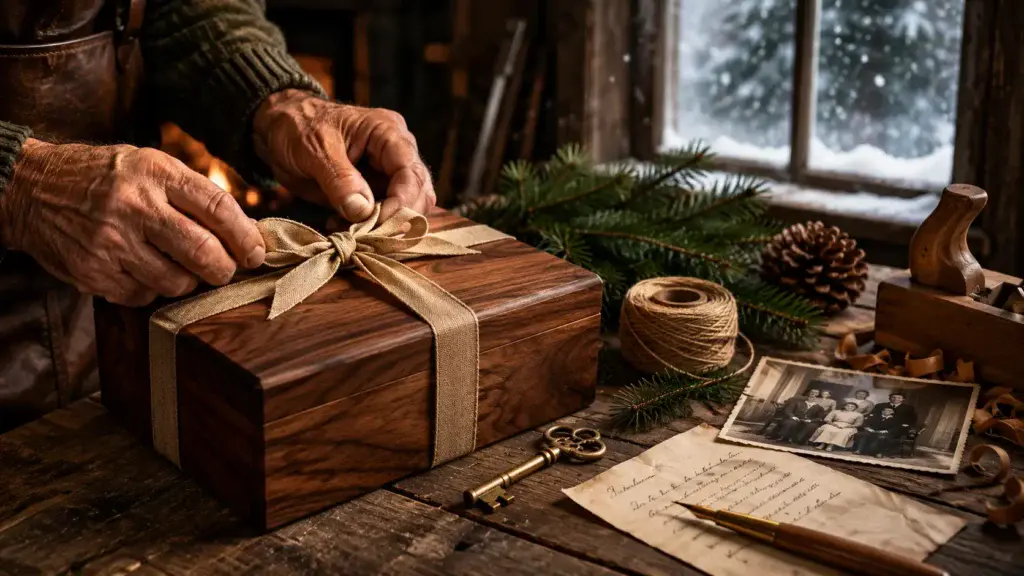
A letter from a grandparent.
By scanning and engraving that handwriting directly onto wood, you preserve something that photographs alone cannot capture.
Even decades later, familiar handwriting has an extraordinary ability to bring memories rushing back.
Pyrography
Handcrafted Character in Every Line
Unlike laser engraving, pyrography embraces the subtle imperfections of handwork.
Every line is created by the artist.
Every curve carries slight variations.
That human touch makes wood burning especially appealing for rustic or nature-inspired projects.
Popular designs include:
- Wildflowers
- Pine branches
- Wildlife
- Celtic knots
- Woodland scenes
- Family names
- Decorative borders
Pyrography pairs beautifully with live-edge lumber and farmhouse-style décor.
CNC Carving
Adding Depth Without Losing Simplicity
CNC carving allows you to introduce three-dimensional detail while maintaining remarkable precision.
It’s particularly effective for:
- Raised lettering
- Relief carvings
- Family crests
- Custom logos
- Topographic maps
- Geometric artwork
- Decorative borders
Used thoughtfully, CNC carving enhances traditional craftsmanship rather than replacing it.
Hand sanding and finishing still provide the warmth that makes the project feel handmade.
Hand-Carved Details
Small Marks That Reveal the Maker
There’s something unmistakably authentic about hand carving.
The tiny variations remind us that another person—not a machine—carefully shaped every detail.
Even simple accents can transform a project.
Ideas include:
- Oak leaves
- Feather motifs
- Vines
- Rope patterns
- Initials
- Mountain ranges
- Wildflowers
These details don’t need to dominate the design.
Sometimes they’re noticed only after years of ownership.
Epoxy Inlays
Modern Contrast with Natural Warmth
Epoxy resin has become increasingly popular in fine woodworking because it creates striking visual contrast while allowing the wood to remain the focal point.
Popular inlay ideas include:
- Rivers
- Compass roses
- Initials
- State outlines
- Metallic pigments
- Crushed turquoise
- Brass shavings
- Glow resin for decorative projects
The most successful inlays are usually modest in size.
A single thoughtful accent often feels more refined than covering large portions of the project.
Coordinates That Tell an Entire Story
Numbers can carry surprising emotional weight.
Latitude and longitude coordinates create understated personalization that only the recipient fully understands.
Popular locations include:
- Wedding venue
- Proposal location
- Family home
- Childhood cabin
- Favorite lake
- National park
- Birthplace
- Fishing spot
To everyone else, they’re simply numbers.
To the family receiving the gift, they’re a lifetime of memories.
Birth Flowers and Constellations
Symbolism Without Saying Too Much
Personalization doesn’t always require names.
Sometimes symbols communicate even more.
Birth flowers offer timeless elegance.
Examples include:
- Rose
- Daisy
- Lily
- Lavender
- Violet
- Sunflower
Constellations create another subtle option.
A small engraved night sky marking a wedding date or birthday feels deeply personal without overwhelming the design.
These motifs work especially well on:
- Jewelry boxes
- Picture frames
- Keepsake boxes
- Serving trays
Family Trees
A Design That Continues to Grow
Few woodworking motifs represent legacy better than a tree.
Strong roots.
Growing branches.
New generations.
Family tree designs work beautifully on:
- Wall art
- Memory chests
- Entryway signs
- Keepsake cabinets
- Decorative panels
Consider leaving room to add future family members over time.
That flexibility allows the project to evolve instead of remaining fixed in one moment.
Maps and Meaningful Places
Geography with Emotional Weight
Certain places shape our lives forever.
A favorite hiking trail.
The lake where summers were spent.
A small hometown.
The first home a couple shared.
Simple engraved maps capture those memories without needing lengthy explanations.
Popular map ideas include:
- Lake outlines
- Coastlines
- Mountain ranges
- City neighborhoods
- National parks
- Hiking routes
- Farm boundaries
Minimal line work keeps these designs clean and timeless.
Hidden Compartments and Secret Messages
Personalization That Waits to Be Discovered
Some of the best surprises aren’t immediately visible.
Adding a hidden compartment or concealed engraving transforms the project into something interactive.
Ideas include:
- Secret drawer
- Magnetic compartment
- Hidden family letter
- QR code linking to a family video
- Engraved message beneath a removable tray
- Photo tucked inside a false bottom
Years later, these discoveries often become the stories families tell again and again.
Choosing the Right Typography
Typography influences emotion just as much as the words themselves.
Modern Projects
Look for:
- Clean sans-serif fonts
- Balanced spacing
- Minimal layouts
Rustic Projects
Choose:
- Handwritten styles
- Vintage-inspired scripts
- Soft brush lettering
Traditional Furniture
Classic serif fonts tend to complement timeless furniture designs beautifully.
Limiting yourself to one or two font styles creates a more cohesive appearance.
Let the Wood Speak
One of the hallmarks of heirloom-quality woodworking is confidence.
Confident designs don’t need to fill every empty surface.
The figure in walnut.
The warmth of cherry.
The straight grain of maple.
Those natural characteristics already provide beauty.
Personalization should support that beauty—not compete with it.
If you’re ever unsure whether to add another decorative element, step back and ask:
Does this strengthen the story—or simply fill empty space?
The answer usually becomes obvious.
Common Personalization Mistakes
Even experienced makers occasionally overwork a design.
Watch for these common pitfalls:
- Oversized engravings
- Too many decorative graphics
- Mixing several unrelated font styles
- Ignoring the direction of the grain
- Crowding edges with text
- Using low-resolution artwork
- Chasing short-lived design trends
Simple, balanced layouts almost always age more gracefully.
Caring for Personalized Gifts
A personalized project deserves the same care as the memories it protects.
Basic maintenance includes:
- Dusting with a soft cloth
- Avoiding harsh household cleaners
- Refreshing food-safe finishes on kitchen items
- Protecting furniture from prolonged direct sunlight
- Maintaining stable indoor humidity
- Reapplying wax or oil when appropriate
With proper care, both the wood and the personalization will continue to tell their story for generations.
Coming Up in Part 10
Next, we’ll explore Choosing the Best Wood for Every Woodworking Gift Project, including hardwood versus softwood, grain patterns, durability, food-safe lumber, sustainability, budgeting, and how to confidently select the right wood species for every build.
Choosing the Best Wood for Every Woodworking Gift Project: How the Right Lumber Shapes the Finished Gift
Every memorable woodworking project begins long before the first cut.
It begins with a board.
At first glance, that board might not seem remarkable. But hidden inside it are decisions that will influence every stage of the build—how easily it machines, how well it accepts a finish, how it ages over the years, and ultimately how the recipient experiences the finished piece.
A jewelry box built from walnut tells a different story than one built from maple.
A cutting board made from hard maple will perform differently than one made from pine.
The design may stay exactly the same.
The material changes everything.
Learning to choose the right wood isn’t simply a technical skill. It’s one of the biggest steps toward creating woodworking gifts that feel intentional, durable, and worthy of becoming heirlooms.
The Wood Is Part of the Design
Many beginners think of lumber as raw material.
Experienced woodworkers think of it as a design element.
The grain becomes texture.
The color becomes mood.
The weight affects how substantial the gift feels in someone’s hands.
Even the scent released while opening a cedar keepsake box contributes to the experience.
When you begin viewing wood as part of the story rather than simply the structure, your projects naturally become more refined.
Hardwood vs. Softwood
Understanding the Difference
One of the first concepts every woodworker encounters is the distinction between hardwoods and softwoods.
Despite the names, this isn’t simply about hardness.
The classification comes from the type of tree.
Hardwoods come from deciduous trees that lose their leaves each year.
Softwoods come from evergreen conifers.
Both have important roles in woodworking.
The key is knowing where each performs best.
Hardwood
Hardwoods are the preferred choice for most premium woodworking gifts because they combine beauty with durability.
Popular species include:
- Maple
- Walnut
- Cherry
- White oak
- Ash
- Birch
- Beech
Why Woodworkers Choose Hardwoods
They generally offer:
- Better wear resistance
- Richer grain patterns
- Greater strength
- Longer lifespan
- Excellent finishing qualities
Hardwoods are especially well suited for projects intended to last for decades.
Best Uses
- Cutting boards
- Furniture
- Keepsake boxes
- Jewelry organizers
- Serving trays
- Floating shelves
- Desk accessories
- Charcuterie boards
Softwood
Softwoods deserve more appreciation than they often receive.
They’re easier to work, widely available, and ideal for many decorative projects.
Common choices include:
- Pine
- Cedar
- Spruce
- Fir
Why Choose Softwood?
Benefits include:
- Lower cost
- Lightweight construction
- Beginner-friendly machining
- Readily available lumber
- Excellent painted finish
Softwoods are perfect when appearance and affordability matter more than maximum durability.
Best Uses
- Decorative signs
- Holiday décor
- Rustic shelving
- Painted furniture
- Practice projects
- Wall art
Maple
The Reliable Choice for Everyday Gifts
If one hardwood could be called the workhorse of gift woodworking, maple would be a strong candidate.
Its clean appearance and exceptional durability make it one of the most versatile species available.
Characteristics
- Creamy white color
- Fine, closed grain
- Excellent hardness
- Smooth surface
- Minimal visual distraction
Because maple has a tight grain structure, it’s particularly well suited for kitchen projects.
Best Projects
- Cutting boards
- Charcuterie boards
- Rolling pins
- Children’s toys
- Step stools
- Desk organizers
- Phone docking stations
It also engraves beautifully, making it an excellent choice for personalized gifts.
Walnut
Rich Color That Never Goes Out of Style
Walnut has a quiet elegance that’s difficult to imitate.
Its naturally dark heartwood immediately creates a premium impression without requiring stain.
Characteristics
- Chocolate brown tones
- Flowing grain
- Excellent stability
- Smooth machining
- Beautiful natural contrast
Walnut often becomes the first choice for projects meant to become heirlooms.
Ideal Projects
- Jewelry boxes
- Keepsake chests
- Valet trays
- Serving boards
- Picture frames
- Luxury desk accessories
- Coffee tables
A simple oil finish is often all walnut needs to look exceptional.
Cherry
A Wood That Improves With Time
Few woods change as gracefully as cherry.
Freshly milled cherry begins with a soft reddish tone.
Over the years, exposure to light deepens that color into the rich warmth people associate with antique furniture.
Best Uses
- Recipe boxes
- Keepsake boxes
- Dining trays
- Decorative furniture
- Picture frames
- Blanket chests
Cherry rewards patience.
The gift you build today often looks even better ten years from now.
White Oak
Strength You Can Feel
White oak has earned its reputation through generations of furniture making.
Its bold grain and remarkable durability make it ideal for projects expected to receive daily use.
Excellent Choices
- Entryway benches
- Blanket ladders
- Plant stands
- Floating shelves
- Dining furniture
- Wine racks
Its natural moisture resistance also makes it well suited for humid indoor environments.
Ash
Clean Lines for Modern Homes
Ash combines strength with understated beauty.
Its straight grain complements contemporary furniture and Scandinavian-inspired interiors particularly well.
Ideal applications include:
- Laptop stands
- Shelving
- Desk organizers
- Plant stands
- Minimalist furniture
Ash offers durability without drawing unnecessary attention away from the overall design.
Birch
Smooth, Strong, and Family Friendly
Birch remains one of the best choices for children’s projects because of its fine texture and consistent appearance.
Popular builds include:
- Toy boxes
- Name puzzles
- Bookshelves
- Wooden blocks
- Dollhouse furniture
- Educational toys
Baltic birch plywood is also widely respected for cabinetry, organizers, and precision woodworking.
Beech
Traditional Craftsmanship That Endures
Beech has been trusted for generations in furniture making and tool production.
Its dense structure makes it an excellent option for projects that receive frequent handling.
Ideal projects include:
- Wooden spoons
- Kitchen utensils
- Educational toys
- Furniture
- Tool handles
Its smooth surface feels comfortable in everyday use.
Pine
Affordable Doesn’t Mean Ordinary
Pine is often overlooked because it’s inexpensive.
In reality, it’s one of the most approachable materials for beginner woodworkers.
Its knots and natural character make it especially attractive for rustic projects.
Great Uses
- Decorative signs
- Holiday decorations
- Farmhouse furniture
- Blanket ladders
- Rustic shelves
- Painted furniture
Choose straight, dry boards with minimal defects for the best results.
Cedar
Beauty You Can Smell
Cedar offers something few other woods can.
Its unmistakable aroma.
That fragrance naturally discourages insects while creating a pleasant sensory experience each time a box or chest is opened.
Perfect Projects
- Keepsake boxes
- Blanket chests
- Closet organizers
- Hope chests
- Storage benches
Cedar lining inside a walnut or cherry keepsake box creates an especially memorable combination.
Reclaimed Wood
Giving Old Timber a New Chapter
Some of the most meaningful woodworking begins with wood that already has a history.
Reclaimed lumber often carries marks from its previous life:
- Nail holes
- Saw marks
- Weathered texture
- Natural checking
- Color variation
Rather than hiding those characteristics, many makers celebrate them.
Popular reclaimed wood projects include:
- Floating shelves
- Coffee tables
- Picture frames
- Entryway benches
- Wall art
Always inspect reclaimed lumber carefully for hidden metal and structural damage before milling.
Understanding Grain Patterns
Grain influences far more than appearance.
It affects how light reflects from the surface, how easily the wood machines, and even how the finished project feels.
Straight Grain
Perfect for:
- Modern furniture
- Scandinavian designs
- Minimalist décor
Its predictable appearance creates calm, balanced projects.
Curly Grain
Produces shimmering figure that changes with the viewing angle.
Excellent for:
- Jewelry boxes
- Decorative lids
- Display pieces
Use figured wood selectively so it remains the focal point.
Bird’s-Eye Maple
One of the most distinctive figured hardwoods available.
Ideal for:
- Luxury boxes
- Collector pieces
- Fine furniture accents
Because it’s visually striking, a little goes a long way.
Live Edge
Sometimes the tree’s natural edge tells the best story.
Live-edge boards remain especially popular for:
- Serving boards
- Floating shelves
- Coffee tables
- Wall décor
The contrast between natural edges and refined craftsmanship creates lasting visual interest.
Matching Wood to the Project
Choosing the right species becomes much easier when you begin with the intended use.
| Project | Recommended Wood |
|---|---|
| Cutting Board | Maple, Walnut, Cherry |
| Charcuterie Board | Walnut, Maple |
| Jewelry Box | Walnut, Cherry |
| Toy Box | Birch, Maple |
| Floating Shelf | White Oak, Ash |
| Plant Stand | White Oak, Ash |
| Picture Frame | Maple, Cherry |
| Desk Organizer | Walnut, Maple |
| Keepsake Chest | Walnut with Cedar lining |
| Blanket Ladder | White Oak |
Selecting the right lumber at the beginning often prevents problems later in the build.
Choosing Sustainable Lumber
Beautiful woodworking should also respect the forests that make it possible.
Whenever practical:
- Buy wood from reputable local lumberyards.
- Look for responsibly harvested wood.
- Use hardwood offcuts for smaller gifts.
- Design projects around standard board dimensions.
- Save quality scraps for future builds.
Thoughtful material use reduces waste while stretching your budget further.
Spend Wisely, Build Better
Premium lumber has its place.
But expensive wood won’t compensate for poor craftsmanship.
Instead of automatically choosing the most costly board, look for lumber that’s:
- Properly dried
- Straight
- Stable
- Free from major defects
- Appropriate for the project
A beautifully crafted maple jewelry box will almost always leave a stronger impression than a poorly built project made from exotic hardwood.
Quality comes from execution.
The wood simply helps tell the story.
Common Wood Selection Mistakes
Many woodworking problems begin before construction even starts.
Avoid these common mistakes:
- Using pine for cutting boards.
- Buying lumber that hasn’t fully dried.
- Ignoring grain direction.
- Choosing figured wood for structural parts.
- Mixing incompatible species without considering movement.
- Prioritizing appearance over function.
Good material selection makes every stage of the project easier.
Coming Up in Part 11
Next, we’ll explore Professional Finishing Techniques, Gift Presentation, and Common Woodworking Mistakes to Avoid, where you’ll learn how sanding, finishing, packaging, and careful attention to detail transform a well-built woodworking project into a gift that looks and feels professionally crafted.
Professional Finishing Techniques That Make Handmade Woodworking Gifts Look Exceptional
A woodworking project isn’t truly finished when the last clamp comes off.
It’s finished when someone runs their hand across the surface, smiles without saying anything, and instinctively knows they’re holding something made with care.
That moment doesn’t happen by accident.
It comes from the final hours of the build—the sanding you refused to rush, the finish you patiently allowed to cure, the edges you softened until they felt comfortable in the hand, and the small details that quietly separate handcrafted work from something that merely looks homemade.
Many woodworkers spend days building a project and only a few hurried minutes preparing it for its finish.
Professionals tend to do the opposite.
They understand that the final ten percent of the process often determines ninety percent of the first impression.
Why the Finish Deserves as Much Attention as the Build
A finish does far more than make wood shine.
It protects.
It highlights.
It deepens color.
It invites touch.
Most importantly, it preserves the hours you’ve already invested.
Without proper finishing, beautiful joinery can lose its impact beneath visible sanding marks, uneven stain, or rough edges that catch the fingertips.
When finishing is done well, people rarely comment on it directly.
Instead, they simply say,
“This feels incredible.”
That’s exactly the reaction you’re aiming for.
Sanding Is Where Quality Begins
Before opening a can of finish, spend time preparing the surface.
No oil, wax, or polyurethane can hide poor sanding.
If anything, finishes tend to make imperfections easier to see.
Swirl marks.
Glue residue.
Scratches.
Uneven grain.
Once finish is applied, they become surprisingly obvious.
Patience here always pays off.
A Reliable Sanding Progression
For most hardwood woodworking gift projects, this sequence produces consistently smooth results:
- 80 grit (only when necessary)
- 120 grit
- 150 grit
- 180 grit
- 220 grit
For decorative projects or furniture that will be touched frequently, continue to:
- 320 grit
Resist the temptation to skip grits.
Each stage removes the scratches left by the previous one.
Missing a step often creates more work later.
Always Finish With the Grain
Cross-grain sanding may not be visible on unfinished wood.
Apply oil, however, and those scratches suddenly stand out.
Your final sanding passes should always follow the natural direction of the grain.
It’s a small habit that makes a noticeable difference.
Soften Every Edge
Perfectly sharp corners rarely stay that way.
They chip more easily.
They’re less comfortable to hold.
And they often make a project feel unfinished.
A gentle round-over or light chamfer creates a piece that feels inviting the moment someone picks it up.
Sometimes it’s the details people don’t consciously notice that leave the strongest impression.
Dust Is the Enemy of Beautiful Finishes
No matter which finish you choose, a dusty surface can spoil the result.
Before applying anything:
- Vacuum thoroughly.
- Blow dust from joints and corners.
- Wipe the project with a clean microfiber cloth.
- Remove remaining particles with a tack cloth if appropriate.
- Let airborne dust settle before beginning.
A clean workshop produces cleaner finishes.
Simple as that.
Choosing the Right Finish
Not every woodworking gift needs the same protection.
The best finish depends entirely on how the project will be used.
Think about daily life before making your choice.
Food-Safe Finishes
For Kitchen Projects That Will Be Used
Cutting boards, serving boards, rolling pins, and wooden utensils need finishes intended for direct food contact.
Trusted options include:
- Food-grade mineral oil
- Beeswax conditioner
- Food-safe hardwax oil
These finishes enhance the wood while remaining easy to maintain.
Encourage recipients to refresh the finish periodically to keep the wood looking its best.
Danish Oil
A Favorite for Decorative Furniture
Danish oil strikes a beautiful balance between protection and natural appearance.
It’s especially well suited for:
- Jewelry boxes
- Keepsake chests
- Picture frames
- Floating shelves
- Decorative trays
It enriches grain without creating a heavy plastic coating.
Tung Oil
A Traditional Finish That Rewards Patience
Used for centuries, tung oil continues to earn its reputation for durability and understated beauty.
Ideal projects include:
- Furniture
- Decorative bowls
- Keepsake boxes
- Wooden clocks
Thin coats applied over time create a finish that feels warm rather than artificial.
Hardwax Oil
Modern Protection with a Natural Feel
Hardwax oils have become increasingly popular among furniture makers because they offer excellent durability while preserving the texture of the wood.
Excellent applications include:
- Dining tables
- Benches
- Shelves
- Coffee tables
- Plant stands
Unlike thick surface finishes, hardwax oils allow the wood to remain the star of the project.
Polyurethane
Built for Heavy Everyday Use
Projects exposed to frequent wear benefit from additional protection.
Polyurethane works well on:
- Entryway benches
- Desk organizers
- Blanket ladders
- Coffee tables
- Storage furniture
Available in matte, satin, semi-gloss, and gloss finishes, it provides long-lasting durability when applied carefully.
Several thin coats almost always outperform one heavy application.
Water-Based Finishes
Preserving Light-Colored Woods
If you’ve chosen maple, birch, or ash specifically for their bright appearance, water-based finishes help preserve those natural tones.
Advantages include:
- Fast drying
- Low odor
- Easy cleanup
- Minimal color change
They’re especially useful for contemporary and Scandinavian-inspired projects.
Oil-Based Finishes
Bringing Warmth to Rich Hardwood
Walnut, cherry, and white oak often become even more beautiful beneath oil-based finishes.
These products:
- Deepen color
- Increase contrast
- Highlight grain
- Add warmth
They generally require longer curing times, but the visual payoff is often worth the wait.
Applying Finish Like a Furniture Maker
Technique matters just as much as product selection.
A few simple habits produce noticeably better results.
Build Slowly
Apply several thin coats rather than trying to achieve full coverage immediately.
Thin applications dry more evenly and reduce the risk of drips or uneven sheen.
Respect Drying Time
One of the hardest lessons in woodworking is learning to leave a project alone.
Dry doesn’t always mean cured.
Give the finish the time it needs before adding another coat or wrapping the gift.
Patience protects your hard work.
Sand Lightly Between Coats
Very fine abrasives remove dust nibs while helping subsequent coats bond smoothly.
Common choices include:
- 320 grit
- 400 grit
Use only light pressure.
You’re refining the surface—not reshaping it.
Buff the Final Surface
Once the finish has fully cured, buffing with a clean, soft cloth creates an inviting feel and a subtle, professional sheen.
People may not notice why the surface feels different.
They’ll simply notice that it does.
Let the Grain Do the Talking
One of the easiest mistakes is trying to make wood look like something it isn’t.
Beautiful hardwood already contains movement, color, and depth.
A good finish simply reveals what’s there.
Walnut develops remarkable richness.
Cherry glows with warmth.
White oak displays bold texture.
Maple reflects light with quiet elegance.
Trust the material.
It rarely needs much help.
Presentation Shapes the First Impression
Before the gift is ever touched, it’s seen.
Thoughtful packaging reinforces the care that went into the build.
Natural wrapping materials complement handcrafted woodworking beautifully.
Consider using:
- Kraft paper
- Cotton twine
- Linen ribbon
- Wooden gift tags
- Wax seals
- Evergreen sprigs
- Reusable fabric bags
The presentation should feel consistent with the craftsmanship inside.
Include a Simple Care Card
A handmade gift often lasts longer when the recipient knows how to care for it.
Keep instructions short and practical.
For Cutting Boards
- Wash by hand only.
- Dry immediately.
- Never soak.
- Reapply food-grade mineral oil as needed.
For Furniture
- Dust with a soft cloth.
- Avoid prolonged direct sunlight.
- Clean with a slightly damp cloth.
- Refresh wax or oil if recommended.
A small care card also reminds the recipient that the project was thoughtfully made—not mass produced.
Tell the Story Behind the Gift
One detail people rarely expect—but almost always appreciate—is the story.
Include a handwritten note describing:
- Why you chose the project
- The wood species you used
- Where the lumber came from
- The inspiration behind the design
- Any hidden personalization they might otherwise miss
The object becomes more meaningful when people understand the care behind it.
Small Details That Create a Premium Feel
Professional-quality woodworking often comes down to finishing touches.
Consider adding:
- Felt pads beneath trays
- Cork feet on coasters
- Leather handles
- Brass hardware
- Hidden fasteners
- Decorative hardwood plugs
- Soft-close hinges
- Perfectly aligned grain
None of these details are dramatic on their own.
Together, they create a project that feels complete.
Your Final Quality Check
Before wrapping the gift, inspect it with fresh eyes.
Surface
✓ No scratches
✓ No glue squeeze-out
✓ Smooth finish
✓ Even sheen
Joinery
✓ Tight joints
✓ Flush surfaces
✓ Square assembly
✓ No visible gaps
Hardware
✓ Secure installation
✓ Proper alignment
✓ Smooth operation
✓ No sharp edges
Overall Feel
Ask yourself one final question:
Would I proudly keep this in my own home?
If the answer is yes, it’s ready to be given.
Common Mistakes That Make Handmade Gifts Look Amateur
Even experienced woodworkers occasionally overlook the finishing stage.
Watch for these common problems:
- Rushing the final sanding.
- Applying finish too heavily.
- Wrapping projects before the finish has fully cured.
- Choosing hardware that feels inexpensive.
- Ignoring wood movement on larger pieces.
- Skipping test boards before staining.
- Leaving sharp corners untouched.
- Forgetting to remove glue residue before finishing.
Most of these mistakes are preventable with a little extra patience.
Craftsmanship Is Remembered Long After the Gift Is Opened
People rarely remember exactly how much a gift cost.
They remember how it felt.
The smooth edge of a serving board.
The satisfying weight of a keepsake box.
The warmth of walnut beneath their fingertips.
Those impressions are created during the final hours of the build.
The saw may shape the wood.
But the finishing process shapes the experience.
Coming Up in Part 12
In the final chapter, we’ll answer the questions woodworkers ask most often, strengthen the guide with reader-focused FAQs, and finish with a Products, Tools & Resources section featuring recommended woods, finishes, essential tools, and helpful supplies to support your next woodworking gift project.
Frequently Asked Questions About Woodworking Gift Projects
By now, you’ve explored woodworking gift ideas for every stage of life, learned how to choose the right lumber, discovered ways to personalize your work, and seen how thoughtful finishing transforms a good project into one that feels truly special.
Even so, a handful of questions come up again and again—whether you’re building your very first gift or planning your next heirloom piece.
Let’s answer the ones woodworkers ask most often.
Frequently Asked Questions
I’m new to woodworking. What’s the best gift project to start with?
Choose something small enough to finish in a weekend but useful enough to become part of someone’s daily routine.
Excellent beginner projects include:
- Wooden coasters
- Phone stands
- Valet trays
- Picture frames
- Candle holders
- Floating shelves
- Simple serving boards
- Key holders
- Plant risers
These projects help you develop accurate measuring, clean cuts, sanding, assembly, and finishing without introducing overly complex joinery.
Finishing a simple project well will teach you more than abandoning an overly ambitious one halfway through.
Which woodworking gifts do people actually use?
Projects tied to everyday routines tend to see the most use.
Some of the most appreciated handmade gifts include:
- Personalized cutting boards
- Charcuterie boards
- Desk organizers
- Jewelry boxes
- Phone docking stations
- Recipe boxes
- Floating shelves
- Keepsake chests
- Blanket ladders
- Entryway organizers
- Wooden toy boxes
- Serving trays
The best woodworking gift is usually the one someone reaches for without thinking.
What are the best woodworking gifts for Christmas?
Holiday favorites include:
- Personalized ornaments
- Advent calendars
- Wooden stocking holders
- Serving boards
- Wooden Christmas trees
- Candle holders
- Santa cookie trays
- Holiday coasters
- Recipe boxes
- Decorative gift boxes
Many of these projects are ideal for batch building if you’re making gifts for multiple family members or friends.
What’s the best wood for woodworking gifts?
The answer depends on the project.
Here’s a simple reference guide.
| Project | Recommended Wood |
|---|---|
| Cutting Boards | Maple, Walnut, Cherry |
| Jewelry Boxes | Walnut, Cherry |
| Toy Boxes | Birch, Maple |
| Floating Shelves | White Oak, Ash |
| Picture Frames | Maple, Cherry |
| Plant Stands | White Oak |
| Keepsake Boxes | Walnut with Cedar lining |
| Decorative Signs | Pine, Cedar |
| Serving Trays | Walnut, Cherry |
Choose wood based on function first and appearance second.
Beautiful grain is a bonus.
Durability should always come first.
Is hardwood always better than softwood?
Not necessarily.
Hardwoods are generally the better choice for projects that receive daily wear, such as furniture, cutting boards, and keepsake boxes.
Softwoods work wonderfully for:
- Decorative signs
- Holiday projects
- Rustic furniture
- Painted pieces
- Practice builds
The right material depends on how the finished project will be used.
How can I make a woodworking gift feel more personal?
Meaningful personalization doesn’t need to be dramatic.
Some timeless ideas include:
- Family names
- Wedding dates
- Handwritten recipes
- Children’s artwork
- Geographic coordinates
- Hidden engraved messages
- Birth flowers
- Favorite quotes
- Initials
- Meaningful landscapes
The strongest personalization usually supports the design instead of dominating it.
What finish should I use on a cutting board?
Choose finishes intended for direct food contact.
Popular options include:
- Food-grade mineral oil
- Beeswax conditioner
- Food-safe hardwax oil
These finishes are easy to maintain and help preserve the wood’s natural appearance.
Avoid placing wooden cutting boards in the dishwasher or leaving them submerged in water.
How much should I budget for lumber?
A thoughtful woodworking gift doesn’t require expensive wood.
Many beautiful projects can be built using:
- Hardwood offcuts
- Local hardwood suppliers
- Reclaimed lumber
- Construction-grade pine for decorative work
Spend your budget where it has the greatest impact:
- Better joinery
- Quality hardware
- Careful sanding
- Durable finishes
Excellent craftsmanship consistently outperforms expensive materials.
Which woodworking gifts become family heirlooms?
Projects most likely to remain in families for generations include:
- Keepsake chests
- Recipe boxes
- Personalized cutting boards
- Jewelry boxes
- Rocking horses
- Dining tables
- Blanket chests
- Family signs
- Wooden clocks
- Memory boxes
Heirlooms are rarely created by accident.
They result from thoughtful design, durable materials, and meaningful personalization.
How do I make my woodworking projects look more professional?
Focus on the details that people notice without realizing they’re noticing them.
That means:
- Careful lumber selection
- Consistent grain direction
- Tight joinery
- Progressive sanding
- High-quality finish
- Rounded edges
- Premium hardware
- Balanced proportions
Professional craftsmanship often feels effortless because every small detail has already been considered.
Keep Learning, Keep Building
Every woodworking project teaches something.
Sometimes it’s a new joinery technique.
Sometimes it’s how a particular finish reacts with walnut.
Sometimes it’s simply the reminder that slowing down usually produces better work.
The gifts you build this year won’t be identical to the ones you build next year—and that’s exactly how it should be.
Every completed project adds another layer of confidence.
Every mistake becomes experience.
Every gift carries a little more craftsmanship than the one before it.
That’s one of the quiet joys of woodworking.
The learning never really ends.
Neither does the satisfaction of making something with your own hands.
Products / Tools / Resources
If you’re planning your next woodworking gift project, having the right materials and tools makes the process smoother and the results more enjoyable. You don’t need a fully equipped professional shop to build meaningful gifts—just reliable tools, quality lumber, and a willingness to take your time.
Recommended Wood Species
Keep these hardwoods on hand for versatile gift projects:
- Hard Maple – Cutting boards, toys, phone stands
- Walnut – Jewelry boxes, valet trays, serving boards
- Cherry – Recipe boxes, keepsakes, picture frames
- White Oak – Furniture, shelves, benches
- Ash – Modern décor and desk accessories
- Birch – Children’s furniture and educational toys
- Cedar – Keepsake box linings and storage chests
Essential Hand Tools
A dependable set of hand tools will cover countless gift projects:
- Combination square
- Marking knife
- Tape measure
- Block plane
- Chisels
- Clamps in various sizes
- Wood mallet
- Card scraper
- Sanding block
- Flush-cut saw
Invest in quality where precision matters most.
Must-Have Power Tools
If you’re building gifts regularly, these tools offer the greatest versatility:
- Table saw
- Miter saw
- Router
- Random orbital sander
- Drill and driver set
- Jigsaw
- Band saw (optional but valuable)
- Drill press (helpful for repeatable accuracy)
Buy tools as your projects require them rather than trying to outfit an entire workshop at once.
Finishes Worth Keeping in the Shop
Different projects call for different finishes, but these cover nearly every situation:
- Food-grade mineral oil
- Beeswax conditioner
- Hardwax oil
- Danish oil
- Water-based polyurethane
- Satin polyurethane
- Paste wax
Always test a finish on an offcut from the same board before applying it to the completed project.
Helpful Hardware
Small upgrades often create a more refined final result.
Keep a selection of:
- Brass hinges
- Soft-close lid supports
- Magnetic catches
- Leather pulls
- Felt pads
- Cork feet
- Decorative screws
- Wooden plugs
- Quality drawer pulls
Premium hardware complements quality craftsmanship.
Sandpaper Grits to Stock
A consistent sanding progression produces better finishes.
Keep these grits readily available:
- 80
- 120
- 150
- 180
- 220
- 320
- 400
Replacing worn sandpaper regularly often improves results more than changing techniques.
Workshop Supplies You’ll Use Constantly
These simple items make every project easier:
- Wood glue
- Blue painter’s tape
- Microfiber cloths
- Tack cloths
- Disposable gloves
- Mixing cups
- Stir sticks
- Painter’s pyramids
- Mineral spirits (where appropriate)
- Shop vacuum
Good organization saves time and reduces frustration during every build.
Books and Learning Resources
Keep improving your skills by exploring:
- Wood identification guides
- Joinery references
- Furniture design books
- Finishing handbooks
- Sketchbooks for project planning
- Workshop layout guides
The more you study traditional craftsmanship, the stronger your own designs become.
Build a Workshop That Grows With You
Don’t feel pressured to own every tool or master every technique immediately.
Some of the most memorable woodworking gifts are built with modest equipment, careful planning, and genuine attention to detail.
Start with projects that match your current skill level.
Learn something from each build.
Refine your process.
Then move on to the next challenge.
Years from now, you’ll likely look back at your earliest projects with a smile—not because they were perfect, but because they marked the beginning of a craft that continues to reward patience, creativity, and care.
And perhaps that’s the greatest gift woodworking offers: not just beautiful things to give away, but the lasting satisfaction of creating something with your own hands that becomes part of someone else’s life.