There’s a certain kind of coffee table that changes the feeling of a room before anyone even sits down.
Not because it’s expensive. Not because it came from a luxury showroom. But because it feels grounded. Solid. Human.
That’s the strange magic behind farmhouse furniture.
A well-built farmhouse coffee table carries texture, weight, and history—even when it was built in a garage over a single weekend with a stack of 2x4s and a borrowed sander. And lately, more people are realizing something the furniture industry hoped they never would:
You don’t need to spend $1,800 to own something beautiful.
You just need the right woodworking plans.
This guide pulls together the best free farmhouse coffee table plans across every major style category—from quick beginner builds to designer-inspired statement pieces that look like they belong inside a custom-built home featured on Pinterest or sold through Etsy for four times the material cost.
Some builds take a few hours. Others become obsession projects.
All of them have one thing in common: they transform ordinary lumber into furniture that feels personal.
And that matters more than most people expect.
Why Farmhouse Coffee Tables Keep Taking Over Living Rooms
Trends usually burn hot and disappear fast.
Farmhouse design didn’t.
It evolved.
What started as rustic country décor slowly merged with minimalist interiors, Scandinavian simplicity, industrial accents, and modern neutral palettes. The result was something warmer than minimalism but cleaner than traditional rustic furniture.
That balance is exactly why farmhouse coffee tables continue dominating DIY search traffic.
They fit almost anywhere.
A black-and-oak farmhouse table works inside a downtown apartment. A distressed whitewashed build feels right at home in a cottage-style living room. A reclaimed wood coffee table with sliding barn doors instantly creates visual texture in spaces that otherwise feel flat.
People aren’t just searching for furniture anymore. They’re searching for atmosphere.
For rooms that feel calmer.
More lived in.
More intentional.
And natural wood has a strange way of doing that.
Before You Pick a Plan, Figure Out What You Actually Want
This sounds obvious. It isn’t.
Most failed DIY furniture projects start with excitement and end with frustration because people choose builds that don’t match their tools, space, or patience level.
Before downloading farmhouse coffee table plans, pause for a minute and think beyond aesthetics.
How Much Room Are You Working With?
Large square farmhouse coffee tables look stunning online. In a tight living room, they become obstacles.
Smaller spaces usually work better with:
- round farmhouse coffee tables
- narrow rectangular builds
- open-frame designs
- lift-top tables with hidden storage
Larger rooms can handle:
- oversized rustic centerpiece tables
- chunky beam-style farmhouse builds
- double-shelf storage tables
- trunk-inspired coffee tables
Scale changes everything.
A beautiful table that overwhelms the room never actually feels beautiful once you live with it.
What Tools Do You Really Have?
This is where people quietly abandon projects.
Some “beginner” woodworking tutorials casually assume you own:
- a table saw
- router
- planer
- miter station
- pneumatic nailer
Most beginners don’t.
The good news? Many farmhouse coffee table plans only require:
- a drill
- circular saw
- pocket-hole jig
- orbital sander
- clamps
That’s it.
The difference between amateur-looking furniture and high-end furniture usually isn’t the tool collection.
It’s patience during sanding and finishing.
Are You Building for Budget or for Impact?
Those are different goals.
A cheap farmhouse coffee table can still look incredible. In fact, some of the most visually striking rustic builds online are made from inexpensive pine and construction lumber.
The secret is finishing.
Layered stain. Soft distressing. Matte polyurethane. Sharp proportions.
Done correctly, inexpensive lumber develops character fast.
Hardwoods like oak and walnut create richer grain patterns and better durability, but they also raise project cost dramatically.
Sometimes the smartest build isn’t the fanciest one.
It’s the one you’ll actually finish.
The Best Free Farmhouse Coffee Table Plans by Skill Level, Style & Cost
Some projects teach you woodworking.
Others make you fall in love with it.
Beginner Farmhouse Coffee Table Plans That Don’t Feel “Beginner”
A lot of starter projects look… temporary.
These don’t.
1. The Classic X-Frame Farmhouse Coffee Table
Skill Level: Beginner
Estimated Cost: $70–$120
If farmhouse furniture had a signature silhouette, this would probably be it.
The X-frame design feels sturdy and architectural without becoming visually heavy. It’s also forgiving—perfect if your cuts aren’t flawless yet.
Best for:
- first-time builders
- rustic living rooms
- neutral farmhouse interiors
2. The Simple Box Frame Coffee Table
Skill Level: Beginner
Estimated Cost: $50–$90
Minimalist. Clean. Surprisingly elegant.
This design works because it strips farmhouse style down to its essentials:
- thick wood texture
- balanced proportions
- visible grain
- uncomplicated lines
It also wastes very little lumber, which matters when material prices fluctuate.
3. Hairpin Leg Rustic Coffee Table
Skill Level: Beginner
Estimated Cost: $60–$110
This style exploded because it blends rustic warmth with modern edge.
Hairpin legs instantly lighten the visual weight of farmhouse furniture. The contrast between metal and wood creates that “Pinterest-perfect” look people keep saving over and over again.
Especially good for:
- apartments
- modern farmhouse interiors
- Scandinavian-inspired spaces
4. Round Farmhouse Coffee Table
Skill Level: Beginner–Intermediate
Estimated Cost: $90–$150
Round coffee tables soften a room.
You feel it immediately.
Sharp corners disappear. Movement flows better. Smaller spaces suddenly breathe easier.
They’re slightly more demanding to build, but visually, they create a calmer room dynamic than rectangular tables.
Farmhouse Coffee Tables Under $100 That Still Look Expensive
There’s something deeply satisfying about building furniture that looks custom-made without draining your bank account.
These builds lean hard into that feeling.
5. The Reclaimed Pallet Coffee Table
Skill Level: Beginner
Estimated Cost: $40–$80
Pallet wood carries imperfections that new lumber simply can’t fake.
Nail marks.
Weathering.
Color variation.
Texture.
Every board already feels like it has a story.
The trick is restraint. Clean the wood carefully, preserve the character, and avoid over-sanding the surface into lifelessness.
6. The 2×4 Farmhouse Build
Skill Level: Beginner
Estimated Cost: $50–$90
2×4 lumber has become the unofficial backbone of beginner woodworking for a reason:
- cheap
- available everywhere
- structurally forgiving
The challenge is making construction lumber feel refined.
That transformation happens during finishing.
A careful sanding progression and layered stain system completely change the visual outcome.
7. Rustic Barnwood Coffee Table
Skill Level: Intermediate
Estimated Cost: $80–$140
Search demand for “barnwood farmhouse coffee table” keeps climbing because people crave texture right now.
Perfect surfaces are starting to feel sterile.
Barnwood feels human.
Modern Farmhouse Coffee Table Plans That Feel Clean, Not Cluttered
Modern farmhouse design works because it edits rustic style instead of drowning in it.
Cleaner lines.
Sharper contrast.
Less visual noise.
8. Black Modern Farmhouse Coffee Table
Skill Level: Intermediate
Estimated Cost: $90–$180
Black base. Natural wood top.
That combination rarely fails.
It creates contrast without overpowering the room, and it photographs beautifully—which is one reason this style performs so aggressively in image search.
Popular finish combinations:
- matte black + white oak
- ebony stain + walnut
- black metal + weathered pine
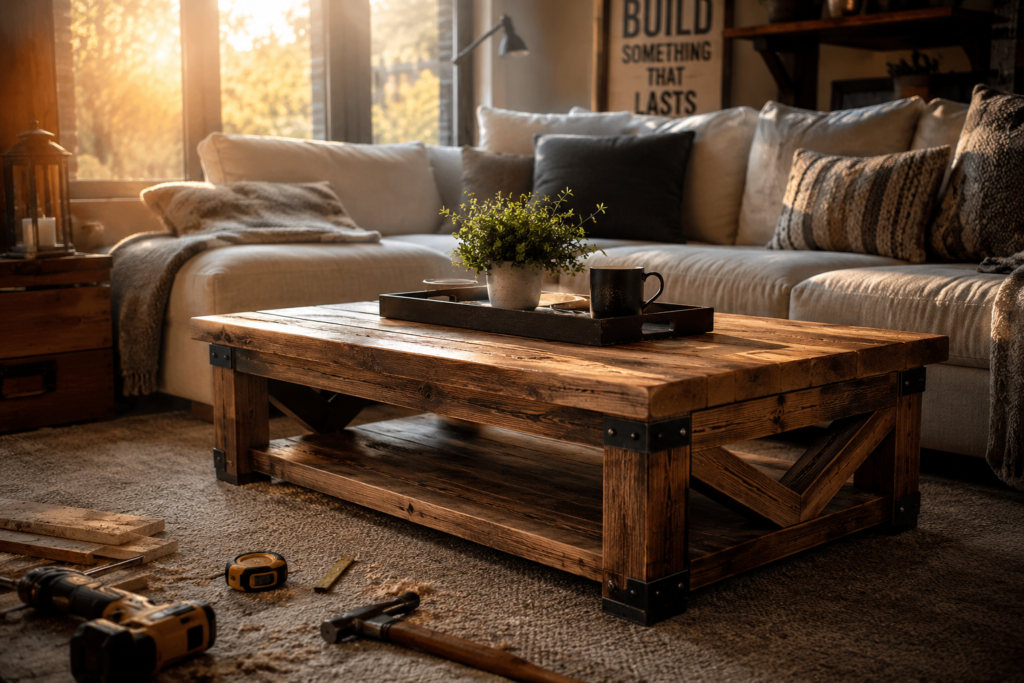
9. Scandinavian Farmhouse Coffee Table
Skill Level: Beginner–Intermediate
Estimated Cost: $80–$150
This style strips farmhouse design down to calm textures and quiet simplicity.
Think:
- pale wood
- soft grain
- open space
- minimal hardware
The result feels airy instead of heavy.
Especially effective in smaller homes where oversized rustic furniture can overwhelm the room.
10. Floating Shelf Coffee Table
Skill Level: Intermediate
Estimated Cost: $90–$170
Open lower shelving creates visual breathing room while still adding storage.
That balance matters more than people realize.
Heavy furniture compresses a room psychologically. Open shelving relaxes it.
Farmhouse Coffee Tables With Storage That Actually Solve Real-Life Problems
Storage furniture performs so well because clutter quietly drains mental energy.
People feel that tension even if they can’t explain it.
A farmhouse coffee table with storage doesn’t just organize a room. It removes friction from daily life.
11. Lift-Top Farmhouse Coffee Table
Skill Level: Intermediate
Estimated Cost: $120–$220
One of the most searched DIY coffee table styles online.
And for good reason.
It functions as:
- storage
- workspace
- dining surface
- laptop station
- hidden organization hub
Especially useful in apartments and multi-use living spaces.
12. Sliding Barn Door Coffee Table
Skill Level: Intermediate–Advanced
Estimated Cost: $150–$280
There’s something tactile and satisfying about sliding barn doors.
People interact with them instinctively.
That physical interaction makes the furniture feel more custom and intentional than standard storage builds.
13. Rustic Trunk Coffee Table
Skill Level: Intermediate
Estimated Cost: $130–$250
Part coffee table. Part heirloom chest.
This style works beautifully in:
- cottage interiors
- mountain homes
- warm neutral spaces
- vintage farmhouse aesthetics
It also creates hidden storage without looking utilitarian.
The Wood You Choose Changes Everything
Wood isn’t just structure.
It’s personality.
Pine: Affordable, Soft, and Surprisingly Beautiful
Pine remains the king of beginner woodworking because it’s:
- inexpensive
- easy to cut
- widely available
- ideal for distressed farmhouse finishes
It dents more easily than hardwoods, but farmhouse furniture actually benefits from a little wear over time.
That lived-in softness becomes part of the charm.
Oak: The Classic Premium Farmhouse Wood
Oak grain has presence.
Even unstained, it feels substantial.
That’s why oak farmhouse coffee tables consistently look more expensive than pine builds, even with simple designs.
Especially good for:
- durability
- visible texture
- darker stain finishes
Walnut: Luxury Without Trying Too Hard
Walnut doesn’t need much help.
Its grain depth and natural richness immediately create a higher-end appearance.
Paired with matte black hardware, walnut farmhouse furniture starts crossing into designer territory fast.
The Finishing Stage Is Where DIY Furniture Either Wins or Dies
A mediocre build with excellent finishing can still look premium.
An excellent build with rushed finishing almost always looks unfinished.
That’s the truth most beginners discover too late.
Sanding Matters More Than Expensive Tools
The smoothness people associate with “professional furniture” usually comes from sanding discipline—not advanced woodworking machinery.
Proper progression matters:
- 80 grit
- 120 grit
- 180 grit
- finishing grit
Skipping steps creates uneven stain absorption and rough texture under light.
You can see it immediately.
Matte Finishes Feel More Expensive Right Now
Modern farmhouse interiors overwhelmingly favor:
- matte polyurethane
- satin sealers
- low-sheen finishes
Gloss reflects too much light and weakens the relaxed rustic atmosphere farmhouse design depends on.
Distressing Should Feel Natural, Not Forced
The best distressed farmhouse furniture looks accidentally aged.
The worst looks attacked.
Subtle edge wear. Soft texture variation. Gentle contrast.
That’s enough.
The Mistakes Most People Don’t Realize They’re Making
Some furniture problems don’t show up immediately.
Then six months later, the table wobbles, cracks, or suddenly feels “cheap” for reasons people can’t quite identify.
Usually, it comes down to one of these issues.
Ignoring Wood Movement
Wood expands and contracts naturally with humidity and temperature.
Ignoring that movement causes:
- warping
- splitting
- loose joints
- structural instability
Good farmhouse coffee table plans account for this from the beginning.
Buying Cheap Hardware
Cheap hinges and drawer slides instantly downgrade otherwise beautiful furniture.
High-quality hardware creates disproportionate visual value.
It’s one of the smartest upgrades you can make.
Building a Table That’s Too Tall
The ideal farmhouse coffee table height is usually:
- level with sofa cushions
- or slightly lower
Too high feels awkward immediately, even if people can’t explain why.
Why Rustic Furniture Feels Emotionally Different Than Mass-Produced Furniture
There’s a reason handmade farmhouse furniture keeps outperforming trend-driven designs.
Natural wood carries visible imperfection.
Grain variation.
Knots.
Texture.
Wear.
Human beings respond emotionally to those details because they signal authenticity.
Mass-produced furniture often feels visually flat because every surface is engineered toward uniformity.
Farmhouse furniture does the opposite.
It allows texture to stay visible.
And that texture makes spaces feel warmer, calmer, and more personal.
Questions People Quietly Ask Before Starting Their First Farmhouse Coffee Table
“Can I Actually Build One of These Without Professional Experience?”
Yes.
Most beginner farmhouse coffee table plans are intentionally designed around straightforward cuts and forgiving assembly methods.
The bigger challenge isn’t technical skill.
It’s confidence.
“What’s the Cheapest Wood That Still Looks Good?”
Pine.
Without question.
Especially when paired with layered stain and matte finishes.
Done properly, inexpensive pine develops a convincing reclaimed-wood appearance surprisingly fast.
“Do I Need Expensive Woodworking Tools?”
Not for most builds.
A drill, circular saw, sander, clamps, and pocket-hole jig handle an enormous percentage of farmhouse coffee table projects.
People often overestimate the tool barrier.
“Why Do Some DIY Coffee Tables Look Cheap?”
Usually because of:
- rushed sanding
- poor proportions
- glossy finishes
- weak stain choices
- low-quality hardware
The details matter more than the lumber price.
“What Finish Creates That High-End Farmhouse Look?”
Low-sheen finishes dominate modern farmhouse interiors because they soften light instead of reflecting it harshly.
Matte and satin polyurethane remain the safest choices.
Products / Tools / Resources
Recommended Beginner Woodworking Tools
- Kreg Tool Pocket Hole Systems
- DeWalt Power Tools
- Makita Woodworking Tools
- Bosch Power Tools
Best Wood Finishes for Farmhouse Furniture
- Minwax Wood Stains
- Rust-Oleum Wood Finishes
- Varathane Polyurethane Finishes
Lumber & Hardware Resources
- Home Depot Lumber & Hardware
- Lowe’s Woodworking Supplies
- Rockler Woodworking Hardware
Design Inspiration & DIY Communities
- Pinterest Farmhouse Furniture Inspiration
- Ana White Free Furniture Plans
- Fix This Build That DIY Plans