
Quick Answer
Rustic woodworking plans for home decor help you create furniture and decorative accents that bring warmth, texture, and personality into a space.
From floating shelves and reclaimed wood coffee tables to farmhouse benches and custom wall décor, these projects combine craftsmanship with timeless design. The result is a home that feels curated, welcoming, and far more expensive than its actual budget.
The Enduring Appeal of Rustic Woodworking
There’s a reason certain rooms stay with you long after you leave them.
It isn’t always the size of the space. It isn’t necessarily the designer furniture or the perfectly chosen paint colors. More often, it’s a feeling.
A weathered wooden shelf holding a collection of well-loved books.
A handcrafted coffee table marked by subtle grain patterns that no factory could ever duplicate.
An entryway bench that feels as though it belongs to the house itself rather than simply occupying it.
These are the details that quietly shape a home’s character.
Rustic woodworking has remained relevant through shifting design trends because it speaks to something deeper than aesthetics. In a world increasingly filled with mass-produced products, handcrafted wood pieces offer authenticity. They introduce texture where rooms feel flat, warmth where spaces feel sterile, and individuality where everything else begins to look the same.
That’s why rustic home decor continues to thrive across styles that, on the surface, seem completely different. Modern farmhouse interiors rely on it. Industrial spaces soften with it. Scandinavian-inspired homes use it to introduce warmth. Even contemporary interiors often depend on rustic wood accents to create balance.
What makes these pieces powerful isn’t just how they look.
It’s how they make people feel.
Natural wood grain tells a story. Knots, imperfections, and subtle color variations create visual depth that synthetic materials struggle to replicate. Every board carries a history. Every finished piece feels unique.
And that uniqueness is exactly what gives rustic woodworking its enduring value.
What Defines Rustic Woodworking?
At its core, rustic woodworking embraces the beauty of natural materials and honest craftsmanship.
Instead of hiding imperfections, rustic design highlights them.
Instead of pursuing flawless symmetry, it celebrates character.
The goal isn’t perfection. The goal is authenticity.
Hallmarks of Rustic Woodworking
- Natural wood grain patterns
- Reclaimed or weathered materials
- Distressed finishes
- Visible craftsmanship
- Functional design
- Earth-toned color palettes
- Durable construction methods
A rustic bookshelf, for example, doesn’t need mirror-smooth surfaces to feel refined. Its appeal often comes from subtle imperfections—a knot in the wood, a slightly varied grain pattern, or the soft wear marks introduced during finishing.
These details create personality.
They also create something many homeowners are searching for today: spaces that feel lived-in rather than staged.
The Foundation of Every Successful Project: Choosing the Right Tools
Many beginners assume beautiful woodworking starts with expensive equipment.
In reality, it starts with a handful of reliable tools and the willingness to develop skill over time.
The best rustic woodworking projects often emerge from simple workshops where craftsmanship matters more than complexity.
Essential Tools for Beginners
If you’re building your first rustic home decor project, start here:
- Tape measure
- Speed square
- Cordless drill
- Circular saw
- Random orbital sander
- Clamps
- Safety glasses
- Hearing protection
These tools are enough to complete a surprising number of projects, including shelves, blanket ladders, wall-mounted organizers, and decorative signs.
Intermediate Workshop Upgrades
As your confidence grows, additional tools expand what’s possible.
- Miter saw
- Pocket-hole jig
- Router
- Brad nailer
- Table saw
- Shop vacuum or dust collection system
These upgrades improve efficiency, precision, and project quality, especially when building furniture.
Professional-Level Equipment
For serious hobbyists and advanced woodworkers:
- Jointer
- Thickness planer
- Band saw
- Track saw
- Mortise and tenon systems
While these tools aren’t necessary for most home decor projects, they open the door to fine furniture construction and custom woodworking.
The important thing to remember is this: tools amplify skill. They don’t replace it.
A carefully built shelf made with basic tools will always outperform a rushed project built with expensive equipment.
Selecting the Best Wood for Rustic Home Decor
The wood you choose shapes everything—from appearance and durability to finishing techniques and long-term performance.
Some species naturally lend themselves to rustic aesthetics. Others require more effort to achieve the same visual impact.
Pine: Affordable, Versatile, and Beginner-Friendly
Pine remains one of the most popular woods for rustic woodworking plans.
Its accessibility makes it ideal for new woodworkers, while its soft texture readily absorbs stain and finish.
Best for:
- Floating shelves
- Decorative signs
- Blanket ladders
- Entryway projects
Why people love it:
Pine delivers rustic charm without demanding a large budget.
Cedar: Natural Beauty with Built-In Character
Cedar brings rich color variation and exceptional resistance to moisture.
Its distinctive aroma and natural durability make it especially attractive for decorative applications.
Best for:
- Decorative shelving
- Outdoor rustic decor
- Accent pieces
- Planters
Why people love it:
Cedar looks aged and refined even when it’s freshly milled.
Oak: Timeless Strength
If you’re building furniture designed to last for decades, oak deserves serious consideration.
Its grain structure creates visual depth that becomes even more striking when stained.
Best for:
- Coffee tables
- Dining tables
- Benches
- Storage furniture
Why people love it:
Oak combines durability with unmistakable character.
Reclaimed Barn Wood: History You Can See
Few materials embody rustic design better than reclaimed wood.
Every mark, nail hole, and weathered edge contributes to a story that new lumber simply cannot replicate.
Best for:
- Accent walls
- Statement furniture
- Floating shelves
- Decorative wall art
Why people love it:
No two boards are ever identical.
Pallet Wood: Rustic Style on a Budget
For budget-conscious builders, pallet wood offers remarkable creative potential.
While it requires additional preparation and careful sourcing, the results can be surprisingly impressive.
Best for:
- Decorative projects
- Wall art
- Storage solutions
- Small furniture builds
Why people love it:
It combines sustainability with authentic rustic character.
37 Rustic Woodworking Plans That Instantly Elevate Any Home
Not every woodworking project changes the way a room feels.
The projects below do.
Some create focal points. Others improve functionality. A few manage to do both at the same time.
Together, they form a collection of timeless rustic woodworking plans that continue to look relevant regardless of changing design trends.
Living Room Projects That Create Immediate Impact
The living room often serves as the emotional center of a home.
It’s where conversations happen, where guests gather, and where families spend the majority of their shared time.
Well-designed woodworking projects can dramatically influence how this space feels.
1. Rustic Floating Shelves
Simple in concept but transformative in execution.
Floating shelves introduce storage without visual heaviness. They create opportunities to display books, framed photographs, ceramics, greenery, and collected objects that tell your story.
A well-built floating shelf often becomes more than furniture.
It becomes a stage for the things that matter most.
2. Reclaimed Wood Coffee Table
Few projects command attention like a handcrafted coffee table.
Placed at the center of the room, it naturally becomes a focal point.
Reclaimed wood adds history and texture, while sturdy joinery ensures the piece remains functional for years.
The beauty of a rustic coffee table lies in its imperfections. Small variations in grain, color, and texture create visual interest that mass-produced furniture rarely achieves.
3. Farmhouse TV Console
Televisions dominate modern living rooms.
A rustic TV console helps soften that technology-driven presence.
Built with natural wood and thoughtful design details, it anchors the room while providing storage for electronics, books, and decorative accents.
The result feels intentional rather than purely functional.
4. Blanket Ladder
Few projects offer a higher visual return for less effort.
A blanket ladder introduces vertical interest while creating a practical storage solution for throws and textiles.
It’s beginner-friendly, inexpensive, and remarkably effective.
Sometimes the simplest projects have the greatest impact.
5. Wooden Candle Display Shelf
Lighting shapes atmosphere.
A handcrafted candle shelf creates an opportunity to layer warmth throughout a room while introducing texture and dimension to otherwise unused wall space.
The glow of candlelight against natural wood creates a visual pairing that feels timeless.
6. Rustic Side Table
Small enough for a weekend build, yet substantial enough to elevate a room.
A rustic side table provides practical surface space while reinforcing the handcrafted aesthetic throughout the living area.
It’s often one of the first furniture projects new woodworkers attempt—and for good reason.
7. Wooden Crate Storage System
Storage doesn’t have to disappear into closets.
When designed thoughtfully, storage becomes part of the decor itself.
Rustic crate systems offer flexibility, functionality, and character while helping maintain an organized space.
And unlike many storage solutions, they become more attractive as they age.
Kitchen Projects That Blend Function and Character
The kitchen is where rustic woodworking truly earns its place.
Unlike decorative pieces that exist primarily for visual impact, kitchen projects are touched, used, and relied upon every day. They become part of routines. They gather stories. They age alongside the home itself.
The beauty of rustic woodworking in the kitchen is that practicality and aesthetics rarely compete. Instead, they reinforce each other.
8. Open Shelving System
Open shelving changes the visual rhythm of a kitchen almost instantly.
Where upper cabinets can feel heavy or enclosed, floating wood shelves create breathing room. They allow everyday items—ceramic bowls, glass jars, cookbooks, and serving pieces—to become part of the design.
Done well, open shelving doesn’t simply store objects.
It curates them.
Natural wood shelves also introduce warmth into spaces often dominated by metal, stone, and painted surfaces, creating a balance that feels inviting rather than sterile.
9. Rustic Spice Rack
Small project. Big payoff.
A handcrafted spice rack solves a practical problem while adding visual interest to an area that’s frequently overlooked.
Mounted on a wall or tucked beneath shelving, it turns everyday ingredients into part of the kitchen’s personality.
There’s something satisfying about seeing frequently used spices organized, accessible, and beautifully displayed.
10. Wooden Serving Tray
Few woodworking projects deliver usefulness as quickly as a serving tray.
It works as functional decor, an entertaining essential, and a simple way to showcase craftsmanship without committing to a large furniture build.
Whether styled with candles, coffee-table books, seasonal accents, or breakfast in bed, a rustic tray proves that small projects can have lasting value.
11. Hanging Pot Rack
Professional kitchens understand a simple truth:
The tools you use most should be easy to reach.
A rustic hanging pot rack transforms cookware into visual texture while freeing up cabinet space. The combination of aged wood and metal hardware creates an industrial-rustic aesthetic that feels both practical and timeless.
12. Coffee Mug Display
Coffee culture has become part of modern home life.
A handcrafted mug display embraces that reality while adding charm to a kitchen, breakfast nook, or coffee station.
Simple wooden pegs, quality lumber, and thoughtful spacing are often all that’s needed to create a piece people notice immediately.
13. Wine Rack
A wine rack offers an opportunity to combine organization with sophistication.
Whether wall-mounted or freestanding, it introduces structure while showcasing bottles as decorative elements.
Rustic wood naturally complements glass, labels, and metal accents, making wine storage feel intentional rather than utilitarian.
14. Cutting Board Wall Display
The most memorable kitchens often blur the line between utility and decor.
A collection of handcrafted cutting boards displayed on a rustic wall rack does exactly that.
The boards remain functional, but they also contribute texture, warmth, and personality to the room.
Bedroom Projects That Add Warmth and Presence
Bedrooms serve a different purpose than living rooms or kitchens.
They’re personal spaces.
Retreats.
Places where comfort matters as much as appearance.
Rustic woodworking naturally complements that purpose because wood introduces a sense of calm and grounding that few materials can replicate.
15. Rustic Headboard
A headboard can completely redefine a bedroom.
Among all rustic woodworking plans, few projects create a larger visual transformation with a single installation.
Wide planks, reclaimed lumber, geometric patterns, or weathered finishes can turn an ordinary bed into a striking focal point.
The room immediately feels more custom, more intentional, and more complete.
16. Nightstands
Nightstands occupy a unique role.
They’re among the most frequently used pieces of furniture in any home, yet they’re often overlooked during design planning.
A handcrafted nightstand provides daily functionality while reinforcing the room’s overall aesthetic.
And unlike many furniture purchases, a handmade version carries a sense of ownership that can’t be bought off a showroom floor.
17. Storage Bench
Placed at the foot of a bed, a rustic storage bench serves multiple purposes simultaneously.
It provides seating.
It adds storage.
It anchors the room visually.
The best woodworking projects solve several problems at once, and this is one of them.
18. Floating Bedside Shelves
For smaller bedrooms, floating shelves offer a clean alternative to traditional nightstands.
They provide space for books, lighting, and personal items without consuming valuable floor space.
The result feels lighter, more open, and surprisingly sophisticated.
19. Wooden Jewelry Organizer
Organization becomes more appealing when it’s beautiful.
A handcrafted jewelry organizer transforms daily essentials into part of the room’s visual story while reducing clutter and improving accessibility.
20. Rustic Wall Art Panels
Sometimes a room doesn’t need more furniture.
It needs texture.
Wood wall panels introduce dimension and warmth while creating a focal point that feels architectural rather than decorative.
The effect is subtle yet powerful.
Entryway Projects That Shape First Impressions
Every home tells a story before a single word is spoken.
The entryway writes the opening chapter.
It’s the first space guests encounter and the last one homeowners experience before leaving.
That makes it one of the most influential areas in the house.
21. Entryway Bench
A handcrafted bench immediately communicates comfort and functionality.
It offers a place to sit, remove shoes, set down bags, and transition between the outside world and home life.
Visually, it also anchors the space and creates a sense of purpose.
22. Coat Rack
The simplest solutions are often the smartest.
A rustic coat rack keeps jackets, hats, scarves, and bags organized while contributing to the home’s overall design language.
The combination of wood grain and metal hooks feels timeless because it is.
23. Console Table
Few pieces balance form and function as effectively as a console table.
Positioned against an entry wall, it creates a landing zone for keys, mail, decorative objects, and seasonal displays.
It also establishes visual structure in spaces that might otherwise feel empty.
24. Mail Organizer
Clutter accumulates quietly.
A rustic mail organizer provides a designated home for paperwork, correspondence, and small essentials before disorder has a chance to spread.
The best organization systems don’t feel like storage.
They feel like design.
25. Shoe Storage Bench
Storage furniture often forces a choice between practicality and appearance.
A shoe storage bench avoids that compromise.
It conceals everyday mess while adding seating and visual warmth.
That’s a rare combination.
Dining Room Projects Designed to Gather People Together
Some furniture serves a room.
Dining furniture serves experiences.
Meals, celebrations, conversations, holidays, and milestones all unfold around these pieces.
That makes dining-room woodworking projects uniquely meaningful.
26. Farmhouse Dining Table
If there is a crown jewel among rustic woodworking plans, this is it.
A farmhouse dining table becomes more than furniture almost immediately.
It becomes a gathering place.
Built correctly, it can last for generations while collecting memories along the way.
Wide planks, sturdy joinery, and visible grain patterns create a presence that mass-produced alternatives struggle to match.
27. Dining Bench
A rustic dining bench introduces flexibility and visual simplicity.
It seats more people when needed and often feels more welcoming than a row of identical chairs.
The design is straightforward, but the impact is substantial.
28. Buffet Cabinet
Storage and presentation come together in a well-designed buffet cabinet.
It provides space for serving dishes, linens, glassware, and entertaining essentials while creating another opportunity to showcase craftsmanship.
Large pieces like this help establish a room’s identity.
29. Wooden Centerpiece Box
Not every project needs to dominate a room.
Sometimes the most effective pieces are the ones that quietly support the overall atmosphere.
A centerpiece box offers endless styling possibilities throughout the year, adapting to seasonal decor without ever feeling out of place.
30. Rustic Wall Shelf
Dining rooms often contain underutilized wall space.
A handcrafted shelf creates an opportunity to display ceramics, collectibles, plants, artwork, or family heirlooms.
The shelf itself becomes part of the display.
Decorative Accent Projects That Deliver Outsized Impact
Decorative woodworking projects are often underestimated.
Because they’re smaller, they’re assumed to be less important.
The opposite is usually true.
These pieces provide finishing touches that transform rooms from functional to memorable.
31. Framed Wooden Mirror
Mirrors naturally expand visual space.
When paired with a handcrafted wood frame, they also introduce texture and character.
The result feels custom rather than generic.
32. Wooden Clock
A wall clock serves a practical purpose, but a handcrafted version becomes something more.
It becomes a conversation piece.
Its presence adds rhythm, texture, and personality to a wall that might otherwise go unnoticed.
33. Reclaimed Wood Wall Art
Few projects capture the spirit of rustic woodworking more effectively.
Reclaimed wood wall art showcases natural imperfections, weathered textures, and unique grain patterns that cannot be replicated.
Each piece feels singular.
Because it is.
34. Rustic Picture Frames
Photographs tell stories.
Handcrafted frames elevate those stories by surrounding them with materials that feel equally authentic.
Even simple family photos gain additional presence when displayed thoughtfully.
35. Wooden Lantern Holders
Atmosphere often comes from details rather than major furniture pieces.
Lantern holders create opportunities to introduce warmth through candlelight while reinforcing rustic design themes throughout a room.
36. Wooden Plant Stand
Plants and wood share a natural compatibility.
A handcrafted stand elevates greenery—literally and visually—while creating layers of height and texture within a space.
The combination feels organic because both elements originate from nature.
37. Accent Wall Panels
Some projects change a room.
Accent wall panels change its architecture.
Whether installed behind a bed, around a fireplace, or across a feature wall, they create depth, texture, and dramatic visual interest.
It’s one of the most transformative rustic woodworking projects available.
The Finishing Techniques That Separate Good Projects from Great Ones
Building is only part of the process.
Finishing is where personality emerges.
The same woodworking plan can produce dramatically different results depending on how the wood is treated, stained, distressed, and protected.
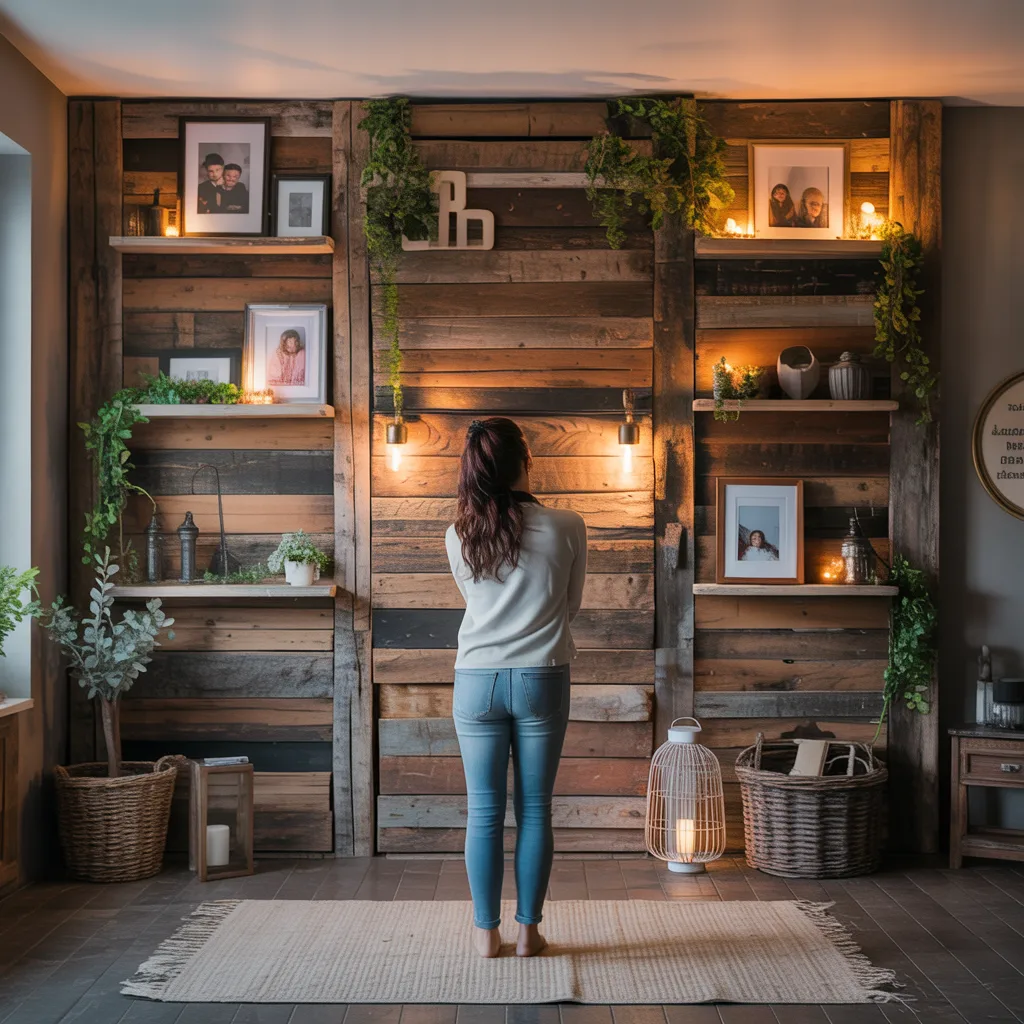
Professionals understand that the finish often determines whether a project feels handcrafted and refined—or unfinished and forgettable.
Distressing with Intention
One of the most common mistakes beginners make is assuming more distressing creates more authenticity.
It doesn’t.
Authentic aging happens gradually.
Professional distressing simply imitates that process with restraint.
Common methods include:
- Wire brushing
- Light edge softening
- Strategic hammer marks
- Chain texturing
- Controlled surface wear
The goal isn’t damage.
The goal is believable character.
Layered Staining for Depth
Natural wood already contains variation.
Layered staining amplifies it.
Instead of applying a single stain color, many experienced woodworkers combine tones to create depth and complexity.
Popular rustic combinations include:
- Weathered Gray and Dark Walnut
- Early American and Provincial
- Jacobean and Natural Oak
- Antique White and Driftwood finishes
The result often feels richer and more organic than a single-color finish.
Whitewashing for Modern Rustic Style
Whitewashing remains one of the most effective ways to balance rustic charm with contemporary design.
Unlike paint, whitewash allows grain patterns to remain visible.
The wood keeps its character while gaining brightness.
This technique works particularly well in:
- Farmhouse interiors
- Coastal-inspired homes
- Scandinavian-rustic spaces
- Small rooms needing visual lightness
Choosing the Right Protective Finish
Protection matters just as much as appearance.
Without it, even beautiful woodworking projects can deteriorate prematurely.
Popular options include:
- Matte polyurethane
- Hardwax oil
- Tung oil
- Danish oil
- Water-based protective finishes
For most rustic home decor projects, lower-sheen finishes tend to feel more authentic than high-gloss alternatives.
The wood remains the focal point rather than the reflection sitting on top of it.
And that’s often where exceptional rustic woodworking begins—not with flawless perfection, but with a finish that allows the natural beauty of the material to remain visible.
The Mistakes That Quietly Undermine Great Rustic Woodworking
Every experienced woodworker has a collection of projects they would build differently today.
Not because they failed.
Because they taught something valuable.
Most disappointing results aren’t caused by a lack of talent. They’re usually the product of small decisions that compound over time—choices that seem insignificant in the moment but become obvious once the finish dries and the project takes its place in the room.
Understanding these mistakes before they happen can save time, money, and frustration.
Over-Distressing the Wood
Rustic does not mean destroyed.
This is perhaps the most common misconception among beginners.
When every edge is beaten, every surface is scratched, and every board looks artificially aged, the piece begins to feel manufactured rather than authentic.
The irony is that true rustic character tends to be subtle.
A softened corner. A weathered grain pattern. A few signs of age where natural wear would actually occur.
Restraint almost always produces a more convincing result.
Ignoring Natural Wood Movement
Wood is alive in ways many people don’t realize.
Even after it’s milled and installed, it continues to respond to humidity and temperature changes.
It expands.
It contracts.
It shifts.
Projects that fail to account for this movement often develop cracks, warping, or joint failures over time.
Understanding wood movement isn’t an advanced skill reserved for professionals.
It’s a foundational principle that protects the longevity of every project.
Rushing Surface Preparation
The excitement of building often makes sanding feel like an obstacle.
In reality, sanding is where much of the quality emerges.
Poorly prepared surfaces absorb stain unevenly. Imperfections become amplified. Finishes appear inconsistent.
A few extra minutes spent refining a surface can dramatically improve the final appearance.
The difference is often visible from across the room.
Choosing Hardware as an Afterthought
Hardware plays a larger role than many homeowners expect.
A beautifully crafted console table paired with cheap, mismatched hardware creates visual tension—and not the good kind.
Rustic woodworking typically pairs best with:
- Forged iron hardware
- Matte black hardware
- Antique brass accents
- Oil-rubbed bronze finishes
- Industrial steel components
The goal is consistency.
Every detail should feel like it belongs to the same story.
Prioritizing Appearance Over Function
The most admired rustic furniture pieces aren’t merely beautiful.
They’re useful.
A bench should be comfortable.
A shelf should support weight confidently.
A storage cabinet should actually improve organization.
When function and craftsmanship work together, the result feels timeless.
When appearance becomes the sole focus, even impressive projects can feel hollow.
Why Rustic Woodworking Makes a Home Feel More Valuable
Most conversations about home value focus on numbers.
Property values.
Renovation budgets.
Return on investment.
But there’s another form of value that influences how people experience a space.
Perceived value.
It’s the reason some homes feel instantly welcoming while others feel forgettable.
It’s why two rooms with similar square footage can create completely different emotional responses.
Rustic woodworking contributes heavily to perceived value because it introduces qualities that people instinctively associate with craftsmanship and care.
Rustic Woodworking Enhances:
- Warmth
- Authenticity
- Visual depth
- Character
- Individuality
- Texture
- Permanence
A handcrafted coffee table often creates a stronger impression than a larger, more expensive piece that lacks personality.
A reclaimed wood accent wall can completely transform the atmosphere of a room without changing its layout.
A simple floating shelf can make a space feel curated rather than merely decorated.
These improvements aren’t solely visual.
They’re emotional.
People respond to environments that feel intentional.
Handcrafted woodworking communicates intention in a way few design elements can.
Every joint, finish, and detail signals that someone invested time and skill into creating something meaningful.
That’s difficult to replicate with mass-produced furniture.
And it’s one of the reasons rustic design continues to resonate across generations.
A Practical Roadmap for Beginners
One of the fastest ways to lose momentum in woodworking is starting with a project that’s too ambitious.
A dining table might be the dream.
But dreams become much easier to achieve when skills are built progressively.
Think of woodworking as a series of layers.
Each project teaches something that makes the next one easier.
Stage One: Learn the Fundamentals
Start with projects that develop measuring, cutting, sanding, and finishing skills.
Recommended beginner projects:
- Floating shelf
- Wooden serving tray
- Blanket ladder
- Wall-mounted coat rack
- Plant stand
At this stage, the objective isn’t perfection.
It’s repetition.
Confidence grows through completed projects, not endless planning.
Stage Two: Build Functional Furniture
Once the basics feel comfortable, move toward pieces that involve more assembly and structural considerations.
Recommended intermediate projects:
- Entryway bench
- Rustic side table
- Nightstand
- Coffee table
- Console table
These projects introduce more advanced joinery while remaining manageable.
Stage Three: Create Statement Pieces
This is where craftsmanship begins to shape entire rooms.
Recommended advanced projects:
- Farmhouse dining table
- Buffet cabinet
- Storage bench
- Accent wall installation
- Custom headboard
By this stage, the skills developed through smaller builds start working together naturally.
Projects become less about following plans and more about making design decisions.
That’s often when woodworking becomes truly rewarding.
Frequently Asked Questions
What’s the easiest rustic woodworking project if I’ve never built anything before?
Floating shelves are often the best place to start.
They’re approachable, affordable, and useful.
You can practice measuring, cutting, sanding, staining, and installation without committing to a large furniture build.
Many woodworkers discover that their first successful shelf gives them the confidence to tackle far bigger projects later.
Which wood creates the most authentic rustic look?
Reclaimed barn wood is often considered the gold standard because its weathering occurs naturally over time.
That said, knotty pine, cedar, and oak also create beautiful rustic results.
The best choice depends on the project, your budget, and the finish you’re trying to achieve.
Often, thoughtful finishing matters just as much as the wood species itself.
Do rustic woodworking projects have to be expensive?
Not at all.
Some of the most visually striking projects are built from affordable materials.
Pine remains one of the most budget-friendly options, while reclaimed lumber and pallet wood can offer tremendous character at relatively low cost.
Good design consistently outperforms expensive materials.
How do I make new wood look aged without making it look fake?
The secret is moderation.
Light distressing, wire brushing, layered staining, and subtle finish techniques generally create more believable results than aggressive aging methods.
When in doubt, less is usually more.
Natural-looking character almost always wins over exaggerated wear.
Which rustic woodworking projects create the biggest visual transformation?
A few projects consistently deliver outsized impact:
- Accent wall panels
- Farmhouse dining tables
- Rustic headboards
- Reclaimed wood coffee tables
- Floating shelves
- Entryway benches
These pieces influence the overall feel of a room rather than simply filling space.
Is rustic woodworking still in style?
Yes—but it has evolved.
Today’s rustic interiors often blend traditional wood textures with modern design principles.
Instead of overly themed farmhouse spaces, homeowners are embracing cleaner lines, better craftsmanship, and natural materials that complement contemporary living.
The result feels timeless rather than trend-driven.
Products / Tools / Resources
The projects in this guide become dramatically easier—and often more enjoyable—when you have the right tools, materials, and learning resources available from the beginning.
Below are some of the most useful categories to explore as your woodworking skills develop.
Essential Hand Tools
Every workshop benefits from reliable fundamentals.
Recommended categories:
- Tape measures
- Speed squares
- Combination squares
- Marking gauges
- Clamps
- Chisels
- Carpenter pencils
These tools form the foundation of accurate work and often have a greater impact on project quality than expensive machinery.
Power Tools Worth Owning Early
If you’re building rustic home decor regularly, consider investing in:
- Cordless drill and driver set
- Circular saw
- Random orbital sander
- Miter saw
- Jigsaw
- Trim router
These tools cover the majority of cutting, shaping, and finishing tasks required for most rustic woodworking plans.
Lumber Sources
Finding quality wood is often half the battle.
Consider sourcing from:
- Local lumber yards
- Reclaimed wood suppliers
- Architectural salvage yards
- Specialty hardwood dealers
- Community woodworking groups
- Pallet recovery programs
The source frequently influences the final character of the project as much as the design itself.
Finishes and Wood Treatments
Popular options for rustic woodworking include:
- Danish oil
- Tung oil
- Hardwax oil
- Matte polyurethane
- Weathered wood stains
- Whitewash finishes
- Natural wax topcoats
Testing finishes on scrap wood before applying them to a completed project can prevent costly surprises.
Hardware and Decorative Components
Small details often determine whether a project feels ordinary or custom-built.
Look for:
- Forged iron handles
- Matte black pulls
- Antique brass hardware
- Industrial pipe fittings
- Decorative hinges
- Shelf brackets
- Furniture feet
These components help reinforce the overall design language of rustic furniture.
Learning Resources for Continued Skill Development
Woodworking rewards continuous learning.
Valuable resources include:
- Detailed woodworking plans
- Project blueprints
- Joinery guides
- Furniture design books
- Wood finishing references
- Workshop safety manuals
- Skill-based woodworking courses
The most successful woodworkers rarely stop learning. Each project introduces new challenges, new techniques, and new opportunities to improve.
And that’s part of the appeal.
No matter how many projects you build, there’s always another idea waiting in the next board, the next sketch, or the next room you’re hoping to transform.