
Picture a backyard that naturally draws people outside. The grill is warming up, someone is settling into a handcrafted bench with a cup of coffee, herbs spill from raised cedar planters, and a pergola casts patterned shade across the patio as the afternoon sun drifts overhead. None of it feels accidental. Every structure has a purpose, every piece tells a story, and together they create an outdoor space that’s both beautiful and deeply personal.
That’s the quiet power of outdoor woodworking.
Unlike many DIY projects that disappear into a garage or spare room, outdoor builds become part of daily life. They shape the places where birthdays are celebrated, gardens flourish, neighbors stop to chat, and families slow down after busy days. A simple planter box can brighten an entryway. A custom dining table becomes the backdrop for years of shared meals. A thoughtfully built pergola transforms an empty patio into a destination.
The best part? You don’t need to be a master carpenter to begin.
Whether you’re picking up a drill for the first time or you’re already comfortable with advanced joinery, there are outdoor woodworking projects that match your experience, your budget, and the vision you have for your backyard. The key is choosing the right project at the right time.
This guide ranks 25 outdoor woodworking projects based on four factors that matter to homeowners far more than trendy designs alone:
- Overall Value – How much function, beauty, and long-term benefit the project delivers.
- Difficulty – The level of woodworking skill, precision, and tools required.
- Maintenance – How well the project stands up to weather and everyday use.
- Homeowner Satisfaction – The lasting enjoyment owners consistently get after the build is complete.
Along the way, you’ll also learn how to choose durable outdoor lumber, avoid costly construction mistakes, protect your projects from the elements, and decide which builds offer the greatest return on both your time and investment.
Whether your goal is creating a quiet garden retreat, expanding your outdoor entertaining space, or simply building something with your own hands that you’ll enjoy for years, this roadmap will help you move forward with confidence.
Quick Answer: What Are the Best Outdoor Woodworking Projects?
If you’re looking for the fastest way to improve your backyard, these projects consistently deliver the best combination of visual impact, everyday usefulness, and long-term value.
| Project | Value | Difficulty | Homeowner Satisfaction |
|---|---|---|---|
| Pergola | ★★★★★ | ★★★★☆ | ★★★★★ |
| Raised Garden Beds | ★★★★★ | ★★☆☆☆ | ★★★★★ |
| Outdoor Dining Table | ★★★★☆ | ★★★☆☆ | ★★★★★ |
| Built-In Bench | ★★★★☆ | ★★★☆☆ | ★★★★★ |
| Privacy Screen | ★★★★★ | ★★☆☆☆ | ★★★★☆ |
| Potting Bench | ★★★★☆ | ★★☆☆☆ | ★★★★☆ |
| Deck Storage Box | ★★★★☆ | ★★☆☆☆ | ★★★★☆ |
| Garden Arbor | ★★★★☆ | ★★★☆☆ | ★★★★☆ |
| Fire Pit Seating | ★★★★★ | ★★★☆☆ | ★★★★★ |
| Outdoor Kitchen Island | ★★★★★ | ★★★★★ | ★★★★★ |
If you’re just beginning your woodworking journey, start with projects like raised garden beds, planter boxes, or a deck storage bench. They’re approachable, forgiving, and teach the core skills you’ll rely on in larger builds.
For experienced DIY builders, structures such as pergolas, pavilions, and custom outdoor kitchens offer an opportunity to completely redefine how a backyard looks and functions.
Why Outdoor Woodworking Offers One of the Best Returns on Any DIY Project
Some home improvements disappear into the background. Outdoor woodworking does the opposite—it changes the way you experience your home every single day.
Think about the difference between an empty corner of the yard and one anchored by a handcrafted cedar bench surrounded by flowering plants. The square footage hasn’t changed, but the purpose has. One invites you to keep walking. The other encourages you to sit, relax, and stay awhile.
That’s what great backyard woodworking accomplishes. It doesn’t simply add furniture or structures; it creates places people naturally gather.
There’s also a practical side to the investment. Well-designed outdoor woodworking projects can:
- Expand usable outdoor living space.
- Improve curb appeal and first impressions.
- Support healthier landscaping and gardening.
- Increase storage without sacrificing style.
- Make entertaining easier and more comfortable.
- Enhance the perceived value of your home.
- Encourage year-round enjoyment of patios, decks, and gardens.
Many homeowners begin with a single weekend project—a planter box, a garden bench, or a small side table. Before long, that first success inspires a larger vision. A neglected patio becomes an outdoor dining area. A bare lawn evolves into a layered landscape with shade structures, seating, and garden features that feel professionally designed.
That progression isn’t unusual. Outdoor woodworking naturally builds momentum because every completed project improves both your skills and your space.
How These Projects Were Ranked
Not every backyard project delivers the same payoff. Some look impressive but require constant maintenance. Others are inexpensive to build yet become indispensable parts of everyday life.
To help you choose wisely, each project in this guide is evaluated using four practical criteria.
Value
Value isn’t simply about cost. It’s the balance between investment, functionality, durability, and visual impact.
Projects that solve multiple problems—such as providing seating, storage, and design appeal at once—earned the highest rankings.
Difficulty
Every build requires a different level of precision.
Simple planter boxes and raised beds are ideal for beginners learning accurate cuts, measuring, and assembly. More advanced structures like pergolas and outdoor kitchens demand stronger joinery, careful planning, and a deeper understanding of structural stability.
Knowing where a project falls on the difficulty scale helps you choose a build that’s both challenging and achievable.
Maintenance
Outdoor projects face constant exposure to sun, rain, moisture, and seasonal temperature changes.
Wood species, protective finishes, drainage design, and hardware selection all influence how much maintenance a project will require over the years. Lower-maintenance builds score higher because they continue looking great with minimal upkeep.
Homeowner Satisfaction
Some projects are useful. Others become the centerpiece of the backyard.
Homeowner satisfaction reflects how often a project is used, how dramatically it improves outdoor living, and whether owners consistently feel the time invested was worthwhile.
The highest-ranking builds combine beauty, function, and longevity—projects you’ll appreciate every time you step outside.
The Top 10 Highest-Value Outdoor Woodworking Projects
Some projects quietly blend into the landscape. Others redefine it.
The following builds have earned their place at the top because they consistently deliver lasting value, practical function, and the kind of visual appeal that makes an ordinary backyard feel intentionally designed.
1. Pergola
Value: ★★★★★
Difficulty: ★★★★☆
Maintenance: Low
Homeowner Satisfaction: ★★★★★
Few outdoor woodworking projects transform a backyard as dramatically as a pergola.
Even before furniture, lighting, or landscaping are added, a pergola creates something every successful outdoor space needs: definition. It gives an open patio a sense of structure, frames a dining area without enclosing it, and introduces architectural character that instantly elevates the surrounding landscape.
Just as importantly, it’s incredibly versatile.
Dress it with climbing vines for a softer, garden-inspired look. Add string lights to extend evenings outdoors. Install a retractable canopy to create welcome shade during the hottest months. Over time, the pergola becomes more than a woodworking project—it becomes the centerpiece around which the rest of the backyard naturally evolves.
Why homeowners love it
- Defines outdoor living areas.
- Adds architectural interest.
- Supports lighting, fans, and climbing plants.
- Increases entertaining space.
- Creates a premium, custom-built appearance.
For many homeowners, a pergola isn’t the final project. It’s the foundation that inspires everything built afterward.
The Top 10 Highest-Value Outdoor Woodworking Projects (Continued)
2. Raised Garden Beds
Value: ★★★★★
Difficulty: ★★☆☆☆
Maintenance: Very Low
Homeowner Satisfaction: ★★★★★
There’s something deeply satisfying about harvesting herbs for dinner or watching tomatoes ripen just a few steps from your back door. Raised garden beds make that experience more accessible while bringing structure and visual balance to a backyard.
For first-time woodworkers, they’re also one of the smartest places to begin. The construction is straightforward, the material list is manageable, and the finished project offers immediate rewards. In a single weekend, an overlooked patch of lawn can become a productive garden that continues to improve with every growing season.
Cedar is often the preferred choice because it naturally resists moisture, insects, and decay without requiring chemical treatment. Combined with quality soil and thoughtful placement, a cedar garden bed can serve your landscape for many years with minimal maintenance.
Why homeowners love it
- Extends the growing season with better soil drainage.
- Reduces weeds and makes gardening easier on the back.
- Adds clean, modern lines to the landscape.
- Works equally well in large yards and compact spaces.
- Delivers one of the highest satisfaction-to-cost ratios of any DIY project.
3. Outdoor Dining Table
Value: ★★★★☆
Difficulty: ★★★☆☆
Maintenance: Moderate
Homeowner Satisfaction: ★★★★★
Some furniture simply fills a space. A handcrafted outdoor dining table creates one.
It’s where birthdays are celebrated, friends gather for long summer evenings, and ordinary weeknight dinners become something worth lingering over. Unlike many decorative backyard projects, this is one you’ll use repeatedly throughout the year.
Building your own table also gives you complete control over its proportions. Whether you need seating for four or a table large enough for extended family gatherings, you can tailor every measurement to fit your patio perfectly.
Hardwoods such as white oak offer exceptional durability, while cedar provides a lighter, more rustic appearance that’s easier to work with. Pair either with corrosion-resistant hardware and an exterior-grade finish, and you’ll have a centerpiece designed to withstand years of changing weather.
Why homeowners love it
- Creates a natural gathering place.
- Custom sizing fits any outdoor space.
- Complements patios, pergolas, and decks.
- Saves money compared to premium retail furniture.
- Ages beautifully with proper care.
4. Privacy Screen
Value: ★★★★★
Difficulty: ★★☆☆☆
Maintenance: Low
Homeowner Satisfaction: ★★★★☆
Privacy isn’t always about blocking a view. More often, it’s about creating a space that feels comfortable enough to truly relax.
A wooden privacy screen can soften neighboring sightlines without making the yard feel closed in. Horizontal slats offer a contemporary look, while lattice panels or decorative patterns introduce texture and character.
This project is especially valuable in suburban neighborhoods where homes sit close together. A thoughtfully designed screen can define a seating area, conceal utility equipment, or create a peaceful backdrop for a garden without requiring a full perimeter fence.
It’s a relatively simple build, yet the impact is immediate.
Why homeowners love it
- Creates secluded outdoor spaces.
- Adds architectural interest.
- Hides air-conditioning units, bins, or storage areas.
- Supports climbing plants for a greener landscape.
- Complements modern and traditional backyard designs.
5. Built-In Bench
Value: ★★★★☆
Difficulty: ★★★☆☆
Maintenance: Low
Homeowner Satisfaction: ★★★★★
Great outdoor spaces invite people to stay. Built-in seating does exactly that.
Unlike movable furniture, a custom bench becomes part of the landscape itself. It follows the lines of a deck, wraps around a fire pit, or nestles beneath a tree, making the entire yard feel more intentional.
One of the biggest advantages is versatility. Add hidden storage beneath the seat, integrate planter boxes at each end, or design the bench to complement an existing pergola. Every variation increases both functionality and visual appeal.
Because it’s custom-built, every inch serves a purpose.
Why homeowners love it
- Maximizes seating without clutter.
- Can include concealed storage.
- Integrates seamlessly into patios and decks.
- Offers exceptional durability.
- Makes outdoor entertaining more comfortable.
6. Fire Pit Seating
Value: ★★★★★
Difficulty: ★★★☆☆
Maintenance: Low
Homeowner Satisfaction: ★★★★★
A fire pit naturally becomes the heart of an outdoor gathering. Custom seating transforms that space into somewhere people genuinely want to spend time.
Rather than relying on mismatched patio chairs, built-in benches arranged around the fire create a cohesive look while providing generous seating for family and guests.
The design can be simple or elaborate. Straight benches work well in modern landscapes, while curved seating creates a more intimate atmosphere that encourages conversation.
It’s one of those projects whose value isn’t measured solely in lumber or labor. It’s measured in evenings spent outdoors long after the sun has gone down.
Why homeowners love it
- Encourages conversation and entertaining.
- Maximizes available seating.
- Creates a permanent focal point.
- Pairs beautifully with patios and landscaping.
- Offers year-round enjoyment.
7. Garden Arbor
Value: ★★★★☆
Difficulty: ★★★☆☆
Maintenance: Moderate
Homeowner Satisfaction: ★★★★☆
Sometimes a backyard doesn’t need something larger—it needs something taller.
A garden arbor introduces vertical interest, drawing the eye upward and adding depth to the landscape. Positioned over a pathway or garden entrance, it creates a natural transition from one area of the yard to another.
Over time, climbing roses, jasmine, clematis, or grapevines soften the structure, turning it into a living architectural feature that changes with the seasons.
For woodworkers, it’s also an enjoyable project that combines straightforward framing with decorative details.
Why homeowners love it
- Frames garden entrances beautifully.
- Supports flowering vines.
- Adds height and visual balance.
- Enhances curb appeal.
- Creates memorable focal points throughout the landscape.
8. Potting Bench
Value: ★★★★☆
Difficulty: ★★☆☆☆
Maintenance: Low
Homeowner Satisfaction: ★★★★☆
Gardening becomes noticeably more enjoyable when every tool has a place.
A potting bench creates an organized workspace for transplanting seedlings, mixing soil, storing pots, and keeping essential tools within easy reach. Instead of balancing trays on a patio table or searching for hand tools scattered around the yard, everything stays neatly organized in one dedicated station.
Open shelving keeps frequently used supplies accessible, while hooks, drawers, and enclosed storage help protect equipment from the weather.
For anyone who spends time tending flowers, vegetables, or container gardens, it’s one of those projects that quickly becomes indispensable.
Why homeowners love it
- Improves gardening efficiency.
- Keeps tools organized.
- Adds charm to garden spaces.
- Can be customized with shelves, hooks, and storage.
- Requires only moderate material costs.
The Top 10 Highest-Value Outdoor Woodworking Projects (Continued)
9. Deck Storage Box
Value: ★★★★☆
Difficulty: ★★☆☆☆
Maintenance: Low
Homeowner Satisfaction: ★★★★☆
Every backyard has a collection of essentials that somehow never seem to have a proper home—seat cushions, gardening gloves, outdoor games, grill accessories, watering cans, and children’s toys. Left out in the open, they quickly make even the most thoughtfully designed patio feel cluttered.
A well-built deck storage box solves that problem without asking you to sacrifice style.
Unlike plastic storage bins that fade and crack over time, a custom wooden storage box can be designed to complement your deck, patio furniture, or pergola. The proportions are yours to choose. Build a compact chest for gardening supplies or create a larger bench-style box that doubles as comfortable seating when guests arrive.
Small design decisions make a noticeable difference. A soft-close lid prevents accidental slamming, ventilation gaps reduce trapped moisture, and waterproof hinges help extend the life of both the box and whatever you store inside.
Sometimes the projects that make everyday life easier become the ones you appreciate the most.
Why homeowners love it
- Keeps outdoor spaces organized year-round.
- Protects cushions and accessories from weather.
- Doubles as additional seating.
- Blends seamlessly with existing backyard designs.
- Simple enough for newer woodworkers while remaining useful for decades.
10. Outdoor Kitchen Island
Value: ★★★★★
Difficulty: ★★★★★
Maintenance: Moderate
Homeowner Satisfaction: ★★★★★
Few woodworking projects change the way a backyard functions as dramatically as an outdoor kitchen.
Instead of walking back and forth between the house and the grill, everything you need is within reach—preparation space, storage, serving areas, and room for guests to gather while meals come together.
It’s an ambitious build, but that’s part of its appeal.
Planning becomes just as important as construction. Weather-resistant materials, proper ventilation, durable countertops, and thoughtful workflow all contribute to a kitchen that’s as practical as it is beautiful.
Many homeowners start with a simple grilling station and expand over time, adding cabinets, shelving, refrigeration, sinks, or built-in lighting as their needs evolve.
When designed well, an outdoor kitchen doesn’t just support entertaining—it becomes the natural center of it.
Why homeowners love it
- Creates a complete outdoor entertaining hub.
- Adds significant perceived property value.
- Reduces trips between indoor and outdoor cooking areas.
- Offers endless customization opportunities.
- Becomes a true showpiece of the backyard.
Best Outdoor Woodworking Projects Under $100
Not every rewarding build requires a significant investment. In fact, some of the most satisfying projects cost surprisingly little while delivering immediate improvements to your backyard.
If you’re building confidence, learning new techniques, or simply working within a budget, these projects offer exceptional value without demanding expensive tools or premium materials.
Planter Boxes
Simple, clean, and endlessly versatile, planter boxes remain one of the most popular outdoor woodworking projects for good reason.
They instantly soften patios, define walkways, frame entrances, and introduce color wherever they’re placed. Build several in matching dimensions and the entire landscape begins to feel more cohesive.
Cedar is a favorite because it naturally resists moisture and insects, but pressure-treated lumber can also provide years of dependable service when properly finished.
Better yet, planter boxes teach essential woodworking skills—accurate measuring, square assembly, sanding, fastening, and finishing—without overwhelming beginners.
Birdhouse Station
A birdhouse is enjoyable. A thoughtfully designed birdhouse station creates a destination.
Multiple nesting boxes mounted on decorative posts encourage local wildlife while adding personality to gardens and wooded corners of the yard.
This project offers tremendous creative freedom. Experiment with roof styles, trim details, paint colors, or natural finishes to create something that’s uniquely yours.
It’s also an excellent family project, introducing younger builders to woodworking while fostering an appreciation for nature.
Hose Storage Cabinet
Garden hoses are practical—but rarely attractive.
A custom hose cabinet keeps them neatly hidden while protecting reels, nozzles, gloves, and watering tools from constant exposure to the elements.
Unlike store-bought plastic storage, a wooden cabinet can be designed to match nearby fencing, garden beds, or deck railings, helping utility features disappear into the overall landscape instead of competing with it.
Garden Shelf
As any gardener quickly discovers, supplies have a habit of multiplying.
Clay pots, fertilizers, watering cans, hand tools, and seed trays all need accessible storage, yet they often end up scattered across patios or tucked into crowded sheds.
A sturdy outdoor garden shelf solves the problem elegantly.
Multiple tiers maximize vertical storage while keeping frequently used items visible and easy to reach. It’s a modest project that quietly improves day-to-day gardening far more than its size suggests.
Vertical Herb Garden
Limited space doesn’t have to limit your ambitions.
Vertical herb gardens make excellent use of fences, privacy screens, and exterior walls, allowing basil, rosemary, mint, thyme, and parsley to flourish without occupying valuable patio space.
For urban homes and compact backyards, this project delivers impressive functionality in a remarkably small footprint.
There’s also something deeply satisfying about stepping outside moments before dinner to gather fresh herbs grown just a few feet away.
Best Weekend Outdoor Woodworking Projects
Not every project needs months of planning or a fully equipped workshop.
Sometimes all you have is a free weekend, a stack of lumber, and the desire to create something tangible before Monday morning arrives.
These projects strike the perfect balance between manageable scope and meaningful impact.
Adirondack Chair
Few pieces of outdoor furniture are as recognizable—or as inviting—as the Adirondack chair.
Its deep seat, gently reclined back, and wide armrests encourage slow mornings, long conversations, and quiet evenings outdoors.
While the angled cuts require careful attention, the project remains accessible for intermediate woodworkers and rewards precision with exceptional comfort.
Outdoor Side Table
Often overlooked, a simple side table dramatically improves the usability of any patio seating area.
Whether it’s holding a morning coffee, a favorite book, or refreshments during summer gatherings, this compact project delivers surprising everyday value.
It’s also an ideal opportunity to practice joinery techniques before tackling larger furniture builds.
Outdoor Coffee Table
A coffee table naturally anchors outdoor seating, giving separate chairs and sofas a sense of connection.
Designs range from minimalist modern styles with clean geometric lines to rustic farmhouse-inspired pieces featuring thicker timbers and exposed joinery.
Whichever direction you choose, durability should remain the priority. Outdoor furniture faces constant exposure to moisture, sunlight, and changing temperatures, making careful finishing essential.
Folding Garden Bench
Versatility is what makes this project so appealing.
A folding bench provides comfortable seating when needed yet stores compactly during winter or whenever additional patio space is required.
For smaller decks, balconies, and multifunctional outdoor areas, few projects deliver as much flexibility in such a modest footprint.
Tool Storage Rack
Workshops tend to become cluttered gradually, not all at once.
A dedicated outdoor tool rack keeps frequently used equipment organized, protected, and within easy reach, reducing time spent searching for what should already be at hand.
Like many of the best woodworking projects, it solves a simple problem so effectively that you wonder how you managed without it.
Compost Bin
Some backyard projects are about appearance. Others quietly improve the way your entire outdoor space functions. A well-built compost bin belongs firmly in the second category.
Kitchen scraps, autumn leaves, grass clippings, and garden trimmings all become valuable instead of waste. Over time, they break down into nutrient-rich compost that feeds vegetable gardens, flower beds, and landscaping naturally.
From a woodworking perspective, it’s also one of the most forgiving builds you’ll ever tackle. Simple framing, sturdy construction, and good airflow matter far more than decorative details. Many woodworkers even build a two- or three-bin system, allowing one section to collect fresh material while another finishes composting.
The result is less waste, healthier soil, and a garden that becomes more productive with every season.
Garden Trellis
A garden rarely reaches its full potential in only two dimensions.
Adding vertical structures introduces depth, movement, and visual rhythm while giving climbing plants the support they need to thrive. Whether it’s cucumbers in a vegetable patch or fragrant clematis climbing toward the summer sun, a trellis quickly becomes part of the landscape rather than something sitting inside it.
This project is approachable for beginners but offers endless room for creativity. You can build a clean, contemporary grid, a traditional lattice, or a custom geometric pattern that doubles as garden art.
As the seasons pass and vines weave themselves through the structure, the woodworking slowly gives way to living architecture.
Fence Planter
Fences often become the forgotten boundary of a backyard—functional, but visually flat.
A series of handcrafted planter boxes changes that almost instantly.
Mounted securely along fence panels, they introduce color, texture, and seasonal variety without sacrificing ground space. Herbs, cascading flowers, ornamental grasses, and compact vegetables all thrive in elevated planters, turning an ordinary fence into an attractive design feature.
For smaller properties where every square foot matters, vertical gardening like this can dramatically increase planting space while making the backyard feel more vibrant and layered.
Premium Backyard Builds for Experienced Woodworkers
Some projects improve a backyard.
Others redefine it completely.
These larger builds require more planning, more precision, and often a greater investment in materials, but they also deliver the kind of transformation that makes people stop and ask, “Who built this?”
If you’ve developed confidence with smaller projects and are ready for a challenge, these statement pieces represent the next level of outdoor woodworking.
Backyard Pavilion
A pavilion doesn’t simply provide shelter—it creates an outdoor room.
Unlike a pergola, which filters sunlight through open rafters, a pavilion offers a solid roof that protects against both intense sun and unexpected rain. That means your outdoor furniture, dining area, or lounge space becomes usable in a much wider range of weather conditions.
Building one requires careful layout, accurate structural framing, and attention to local building requirements. Every post, beam, and roof connection contributes to long-term stability.
When complete, though, the effect is remarkable. The backyard gains a permanent gathering place that feels every bit as intentional as the rooms inside your home.
Covered Patio Structure
For homeowners who already have an existing patio, adding a custom cover can dramatically increase comfort throughout the year.
Shade during summer afternoons, protection from light rain, and reduced exposure for outdoor furniture all contribute to a space that’s used more often and enjoyed for longer.
Design choices matter here. Matching rooflines, complementary trim details, and coordinated finishes help the new structure blend naturally with the home’s architecture rather than appearing like an afterthought.
The goal isn’t simply adding a roof—it’s extending the personality of the house into the landscape.
Outdoor Kitchen
Cooking outdoors changes when everything is designed around the experience.
Instead of balancing serving trays on folding tables or making repeated trips indoors, a thoughtfully planned outdoor kitchen keeps preparation, cooking, storage, and serving within easy reach.
Successful designs begin long before construction starts.
Think about workflow. Where will ingredients be prepared? How close should storage be to the grill? Is there room for guests to gather without interrupting the cook? These questions shape a space that’s enjoyable to use every weekend rather than only on special occasions.
Woodworkers often incorporate weather-resistant cabinetry, shelving, integrated trash storage, and decorative trim that ties the kitchen into nearby pergolas or seating areas.
Done well, the finished space feels less like an addition and more like a natural extension of the home.
Multi-Level Deck Expansion
A flat deck serves a purpose.
A multi-level deck creates experiences.
Different elevations naturally divide the backyard into functional zones—perhaps dining on one level, conversation around a fire feature on another, and quiet seating overlooking the garden beyond.
This layered approach introduces movement and dimension while making larger yards feel more intentional.
Precision is critical. Every measurement influences structural integrity, drainage, stair alignment, and visual balance. Yet the reward is one of the most dramatic outdoor transformations possible without changing the home’s footprint.
Poolside Cabana
Luxury isn’t always about size. Often, it’s about thoughtful convenience.
A poolside cabana provides shade during the hottest afternoons while offering secure storage for towels, cushions, outdoor games, and maintenance supplies.
Depending on the design, it can include changing areas, built-in seating, open shelving, or even a compact beverage station.
Architecturally, a cabana also anchors the pool area, helping the landscape feel complete rather than scattered. With coordinated materials and finishes, it becomes both a practical structure and a defining visual feature.
Choosing the Best Wood for Outdoor Projects
The quality of a woodworking project depends on more than careful joinery. Material selection plays an equally important role.
Even beautifully built furniture will struggle outdoors if the lumber isn’t suited to moisture, sunlight, insects, and seasonal movement.
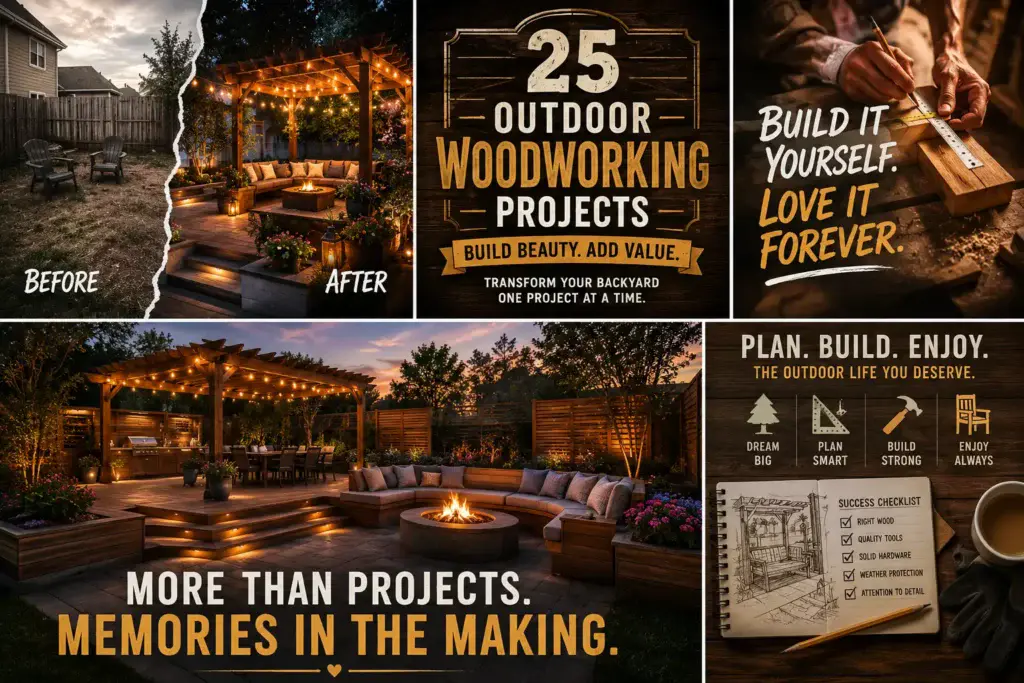
Choosing the right species from the beginning saves maintenance, extends lifespan, and protects the time you’ve invested in every cut and assembly.
Cedar
Ask experienced outdoor woodworkers to recommend one material, and cedar appears near the top of almost every list.
Its natural oils help resist decay, insects, and moisture without requiring chemical treatment. It’s lightweight enough to work comfortably, machines cleanly with standard tools, and accepts stains or clear finishes beautifully.
From pergolas and planter boxes to benches and privacy screens, cedar remains one of the most dependable all-around choices for backyard woodworking.
Best for:
- Raised garden beds
- Outdoor furniture
- Pergolas
- Privacy screens
- Planter boxes
Redwood
Redwood combines durability with unmistakable character.
Its warm color and attractive grain make it especially popular for premium outdoor furniture and architectural garden features. Like cedar, it naturally resists insects and decay, making it well suited to changing weather conditions.
Although generally more expensive, many homeowners view redwood as a long-term investment in both beauty and longevity.
Best for:
- Garden structures
- Benches
- Decorative fencing
- Outdoor dining furniture
- Arbors
Pressure-Treated Pine
For larger structural projects where budget matters, pressure-treated pine remains one of the most practical choices available.
Modern treatment processes help protect the wood from rot, fungal decay, and insect damage, making it suitable for ground-contact applications and load-bearing structures.
Many decks, retaining walls, raised platforms, and framing systems rely on pressure-treated lumber as their structural foundation.
Allow the wood to dry properly before applying paint or stain to ensure the finish bonds effectively.
Best for:
- Deck framing
- Structural supports
- Raised platforms
- Garden retaining walls
- Utility projects
White Oak
When strength, durability, and timeless appearance matter most, white oak is difficult to beat.
Unlike many hardwoods, white oak contains a naturally closed grain structure that resists moisture remarkably well. That characteristic has made it a trusted material for everything from outdoor furniture to boatbuilding for generations.
Its weight and density demand sharper tools and a bit more patience during construction, but the payoff is furniture that feels substantial, ages gracefully, and can last for decades with proper care.
If you’re building a dining table, bench, or statement piece designed to become a permanent part of your backyard, white oak is well worth considering.
Best for:
- Outdoor dining tables
- Premium benches
- Coffee tables
- High-end patio furniture
- Heirloom woodworking projects
Essential Hardware and Weatherproofing
Beautiful joinery alone won’t protect an outdoor project from years of changing weather.
Rain finds its way into tiny gaps. Summer heat causes wood to expand. Winter moisture lingers longer than expected. The difference between a project that still looks great after ten years and one that begins deteriorating after two often comes down to the hardware and finishes you choose.
Whenever possible, use materials designed specifically for exterior environments.
Recommended Hardware
- Stainless steel screws
- Hot-dip galvanized fasteners
- Exterior-rated structural screws
- Corrosion-resistant brackets
- Weatherproof hinges
- Marine-grade bolts where additional strength is required
Recommended Finishes
- Exterior penetrating oil
- UV-resistant deck stain
- Marine spar varnish
- Exterior polyurethane formulated for outdoor use
- Water-repellent wood preservative
- End-grain wood sealer
Don’t overlook the details that aren’t immediately visible.
Elevate furniture slightly above the ground to reduce standing moisture. Leave small expansion gaps where appropriate, especially on tabletops and decking. Seal exposed end grain carefully, since it’s often the first place water begins to penetrate.
Routine maintenance doesn’t require much time, but it dramatically extends the life of every outdoor woodworking project you build.
Outdoor Project Planning Checklist
The excitement of starting a new project often makes it tempting to begin cutting lumber immediately.
Experienced woodworkers know the opposite approach usually produces better results.
Spending an extra hour planning can prevent days of frustration later.
Before You Build
Measure More Than Once
Walk the space with a tape measure.
Visualize traffic flow, seating, doors, pathways, and landscaping. A project that looks perfect on paper can feel oversized once it’s placed outdoors.
Think About Sun and Shade
Observe how sunlight moves across your backyard during the day.
That dining table may be ideal in spring but unbearably hot in midsummer if it’s exposed to direct afternoon sun.
Check Local Requirements
Larger structures such as pergolas, pavilions, decks, and covered patios may require permits or must comply with local setback regulations.
Confirm those requirements before purchasing materials.
Before You Buy Materials
- Purchase approximately 10–15% extra lumber to account for defects and mistakes.
- Inspect every board for twists, warping, large knots, and cracks.
- Allow lumber to acclimate before construction when appropriate.
- Choose exterior-grade hardware from the beginning rather than upgrading later.
During Construction
- Dry-fit major assemblies before fastening.
- Check for square frequently.
- Pre-drill where necessary to prevent splitting.
- Sand components before final assembly whenever possible.
- Test moving parts before applying finish.
Small corrections are easy early in the build. They become much more difficult after everything has been assembled.
Before Applying Finish
A finish protects far more than appearance.
Clean away dust thoroughly.
Apply finish evenly to every surface—not just those that remain visible after assembly.
Pay particular attention to end grain, joints, and hidden areas where moisture tends to collect.
Allow adequate curing time before exposing the project to rain or heavy use.
Common Mistakes That Shorten the Life of Outdoor Woodworking Projects
Most outdoor woodworking failures don’t happen because of poor craftsmanship.
They happen because small details are overlooked.
Avoid these common mistakes:
Using Indoor Hardware Outdoors
Standard screws and hinges corrode surprisingly quickly when exposed to moisture.
Exterior-rated hardware costs slightly more but dramatically improves longevity.
Ignoring Seasonal Wood Movement
Wood expands and contracts as humidity changes.
Building without allowing for natural movement can lead to cracking, splitting, warped tabletops, or loose joints.
Forgetting Drainage
Water should never be trapped against wood.
Provide drainage gaps where appropriate and avoid designs that create standing water.
Finishing Only the Visible Surfaces
Moisture doesn’t care which side of the board people can see.
Protect every face, edge, and end grain equally.
Placing Wood Directly on Soil
Constant ground contact dramatically accelerates decay.
Whenever possible, elevate furniture and structures slightly using feet, pavers, or appropriate foundations.
Skipping Regular Maintenance
Even naturally durable woods benefit from occasional cleaning and refinishing.
A small amount of annual maintenance prevents much larger repairs later.
Frequently Asked Questions
Which outdoor woodworking project gives the biggest return for the time invested?
If you’re looking for the sweet spot between effort and impact, a pergola is hard to beat. It instantly defines an outdoor living area, adds architectural character, and creates a natural focal point for patios, dining spaces, or lounge areas. For smaller budgets, raised garden beds and built-in benches deliver exceptional value with far less complexity.
I’m completely new to woodworking. Where should I start?
Start with projects that teach the fundamentals without overwhelming you.
Planter boxes, raised garden beds, storage boxes, and simple benches help you develop confidence with measuring, cutting, fastening, sanding, and finishing. Those skills carry directly into larger projects later.
Which type of wood holds up best outdoors?
There’s no single answer because each material serves a different purpose.
Cedar remains the favorite for many DIY builders because it’s naturally resistant to insects and moisture while being easy to work with. Redwood offers premium appearance and durability. Pressure-treated lumber is excellent for structural applications, and white oak excels when building heirloom-quality outdoor furniture.
Choosing the right material depends on your budget, design goals, and expected level of maintenance.
How long should outdoor woodworking projects last?
With quality lumber, corrosion-resistant hardware, thoughtful construction, and regular maintenance, many outdoor projects remain functional and attractive for 15 to 30 years—or even longer.
The lifespan often depends less on the wood species itself than on how well the project sheds water, resists UV exposure, and is cared for over time.
Is paint or stain the better choice?
If you love seeing natural wood grain, stain is usually the better option. It’s easier to refresh over the years and highlights the character of the lumber.
Paint creates a solid protective barrier and offers greater flexibility for matching a home’s exterior, but it typically requires more preparation when it’s time for maintenance.
The best finish is the one that matches both your design preferences and the amount of upkeep you’re comfortable performing.
Products / Tools / Resources
Whether you’re building your very first planter box or planning a full backyard transformation, having reliable tools and quality materials makes every project smoother and more enjoyable.
Essential Power Tools
- Circular saw
- Miter saw
- Cordless drill and impact driver
- Random orbital sander
- Jigsaw
- Router (for decorative edges and joinery)
Must-Have Hand Tools
- Tape measure
- Combination square
- Speed square
- Clamps in multiple sizes
- Chisels
- Utility knife
- Carpenter’s pencil
- Rubber mallet
- Block plane
Recommended Safety Equipment
- Safety glasses
- Hearing protection
- Dust mask or respirator
- Work gloves
- Knee pads
- Push sticks for table saw work
Outdoor Hardware
- Stainless steel deck screws
- Exterior structural screws
- Hot-dip galvanized bolts
- Heavy-duty outdoor hinges
- Weather-resistant brackets
- Exterior wood glue
Finishes and Wood Protection
- Exterior penetrating oil
- UV-resistant stain
- Marine spar varnish
- Exterior polyurethane
- Wood cleaner
- End-grain sealer
- Soft-bristle cleaning brush
Best Lumber Choices
- Cedar for general outdoor woodworking
- Redwood for premium landscaping projects
- Pressure-treated pine for structural builds
- White oak for heirloom-quality furniture
Helpful Resources for Your Next Project
As you continue improving your skills, consider creating a personal woodworking library that includes detailed furniture plans, joinery references, finishing guides, deck-building tutorials, and outdoor design inspiration. Pair those resources with a simple project journal where you can record dimensions, lumber choices, finish schedules, and lessons learned.
Over time, that collection becomes just as valuable as the tools in your workshop, making every future build more efficient, more enjoyable, and more successful than the last.