
Snippet
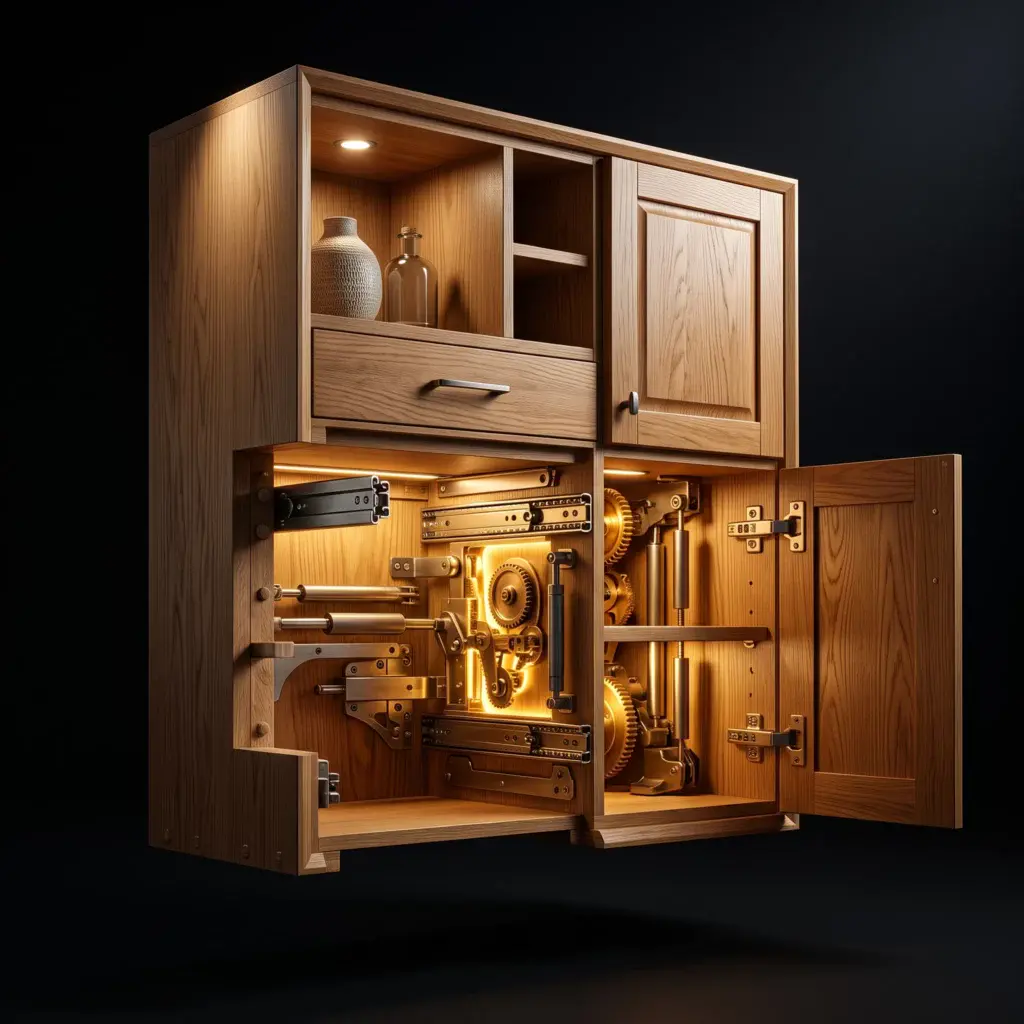
Beautiful cabinets begin with quality woodworking, but they’re remembered for how they feel. A door that closes with a whisper. A drawer that glides effortlessly under a heavy load. A handle that feels perfectly balanced every time you reach for it. Those small moments don’t happen by chance—they’re created by choosing the right cabinet hardware. This guide explores everything from hinges and drawer slides to knobs, pulls, shelf supports, and hidden hardware, helping you build cabinets that look exceptional and perform just as beautifully for decades.
Table of Contents
- Why Cabinet Hardware Is the Hidden Foundation of Great Cabinetry
- Every Type of Cabinet Hardware Explained
- Choosing the Right Cabinet Hinges for Every Project
- Drawer Slides and Storage Hardware That Make Cabinets Better
- Cabinet Knobs, Pulls, Finishes, and Professional Installation Tips
- How to Buy Cabinet Hardware Like an Experienced Cabinet Maker
- Frequently Asked Questions (FAQ)
- Bonus: Products, Tools & Resources for Building Better Cabinets
Why Cabinet Hardware Is the Hidden Foundation of Great Cabinetry
It’s easy to fall in love with beautiful wood.
The sweeping grain of walnut. The warm glow of maple. The timeless character of white oak.
Most woodworkers naturally focus on those details first, and understandably so. They’re the parts everyone notices.
But after the excitement of the build fades and the finish has fully cured, something else quietly takes over.
The hardware.
Every cabinet is judged through movement long before it’s admired for craftsmanship.
Open a drawer.
Close a door.
Reach for a handle.
Those simple actions tell people more about the quality of a cabinet than almost anything else.
A perfectly fitted cabinet can lose its charm remarkably fast if the hinges squeak, the drawer sticks halfway open, or the handles loosen after a few months. On the other hand, even a relatively simple cabinet can feel surprisingly luxurious when every moving part operates with confidence and precision.
That’s why experienced cabinet makers think about hardware much earlier than most beginners expect.
Recommended reading: Garage Storage Cabinet Woodworking Plans: Build a Custom Cabinet System That Finally Organizes Your Garage
Hardware Isn’t Decoration—It’s Engineering
Cabinet hardware often gets treated like the finishing touch.
In reality, it’s part of the cabinet’s structural design.
Long before the first sheet of plywood is cut or the first board passes through the table saw, professionals are already making decisions about:
- Door overlays
- Hinge styles
- Drawer slide systems
- Pull placement
- Shelf support locations
- Opening clearances
Those decisions influence measurements, joinery, and even the dimensions of the cabinet itself.
Waiting until the end to choose hardware usually creates unnecessary compromises.
Planning around it creates furniture that feels intentional from every angle.
Recommended reading: 25 Best Woodworking Hardware Products Every Serious Woodworker Should Own (Ranked by Performance)
What Counts as Cabinet Hardware?
Cabinet hardware includes every component that allows a cabinet to function smoothly, safely, and efficiently.
The most common categories include:
- Cabinet hinges
- Drawer slides
- Cabinet knobs
- Cabinet pulls
- Shelf pins and shelf supports
- Magnetic catches
- Touch latches
- Soft-close mechanisms
- Lift-up door hardware
- Corner cabinet systems
- Cabinet leveling feet
- Interior storage accessories
Some pieces are visible every day.
Others remain hidden for the entire life of the cabinet.
Ironically, the parts you never see are often the ones that matter most.
Why Better Hardware Pays for Itself
Quality hardware rarely feels inexpensive when you’re standing in the aisle comparing prices.
But that perspective changes once the cabinets have been in use for a few years.
Cheap hinges eventually sag.
Low-quality drawer slides begin to bind.
Decorative finishes wear away.
Loose handles need constant tightening.
Replacing hardware after cabinets are installed is far more time-consuming than selecting better components from the beginning.
Professional cabinet shops understand this well.
They don’t buy hardware because it’s expensive.
They buy it because replacing it later costs far more—in both time and frustration.
The Evolution of Modern Cabinet Hardware
Cabinet hardware has come a long way.
The hardware found in today’s kitchens and workshops is dramatically different from what was available even twenty years ago.
Modern systems now include:
- Concealed European hinges
- Integrated soft-close dampers
- Push-to-open hardware
- Full-extension drawer runners
- Concealed undermount slides
- Clip-on hinge systems
- Lift-up cabinet mechanisms
- Adjustable shelf systems
Many of these innovations were once reserved for high-end custom cabinetry.
Today they’re available to hobbyists building cabinets in a home workshop.
That shift has raised expectations.
People no longer judge cabinets solely by appearance—they expect them to feel refined every time they’re used.
Learning to Think Like a Professional Cabinet Maker
One habit separates experienced builders from beginners more than almost anything else.
Professionals ask questions before they build.
Not after.
Questions like:
- How wide should this drawer be for the slide I’ve chosen?
- Will these doors clear nearby walls?
- Should this cabinet use inset or overlay hinges?
- Will these shelves need adjustable supports?
- How much weight will these drawers eventually carry?
Every answer shapes the project before construction even begins.
That kind of planning isn’t about perfection.
It’s about preventing problems before they ever appear.
Four Qualities Every Great Piece of Cabinet Hardware Shares
Although hardware comes in countless designs, the best products almost always share the same core characteristics.
Durability
Cabinet hardware should withstand years of opening, closing, adjusting, and carrying weight without losing performance.
Strong materials, quality bearings, and corrosion-resistant finishes all contribute to a longer working life.
Precision
Tiny manufacturing tolerances create smoother movement, tighter door gaps, and a noticeably more refined feel.
It’s one of those details people immediately notice—even if they can’t explain why.
Adjustability
Wood naturally expands and contracts with seasonal humidity.
Modern hardware allows you to make small corrections over time, keeping cabinet doors perfectly aligned without major repairs.
Consistency
Perhaps the most overlooked quality of all.
Great hardware feels the same every single time.
Every drawer opens with identical resistance.
Every door closes evenly.
Every pull feels secure in your hand.
That consistency creates a quiet confidence that’s impossible to fake.
It’s one of the defining characteristics of professionally built cabinetry.
In the next section, we’ll explore every major category of woodworking hardware for cabinets, explaining what each component does, where it’s used, and how each piece contributes to building cabinets that are as enjoyable to use as they are to look at.
Part 2: Every Type of Cabinet Hardware Explained
Walk into a well-built kitchen or workshop and you’ll probably notice the wood first.
The color.
The grain.
The craftsmanship.
What you won’t immediately notice is the quiet choreography happening every time a cabinet is used. Doors swing effortlessly into place. Drawers glide open without resistance. Shelves stay perfectly level under years of weight. Nothing rattles. Nothing binds. Nothing feels accidental.
That’s the work of quality cabinet hardware.
The best hardware almost disappears because it performs so naturally that you stop thinking about it altogether.
Understanding what each component does—and where it belongs—is one of the fastest ways to improve the quality of every cabinet you build.
Cabinet Hinges: The Silent Workhorses
No piece of cabinet hardware works harder than the hinge.
Every time a cabinet door opens, the hinges absorb the weight, guide the movement, and return the door to exactly the same position. They repeat that process thousands upon thousands of times throughout the cabinet’s life.
A well-made hinge should feel almost invisible.
It shouldn’t creak.
It shouldn’t wobble.
It shouldn’t require constant adjustment.
Instead, it should simply work.
Modern cabinet hinges come in several styles, each designed for a specific type of cabinet construction.
The most common include:
- Concealed European hinges
- Face frame hinges
- Frameless cabinet hinges
- Full overlay hinges
- Partial overlay hinges
- Inset hinges
- Soft-close hinges
- Self-closing hinges
- Decorative exposed hinges
- Corner cabinet hinges
Choosing the correct hinge is about far more than appearance. It affects installation, door alignment, opening angle, and long-term durability.
Drawer Slides: Where Quality Becomes Obvious
People rarely compliment drawer slides.
But they immediately notice bad ones.
A drawer that catches halfway, tilts under weight, or refuses to close smoothly makes an otherwise beautiful cabinet feel unfinished.
Premium drawer slides create the opposite experience.
They move with almost effortless precision, carrying heavy loads while remaining quiet and stable.
There are three primary styles worth understanding.
Side-Mount Drawer Slides
These have been trusted by cabinet makers for decades.
Mounted along each side of the drawer, they’re straightforward to install and offer dependable performance for many woodworking projects.
They’re especially popular for:
- Workshop cabinets
- Garage storage
- Utility furniture
- Shop-built organizers
Why woodworkers like them
- Affordable
- Strong
- Easy to replace
- Available in many lengths
- Good weight capacity
The trade-off is visibility. When the drawer opens, the slides can be seen along the sides.
For many projects, that’s a perfectly acceptable compromise.
Undermount Drawer Slides
Undermount slides are hidden beneath the drawer, leaving nothing visible when it’s open.
That single design decision changes the entire feel of a cabinet.
The drawer appears to float.
Movement feels more refined.
The craftsmanship takes center stage.
Most premium kitchens now rely on undermount systems because they combine elegance with exceptional performance.
They offer:
- Full-extension access
- Hidden hardware
- Soft-close operation
- Excellent stability
- Quiet movement
- Smooth action even under heavier loads
Once you’ve experienced quality undermount slides, it’s surprisingly difficult to go back to basic drawer systems.
Center-Mount Drawer Slides
Center-mounted slides occupy a unique place in woodworking.
They’re less common today but still appear in traditional furniture, writing desks, and lighter cabinetry.
Because they support the drawer from the center rather than both sides, they’re generally best suited for lighter loads.
They remain an excellent choice when preserving a traditional furniture style.
Heavy-Duty Drawer Hardware
Not every drawer stores silverware.
Some hold routers, drills, clamps, and boxes of screws.
Others support cast iron cookware or heavy pantry supplies.
Those situations demand hardware built for significantly greater loads.
Heavy-duty drawer slides are engineered to carry substantial weight without sacrificing smooth movement.
They’re commonly used in:
- Workshop cabinets
- Tool chests
- Garage storage
- Machinery cabinets
- Commercial workstations
Good heavy-duty slides don’t simply support more weight.
They continue operating smoothly year after year under demanding conditions.
Cabinet Knobs
Cabinet knobs may be small, but they influence how a cabinet feels every time it’s used.
They’re often associated with traditional furniture, yet they remain incredibly versatile.
You’ll commonly see them on:
- Cabinet doors
- Bathroom vanities
- Accent furniture
- Small drawers
- Display cabinets
Because knobs require only a single mounting hole, replacing them later is simple if your style evolves.
That flexibility makes them especially appealing for homeowners who enjoy updating interiors over time.
Cabinet Pulls
Pulls offer more surface area for your hand and provide better leverage for larger drawers.
They’re practical.
Comfortable.
And increasingly popular in both modern and transitional cabinetry.
Common styles include:
- Bar pulls
- Cup pulls
- Edge pulls
- Finger pulls
- Arch pulls
- Recessed pulls
- Appliance pulls
The right pull should feel natural in your hand while complementing the overall proportions of the cabinet.
It’s one of those details that subtly shapes the daily experience of using the furniture.
Shelf Supports
Cabinet interiors deserve just as much attention as the exterior.
Shelf supports allow shelving to adapt as storage needs change over time.
Popular options include:
- Metal shelf pins
- Locking shelf supports
- Brass shelf pins
- Heavy-duty shelf brackets
- Plastic support clips
Though inexpensive, these small pieces carry considerable responsibility.
Quality shelf supports prevent sagging, keep shelves level, and make cabinets far more versatile.
Magnetic Catches
A cabinet door doesn’t always need a latch.
Sometimes all it needs is a gentle, reliable hold.
Magnetic catches accomplish exactly that.
They’re commonly installed on:
- Utility cabinets
- Workshop storage
- Entertainment centers
- Laundry room cabinets
- Decorative furniture
Despite their simplicity, quality magnetic catches create a satisfying, secure closing action without adding unnecessary complexity.
Touch Latches
Some cabinet designs intentionally eliminate visible hardware altogether.
Touch latches make that possible.
Instead of pulling a handle, you simply press the cabinet door.
The latch releases.
The door opens.
The result is a clean, uninterrupted appearance that’s especially popular in contemporary interiors.
Touch latches are frequently used for:
- Modern kitchens
- Minimalist furniture
- Hidden storage compartments
- Media centers
- Custom built-ins
When paired with concealed hinges, they create an elegant, seamless look.
Soft-Close Systems
If you’ve ever heard a cabinet door slam repeatedly throughout the day, you’ll immediately appreciate soft-close hardware.
A small hydraulic mechanism slows the final movement of the door or drawer, bringing it gently into position.
The benefits extend beyond quiet operation.
Soft-close hardware also helps:
- Reduce long-term wear
- Protect cabinet joints
- Improve safety
- Extend hardware life
- Create a premium user experience
It’s one of those upgrades that seems minor until you’ve lived with it.
After that, it’s hard to imagine building cabinets without it.
Lift Systems for Upper Cabinets
Traditional cabinet doors swing outward.
Lift systems move upward instead.
They’re especially useful where space is limited or where upward access feels more natural.
These mechanisms are commonly found in:
- Wall cabinets
- Coffee stations
- Home offices
- Entertainment units
- Modern kitchens
Many remain open without support, allowing you to work comfortably without holding the door.
Corner Cabinet Hardware
Corner cabinets have challenged cabinet makers for generations.
Without thoughtful hardware, much of that space becomes awkward or inaccessible.
Fortunately, modern solutions make those difficult corners surprisingly useful.
Popular options include:
- Lazy Susan systems
- Swing-out shelves
- Pull-out corner organizers
- Blind corner storage systems
- LeMans shelving
These systems transform forgotten corners into practical storage that’s easy to access.
Interior Cabinet Accessories
Today’s woodworking hardware extends well beyond hinges and drawer slides.
Purpose-built accessories allow cabinets to work harder while remaining organized.
Some of the most useful additions include:
- Pull-out pantry shelves
- Spice rack organizers
- Waste and recycling systems
- Vertical tray dividers
- Appliance lifts
- Cutlery organizers
- Wire basket drawers
- Pull-out towel racks
- Hidden charging stations
These aren’t simply conveniences.
They’re thoughtful improvements that make cabinets feel tailored to the way people actually live.
Think in Systems, Not Individual Parts
One of the biggest shifts in mindset comes when you stop viewing cabinet hardware as separate pieces.
Professionals think in complete systems.
A well-designed kitchen might combine:
- Concealed soft-close hinges
- Full-extension undermount drawer slides
- Matching cabinet pulls
- Adjustable shelf supports
- Precision mounting plates
- Hidden organizers
- Quality installation jigs
Every component complements the next.
Nothing feels out of place.
That harmony is difficult to describe, but easy to recognize the moment you open the first drawer.
And that’s exactly what separates ordinary cabinetry from work that feels truly custom-built.
In the next part, we’ll take a closer look at cabinet hinges—the single most important moving component in any cabinet—and explore how choosing the right hinge can dramatically improve appearance, durability, and everyday performance.
Part 3: Choosing the Right Cabinet Hinges for Every Project
Ask a professional cabinet maker what separates an average cabinet from one that still feels exceptional twenty years later, and chances are the conversation won’t begin with hardwood species or expensive finishes.
It will begin with the hinges.
Cabinet hinges rarely attract attention when they’re doing their job well. They simply disappear into the background, quietly supporting every opening and closing movement without complaint. That’s exactly how they should behave.
When hinges are poorly chosen, however, everything changes.
Doors drift out of alignment.
Corners begin rubbing.
Gaps become uneven.
A satisfying, solid cabinet suddenly feels frustrating to use.
The truth is simple: every cabinet door depends on its hinges more than any other moving part.
What a Cabinet Hinge Actually Does
Most people think a hinge has one job—to let a door swing open.
In reality, it does much more.
A quality cabinet hinge must:
- Support the full weight of the door
- Keep the door perfectly aligned
- Allow smooth movement
- Resist years of repeated use
- Compensate for minor wood movement
- Close consistently every time
Modern hinges accomplish all of this while remaining almost completely hidden from view.
It’s remarkable engineering packed into a surprisingly small piece of hardware.
Understanding the Parts of a Modern Cabinet Hinge
Before choosing a hinge, it’s helpful to understand the components that make it work.
Most concealed hinges include:
- Hinge cup
- Hinge arm
- Mounting plate
- Pivot mechanism
- Adjustment screws
- Clip-on attachment system
- Integrated soft-close damper on compatible models
Each part contributes to the hinge’s strength, precision, and adjustability.
One of the biggest advantages of modern systems is that small alignment corrections can usually be made with nothing more than a screwdriver.
Concealed European Hinges
If there’s one hinge style that has transformed cabinet making over the past few decades, it’s the concealed European hinge.
Unlike traditional hinges that remain visible on the outside of the cabinet, these are completely hidden when the door is closed.
That clean appearance is only part of the story.
Woodworkers appreciate them because they’re remarkably adjustable, reliable, and easy to fine-tune.
Their biggest advantages include:
- Hidden installation
- Three-way adjustment
- Smooth operation
- Soft-close compatibility
- Long service life
- Clean, modern appearance
They’re equally at home in kitchens, workshops, bathrooms, home offices, and custom furniture.
For many cabinet makers, they’re simply the default choice.
Face Frame Hinges
Face frame cabinets continue to be popular because of their strength and traditional appearance.
In this style of construction, a wooden frame surrounds the front of the cabinet box.
That frame requires hinges designed specifically for its dimensions.
Common options include:
- Compact concealed hinges
- Semi-concealed hinges
- Decorative exposed hinges
- Traditional face frame hinges
Using hardware intended for face frame construction makes installation significantly easier while improving long-term alignment.
Frameless Cabinet Hinges
Frameless cabinets eliminate the front frame altogether.
Instead, the doors attach directly to the cabinet box.
This style has become increasingly common because it offers:
- Cleaner lines
- More interior storage
- Greater adjustability
- Simpler hardware installation
- Contemporary aesthetics
Because the cabinet relies heavily on precise hardware, choosing high-quality hinges becomes even more important.
Fortunately, modern concealed hinge systems were largely developed with frameless cabinetry in mind.
Learn more: The Complete Frameless Cabinet Woodworking Guide: Build Modern Cabinets That Look Professionally Made
Overlay Hinges Explained
The word overlay describes how much of the cabinet opening is covered by the door.
Choosing the wrong overlay hinge can lead to uneven gaps and installation headaches, so understanding the differences is essential.
Full Overlay Hinges
With full overlay construction, the doors cover nearly the entire front edge of the cabinet.
This creates:
- Clean lines
- Minimal visible cabinet box
- Contemporary styling
- Efficient use of space
It’s the look many homeowners associate with modern custom kitchens.
Partial Overlay Hinges
Partial overlay leaves part of the cabinet frame visible.
You’ll often find this style on:
- Traditional kitchens
- Utility cabinets
- Older cabinetry
- Classic furniture
It’s a timeless look that continues to suit many woodworking projects.
Half Overlay Hinges
When two cabinet doors share a center partition, half overlay hinges allow both doors to function while maintaining even spacing between them.
They’re a specialized solution but an important one for many cabinet layouts.
Inset Hinges
Inset cabinetry represents one of the highest levels of woodworking precision.
Instead of overlapping the cabinet, the door sits perfectly inside the opening.
That means every gap is visible.
Every reveal matters.
Every measurement counts.
Inset hinges are designed to provide:
- Precise positioning
- Consistent spacing
- Reliable long-term alignment
- Smooth movement
Although inset construction demands greater accuracy during the build, the finished result has an elegance that’s difficult to match.
Soft-Close Hinges
Few upgrades change the everyday feel of a cabinet as dramatically as soft-close hinges.
As the door approaches the cabinet, a built-in hydraulic mechanism gently slows the final movement.
Instead of slamming shut, the door settles quietly into place.
The benefits go beyond comfort.
Soft-close hinges also:
- Reduce wear on cabinet joints
- Protect the finish
- Extend hinge life
- Minimize noise
- Improve safety in busy households
It’s a feature that quickly becomes something you stop noticing—until you use a cabinet without it.
Self-Closing Hinges
Self-closing hinges use spring tension to pull the door completely shut after it reaches a certain point.
They’re different from soft-close hinges, although many modern products combine both technologies.
Together they create doors that close automatically and do so quietly.
It’s a small luxury that makes cabinets feel more refined every single day.
Wide-Angle Hinges
Not every cabinet benefits from a standard opening angle.
Certain layouts require doors to swing much farther.
Wide-angle hinges commonly open to:
- 120 degrees
- 135 degrees
- 155 degrees
- 170 degrees
These larger opening angles improve access to:
- Pantry cabinets
- Corner storage
- Appliance garages
- Deep utility cabinets
When full access matters, the extra opening range makes a noticeable difference.
Specialty Hinges for Unique Projects
Some cabinet designs call for hardware beyond the standard options.
Specialty hinges solve these unique challenges.
Popular examples include:
Pivot Hinges
Ideal for hidden doors and custom furniture designs.
Glass Door Hinges
Designed specifically for display cabinets and glass-front cabinetry.
Corner Cabinet Hinges
Allow angled cabinet doors to move smoothly without binding.
Lift-Up Door Hinges
Perfect for upper cabinets where doors open vertically instead of swinging outward.
Blind Corner Hinges
Engineered for cabinets with limited clearance where conventional hinges won’t work.
These specialized solutions expand what’s possible in cabinet design while maintaining smooth, dependable operation.
The Power of Three-Way Adjustment
One reason concealed hinges have become the industry standard is their ability to be adjusted after installation.
Most quality hinges offer movement in three directions.
Side-to-Side
Fine-tunes the gap between adjacent cabinet doors.
Height
Raises or lowers the entire door for perfect alignment.
Depth
Moves the door closer to or farther from the cabinet box.
These adjustments make it possible to achieve the crisp, even reveals associated with professionally built cabinetry—even if small corrections are needed after installation.
Choosing the Right Hinge for Your Cabinet
Every project is different, which means there isn’t a single hinge that’s best for every situation.
Before buying hardware, think about:
- Cabinet construction
- Door style
- Overlay or inset design
- Door thickness
- Door weight
- Desired opening angle
- Soft-close preference
- Frequency of use
Answering these questions early prevents costly changes later and makes installation much more straightforward.
Mistakes That Can Shorten the Life of Your Cabinets
Many cabinet problems can be traced back to simple hinge mistakes.
Some of the most common include:
- Choosing the wrong overlay hinge
- Ignoring weight limits
- Drilling hinge cups too deep
- Installing hinges without a drilling jig
- Using poor-quality screws
- Uneven hinge spacing
- Mixing incompatible hardware systems
- Forgetting to allow for door clearance
Fortunately, every one of these mistakes is easy to avoid with careful planning.
A few extra minutes during the design stage often save hours of adjustment once the cabinet is assembled.
The doors may be the first thing you notice on a cabinet, but drawers are what most people interact with every day. In the next section, we’ll explore drawer slides, hidden runners, pull-out storage systems, and the hardware that transforms ordinary cabinets into storage solutions that feel effortless to use.
Part 4: Drawer Slides and Storage Hardware That Make Cabinets Better
The first time you open a truly well-built drawer, something feels different.
There’s no hesitation.
No scraping.
No wobble.
The drawer glides forward with quiet confidence, stops exactly where it should, and reveals every item inside without making you reach blindly into the back.
It’s a small experience.
Yet it’s one of the clearest signs of exceptional cabinet craftsmanship.
People often admire cabinet doors because they’re visible. But drawers are where quality reveals itself day after day. Whether you’re preparing dinner, organizing hand tools, or storing office supplies, the hardware hidden beneath each drawer quietly determines how enjoyable the cabinet is to use.
That’s why professional cabinet makers devote so much attention to drawer systems long before assembly begins.
Why Drawer Slides Deserve More Attention
Drawer slides rarely receive the same attention as hardwoods or finishes.
They should.
Every drawer must support weight while moving smoothly through thousands of opening and closing cycles. It has to remain level, resist twisting, and perform consistently regardless of whether it holds socks or socket wrenches.
Good drawer slides create confidence.
Poor ones create frustration.
Once you’ve experienced both, the difference becomes impossible to ignore.
Understanding the Main Types of Drawer Slides
Although there are dozens of specialized drawer systems available today, most woodworking projects rely on three primary slide designs.
Knowing how each one works makes choosing the right hardware much easier.
Side-Mount Drawer Slides
Side-mount slides remain one of the most widely used options in woodworking.
Installed along both sides of the drawer, they’re durable, dependable, and relatively simple to fit.
Because of their straightforward design, they’re often chosen for:
- Workshop cabinets
- Garage storage
- Utility furniture
- Office cabinets
- General household storage
Why they’re so popular
- Excellent value
- Wide availability
- Reliable strength
- Simple installation
- Easy replacement if necessary
The only obvious compromise is visibility. When the drawer is open, the slides can be seen along each side.
For many projects, especially workshop furniture, that’s a perfectly reasonable trade-off.
Undermount Drawer Slides
Open a premium kitchen drawer and you probably won’t see the hardware at all.
That’s because it’s hidden underneath.
Undermount drawer slides have become the benchmark for high-end cabinetry because they combine elegant appearance with outstanding performance.
With nothing visible inside the cabinet, the craftsmanship of the drawer itself becomes the focal point.
Beyond appearance, they also deliver exceptional functionality.
Benefits include
- Hidden installation
- Full-extension access
- Soft-close capability
- Excellent drawer stability
- Smooth, quiet movement
- Clean interior appearance
For anyone building custom cabinetry, undermount slides are often one of the most satisfying upgrades available.
Center-Mount Drawer Slides
Center-mounted slides occupy a smaller niche today, but they still serve an important purpose.
Installed beneath the middle of the drawer, they’re commonly used in:
- Writing desks
- Antique reproductions
- Decorative furniture
- Small storage cabinets
Because they’re designed for lighter loads, they’re generally less suitable for kitchens or workshops where drawers regularly carry heavier items.
Still, for traditional furniture, they remain an elegant solution.
Heavy-Duty Drawer Slides
Some drawers have an easy life.
Others carry thirty kilograms of power tools.
Those projects demand hardware built for serious work.
Heavy-duty drawer slides are engineered to support significantly greater weight while maintaining smooth operation.
They’re commonly found in:
- Tool cabinets
- Machinery storage
- Garage workstations
- Workshop benches
- Commercial cabinetry
High-quality heavy-duty slides don’t simply resist weight.
They continue moving smoothly under loads that would overwhelm standard drawer systems.
Full-Extension vs. Three-Quarter Extension
Not every drawer opens the same distance.
That difference has a surprisingly large impact on usability.
Three-Quarter Extension
These slides leave part of the drawer inside the cabinet when fully opened.
They’re perfectly suitable for many everyday applications.
Full-Extension Slides
These allow the drawer to travel completely beyond the cabinet opening.
The advantages become obvious immediately.
You can:
- Reach items at the back effortlessly
- Organize storage more efficiently
- Improve visibility
- Maximize usable drawer space
It’s one of those upgrades people quickly stop thinking about because it simply feels natural.
Soft-Close Drawer Systems
Anyone who’s lived with soft-close drawers knows how quickly they become something you expect.
Instead of slamming shut, the drawer gently slows during the final few centimeters before closing silently.
The mechanism feels effortless, but the engineering behind it is impressive.
Soft-close drawer slides help:
- Reduce wear on cabinet boxes
- Protect drawer fronts
- Minimize noise
- Improve safety
- Extend hardware lifespan
It’s a feature that quietly improves every interaction with the cabinet.
Push-to-Open Drawer Systems
Modern cabinetry often embraces simplicity.
No visible handles.
No pulls.
No knobs.
Push-to-open hardware makes that possible.
A gentle press on the drawer front releases the mechanism, allowing the drawer to glide outward.
These systems are especially popular in:
- Contemporary kitchens
- Minimalist interiors
- Home offices
- Entertainment units
- Custom built-in furniture
Combined with concealed hinges, they create uninterrupted cabinet surfaces that feel clean and remarkably modern.
Choosing the Right Weight Capacity
One mistake beginners frequently make is assuming all drawer slides support similar loads.
They don’t.
Selecting the proper weight rating is essential.
Light-Duty Drawers
Suitable for:
- Clothing
- Office supplies
- Bathroom storage
- Small household items
Medium-Duty Drawers
Ideal for:
- Kitchen utensils
- Pantry storage
- Pots and pans
- Craft materials
Heavy-Duty Drawers
Designed for:
- Power tools
- Workshop equipment
- Hardware collections
- Automotive tools
- Commercial storage
It’s almost always wise to choose slightly more capacity than you think you’ll need.
People tend to accumulate more tools—and more kitchen gadgets—than they originally planned.
Cabinet Storage Hardware That Maximizes Space
Today’s cabinet hardware extends well beyond hinges and drawer slides.
Purpose-built storage accessories can transform the way a cabinet functions without increasing its size.
Some of the most practical additions include:
Pull-Out Pantry Systems
Instead of reaching into deep shelves, the entire pantry glides toward you.
Everything stays visible and within easy reach.
Pull-Out Waste and Recycling Centers
A practical way to keep bins concealed while making them easy to access.
They’re particularly useful in busy kitchens.
Spice Rack Pull-Outs
Narrow cabinets become surprisingly useful when fitted with slim vertical organizers.
Every jar remains visible.
Nothing gets forgotten at the back.
Tray Dividers
Perfect for organizing:
- Baking trays
- Cutting boards
- Serving platters
- Cooling racks
Vertical storage prevents clutter and makes retrieval effortless.
Pull-Out Shelves
Deep base cabinets often waste valuable storage because items disappear into the back.
Pull-out shelves solve that problem by bringing everything forward.
They’re especially appreciated in lower cabinets where bending and reaching can become uncomfortable.
Making Corner Cabinets Actually Useful
Corner cabinets have frustrated homeowners for decades.
Without thoughtful hardware, they often become storage for forgotten items.
Fortunately, modern cabinet systems have changed that completely.
Popular solutions include:
- Lazy Susan systems
- Swing-out shelves
- Pull-and-pivot organizers
- Blind corner pull-outs
- LeMans storage systems
These mechanisms recover space that would otherwise remain difficult to access.
Instead of becoming dead storage, the cabinet becomes genuinely useful.
Design Around the Hardware—Not the Other Way Around
One of the clearest differences between amateur builders and experienced cabinet makers appears during the planning stage.
Professionals select the hardware first.
Then they design the cabinet around it.
That decision affects:
- Drawer dimensions
- Cabinet depth
- Material thickness
- Installation clearances
- Mounting locations
- Front spacing
- Overall cabinet layout
This approach produces cleaner installations and far fewer surprises during assembly.
Installation Details That Matter
Premium hardware can only perform as well as it’s installed.
Fortunately, a few careful habits make a significant difference.
For consistently smooth drawer operation:
- Measure every opening carefully.
- Keep drawer slides perfectly parallel.
- Check measurements before drilling.
- Follow the manufacturer’s clearance recommendations.
- Test movement before attaching drawer fronts.
- Tighten screws evenly without overtightening.
- Make small adjustments immediately rather than waiting until the project is complete.
Those extra moments spent checking alignment often determine whether a drawer feels merely acceptable—or truly exceptional.
How to Recognize Quality Drawer Hardware
You don’t need decades of experience to identify well-made hardware.
Look for features such as:
- Smooth, consistent movement
- Precision bearings or concealed runners
- Thick steel construction
- Durable corrosion-resistant finishes
- Reliable soft-close mechanisms
- High cycle-life ratings
- Easy adjustment after installation
- Solid, reassuring operation
Quality drawer hardware rarely draws attention to itself.
Instead, it quietly does its job every single day, making every interaction with your cabinets feel effortless.
In the next part, we’ll focus on the details people see—and touch—the most: cabinet knobs, pulls, hardware finishes, materials, sizing, and the professional installation techniques that bring the entire project together with precision and style.
Part 5: Cabinet Knobs, Pulls, Finishes, and Professional Installation Tips
The last screw has been driven.
The cabinet doors are hanging perfectly.
The drawers slide in and out with barely a sound.
At this stage, it’s tempting to think the project is finished.
Then you install the hardware.
Almost instantly, the cabinet takes on a personality.
The right knobs or pulls don’t simply complete the look—they change the way people interact with the furniture. Every cabinet is opened by hand. Every drawer begins with a grip. Those tiny moments happen dozens of times each day, making cabinet hardware one of the few parts of a woodworking project that people constantly see and physically experience.
Done well, it feels effortless.
Done poorly, it never quite feels right.
Knobs or Pulls? Start with How the Cabinet Will Be Used
One of the most common questions woodworkers ask is whether cabinets should have knobs, pulls, or both.
There isn’t a universal answer.
The best choice depends on the cabinet itself, the style you’re trying to create, and how often that cabinet will be used.
Instead of asking which is better, ask which feels more natural for the project in front of you.
Cabinet Knobs
Cabinet knobs have remained popular for generations because they’re simple, practical, and timeless.
Mounted with a single screw, they’re easy to install and just as easy to replace years later if your style changes.
They’re especially well suited for:
- Cabinet doors
- Bathroom vanities
- Accent furniture
- Small drawers
- Display cabinets
- Traditional kitchens
Why many woodworkers still prefer knobs
- Clean appearance
- Simple installation
- Easy future replacement
- Wide variety of styles
- Budget-friendly
A well-chosen knob rarely dominates the design.
Instead, it quietly complements the wood while remaining comfortable to use.
Cabinet Pulls
Pulls provide a larger gripping surface, making them particularly comfortable on larger drawers and heavier cabinet doors.
They’re also one of the defining features of many modern kitchens.
Common styles include:
- Straight bar pulls
- Cup pulls
- Finger pulls
- Edge pulls
- Recessed pulls
- Arch pulls
- Appliance pulls
Because they distribute force across two mounting points, pulls often feel more secure when opening wider drawers loaded with heavy items.
They’re practical, durable, and increasingly popular across many cabinet styles.
Mixing Knobs and Pulls
Many professional cabinet makers don’t choose one or the other.
They combine both.
A common approach is:
- Knobs on cabinet doors
- Pulls on drawers
This creates visual variety while matching the hardware to the way each cabinet is used.
Large drawers benefit from the leverage of a pull.
Smaller cabinet doors often feel perfectly balanced with a single knob.
It’s a subtle design decision that also improves functionality.
Choosing a Hardware Style That Matches Your Cabinets
Hardware should support the cabinet’s design rather than compete with it.
Think of it as the finishing detail that completes the overall story.
Traditional Style
Traditional hardware often features elegant curves and decorative details.
It pairs beautifully with:
- Raised-panel doors
- Cherry
- Maple
- Oak
- Rich furniture finishes
The overall effect feels timeless rather than trendy.
Shaker Style
Shaker cabinets are known for clean lines and understated craftsmanship.
Simple hardware works best.
Popular choices include:
- Round knobs
- Slim bar pulls
- Matte black finishes
- Brushed nickel
- Satin brass
The goal is balance rather than decoration.
Modern Style
Modern cabinetry embraces simplicity.
Long, straight pulls and minimal hardware create uninterrupted visual lines that emphasize the cabinet itself.
Many contemporary kitchens also incorporate:
- Edge pulls
- Finger pulls
- Push-to-open systems
- Hidden hardware
Less becomes more.
Farmhouse and Rustic Style
Rustic cabinetry welcomes texture and character.
Popular options include:
- Oil-rubbed bronze
- Wrought iron
- Hammered finishes
- Aged brass
- Hand-forged hardware
These finishes complement reclaimed lumber, knotty woods, and traditional joinery exceptionally well.
More information: Woodworking Cabinet Joinery Techniques: 15 Strong, Beautiful Joints Every Cabinet Builder Should Master
Industrial Style
Industrial-inspired cabinetry often combines wood with metal accents.
Popular finishes include:
- Matte black
- Brushed stainless steel
- Gunmetal gray
- Raw steel finishes
The result feels bold, functional, and durable without appearing overly decorative.
Selecting the Right Hardware Finish
Finish is about more than color.
It influences maintenance, durability, and how gracefully the cabinet ages over time.
Some finishes develop character.
Others remain almost unchanged for decades.
Choosing one depends as much on lifestyle as appearance.
Matte Black
Few finishes have become as popular in recent years.
Matte black creates dramatic contrast while remaining surprisingly versatile.
It works beautifully with:
- White cabinetry
- Natural oak
- Walnut
- Painted cabinets
- Contemporary interiors
Its understated appearance helps the wood remain the visual focus.
Brushed Nickel
Brushed nickel has earned its popularity through practicality.
Unlike highly polished finishes, it disguises fingerprints and everyday wear remarkably well.
It’s an excellent choice for:
- Family kitchens
- Bathrooms
- Laundry rooms
- Frequently used cabinetry
Its neutral tone also blends comfortably with many different wood species.
Stainless Steel
When moisture is a concern, stainless steel is difficult to beat.
Its resistance to corrosion makes it ideal for:
- Bathrooms
- Outdoor kitchens
- Utility rooms
- Commercial environments
It combines durability with a clean, modern appearance.
Brass
Brass has enjoyed a remarkable revival.
Today’s brushed and satin brass finishes feel warm and sophisticated rather than overly ornate.
They’re especially striking when paired with:
- Walnut
- White oak
- Deep green cabinetry
- Navy blue finishes
- Rich natural hardwoods
The contrast creates a sense of quiet luxury without overwhelming the design.
Oil-Rubbed Bronze
Oil-rubbed bronze continues to be a favorite for traditional and rustic cabinetry.
Its darker tones add warmth while naturally complementing handcrafted furniture and country-style kitchens.
Choosing Hardware Materials
The finish catches your eye.
The material determines how well the hardware survives years of daily use.
Solid Brass
Highly resistant to corrosion and exceptionally durable.
Solid brass remains one of the best choices for premium cabinetry designed to last for decades.
Stainless Steel
Strong, dependable, and naturally resistant to rust.
A practical option for busy homes where durability matters as much as appearance.
Steel
Most quality hinges and drawer slides rely on heavy-gauge steel because of its strength.
When protected by a quality finish, steel hardware delivers outstanding long-term performance.
Zinc Alloy
Widely used in decorative cabinet hardware.
It allows manufacturers to produce detailed shapes while keeping costs reasonable.
Quality zinc alloy hardware performs surprisingly well for many residential applications.
Aluminum
Lightweight, corrosion resistant, and frequently used in modern interiors where clean lines and minimal weight are priorities.
Wood
Wooden knobs and pulls create an unmistakably handcrafted look.
Popular species include:
- Oak
- Maple
- Walnut
- Cherry
- Beech
They feel warm to the touch and blend naturally into handcrafted furniture.
Getting the Size Right
The size of your hardware has a greater impact than many people expect.
Handles that are too small can disappear visually and feel awkward to use.
Handles that are too large may dominate the cabinet instead of complementing it.
Before making a decision, consider:
- Drawer width
- Cabinet door height
- Overall proportions
- Frequency of use
- Ergonomics
Larger drawers generally benefit from longer pulls because they offer better leverage while creating stronger visual balance.
Consistency Creates a Custom Look
Walk through a professionally designed kitchen and you’ll notice something subtle.
Everything feels connected.
Not because every cabinet uses identical hardware, but because every choice belongs together.
Consistency can come from:
- Matching finishes
- Similar shapes
- Equal installation heights
- Uniform spacing
- Repeating design details
That quiet consistency gives custom cabinetry its polished, intentional appearance.
Professional Installation Tips
Even the finest cabinet hardware can’t compensate for inaccurate installation.
Small measuring errors quickly become obvious once multiple doors and drawers are installed.
Professionals rely on a few simple habits that dramatically improve accuracy.
Use a Cabinet Hardware Jig
A cabinet hardware jig removes much of the guesswork.
It helps produce:
- Perfectly aligned holes
- Consistent spacing
- Faster installation
- Fewer mistakes
- Professional-looking results
If you’re building more than a single cabinet, it’s one of the smartest tools you can own.
Measure More Than Once
The old woodworking saying still holds true.
Measure twice.
Drill once.
Many experienced builders actually measure three times before making the first hole.
Repairing a misplaced handle is far more difficult than taking an extra minute to confirm the layout.
Use Self-Centering Drill Bits
These specialized bits automatically locate the center of mounting holes.
They reduce wandering and help screws seat perfectly, especially when installing hinges or hardware on hardwood cabinet doors.
It’s a small investment that noticeably improves accuracy.
Protect the Finished Surface
Applying painter’s tape before drilling helps reduce tear-out and protects delicate finishes from scratches.
After drilling, remove any dust or debris before fastening the hardware.
That extra care keeps everything sitting perfectly flush against the cabinet.
Small Details Shape the Entire Experience
Most visitors won’t ask what joinery you used.
They probably won’t notice whether the cabinet sides are three-quarter-inch plywood or solid hardwood.
But they’ll notice how the drawer opens.
How quietly the door closes.
How naturally the handle fits their hand.
Those are the moments that define quality.
They’re subtle.
They’re repeated every day.
And together, they transform a well-built cabinet into one that feels truly exceptional.
In the next part, we’ll shift from individual hardware components to the bigger picture—how experienced cabinet makers evaluate quality, spend their budget wisely, avoid expensive mistakes, and choose woodworking hardware for cabinets that continues performing beautifully for decades.
Part 6: How to Buy Cabinet Hardware Like an Experienced Cabinet Maker
Buying cabinet hardware is surprisingly easy.
Buying the right cabinet hardware is where experience begins to matter.
Walk into any woodworking supplier or browse an online catalog and you’ll find thousands of hinges, drawer slides, pulls, knobs, shelf supports, and specialty accessories. Many look almost identical in photographs. Some even advertise the same features.
Yet once they’re installed, the differences become obvious.
One drawer glides effortlessly.
Another develops play after a year.
One cabinet door stays perfectly aligned.
Another slowly drops until it rubs against the frame.
Those differences rarely happen by accident. They usually begin with the choices made before the hardware ever leaves the box.
Start by Thinking About Daily Life
The best cabinet makers don’t begin by asking, “Which hardware is the most popular?”
They ask something much more practical.
“How will this cabinet actually be used?”
That single question changes everything.
A bathroom vanity experiences different conditions than a workshop cabinet.
A display cabinet for collectibles has completely different demands than a kitchen pantry that’s opened twenty times a day.
Before buying anything, think about:
- How often will the cabinet be opened?
- Will children use it?
- How much weight will the drawers carry?
- Will moisture be an issue?
- Is quiet operation important?
- Does the cabinet need to last for decades?
The answers naturally point you toward the right hardware.
Match the Hardware to the Cabinet Construction
Cabinet hardware should never be chosen in isolation.
It needs to work with the way the cabinet itself is built.
Face Frame Cabinets
These often work best with:
- Compact concealed hinges
- Face frame mounting plates
- Decorative hinges for traditional designs
Because the face frame affects clearances, selecting compatible hardware simplifies installation considerably.
Frameless Cabinets
Frameless cabinets typically pair beautifully with:
- European concealed hinges
- Full-extension undermount drawer slides
- Modern pull systems
- Precision mounting hardware
These combinations create the clean, contemporary appearance associated with premium custom cabinetry.
Design Around the Hardware
This is one of the biggest habits that separates professionals from beginners.
New woodworkers often finish building the cabinet before shopping for hardware.
Experienced builders reverse that process.
They choose:
- Hinge type
- Drawer slide system
- Overlay dimensions
- Pull style
- Shelf support locations
- Opening clearances
before making the first cut.
The cabinet is then designed to fit the hardware—not the other way around.
That simple shift eliminates countless installation headaches later.
Where Spending More Makes Sense
Every woodworking project has a budget.
The goal isn’t to spend more.
It’s to spend wisely.
Certain pieces of hardware influence the daily experience so much that they’re worth investing in.
Cabinet Hinges
Doors move constantly.
High-quality hinges offer:
- Better alignment
- Smoother movement
- Longer service life
- Easier adjustment
- More consistent closing
They’re one of the few upgrades you’ll appreciate every single day.
Drawer Slides
Quality drawer slides often become the feature people notice first.
A drawer that opens effortlessly under load immediately feels more refined than one that rattles or sticks.
Whenever possible, choose:
- Full-extension slides
- Soft-close mechanisms
- Durable steel construction
- Reliable adjustment features
They’re worth every cent.
Cabinet Hardware Jigs
Technically, a jig isn’t cabinet hardware.
But it directly influences how well every piece of hardware is installed.
A good cabinet hardware jig helps produce:
- Perfect alignment
- Consistent spacing
- Faster installation
- Fewer measuring mistakes
- Professional-looking results
For anyone planning multiple cabinet projects, it’s an investment that quickly pays for itself.
Where You Can Save Without Sacrificing Quality
Not every component needs to be premium.
Some items can be upgraded later without major effort.
Examples include:
- Decorative knobs
- Cabinet pulls
- Shelf pins
- Magnetic catches
- Interior storage accessories
Focus your budget on the hardware that carries weight and moves constantly.
That’s where quality delivers the greatest return.
How to Recognize Quality Hardware
The best cabinet hardware usually feels different before it’s even installed.
It operates smoothly.
The finish feels durable.
The moving parts fit together precisely.
Look for features such as:
- Heavy-gauge steel construction
- Corrosion-resistant coatings
- Precision adjustment screws
- Smooth bearings or concealed runners
- Consistent movement
- Reliable soft-close mechanisms
- Clear installation instructions
- Long product warranties
Quality rarely announces itself with flashy packaging.
Instead, it reveals itself through careful engineering.
Warning Signs of Poor-Quality Hardware
Low-quality hardware often looks convincing at first glance.
The differences become noticeable only after regular use.
Watch for:
- Thin stamped metal
- Rough or uneven movement
- Loose hinge joints
- Weak springs
- Inconsistent finishes
- Low-quality mounting screws
- Limited adjustment options
- Excessive play in moving parts
If something feels flimsy in your hand, it probably won’t become stronger once it’s installed.
Plan for the Future, Not Just Today
Good cabinet hardware should still perform years from now.
That means thinking beyond the initial installation.
Once or twice each year, inspect:
- Hinge screws
- Drawer alignment
- Cabinet pulls
- Soft-close mechanisms
- Shelf supports
- Mounting plates
Most adjustments take only a few minutes.
Performed regularly, they help keep cabinets operating like new for decades.
Mistakes That Cost More Than Money
Some cabinet hardware mistakes don’t become obvious until long after the project is complete.
Fortunately, nearly all of them are avoidable.
Buying Hardware Last
This is perhaps the most common mistake beginners make.
Hardware influences cabinet dimensions, clearances, and installation methods.
Choose it before building.
Not after.
Mixing Different Hardware Systems
Combining unrelated hinge systems, drawer slides, and mounting plates can create unnecessary complications.
Whenever possible, stick with compatible hardware designed to work together.
Consistency simplifies installation and adjustment.
Ignoring Weight Ratings
A drawer full of socks places very different demands on hardware than a drawer filled with hand planes or cast iron cookware.
Always choose slides and hinges with appropriate load capacities.
Extra strength today often prevents problems years later.
Choosing Style Over Function
Beautiful hardware isn’t automatically comfortable.
Before buying, imagine using it every day.
Can you grip it easily?
Will it remain comfortable after hundreds of uses?
The best cabinet hardware balances appearance with practicality.
Forgetting Door Clearances
A perfectly installed hinge still needs space to operate.
Nearby walls, appliances, adjacent cabinets, and decorative moldings all affect how far a door can open.
Checking clearances early avoids frustrating surprises after installation.
Rushing the Installation
Even premium hardware can’t compensate for hurried work.
Careful measuring, accurate drilling, and repeated test-fitting produce cleaner results than trying to finish quickly.
Patience almost always shows in the finished cabinet.
Professional Buying Habits Worth Adopting
Experienced cabinet makers share several habits that consistently improve results.
Buy Everything at Once
Purchasing all hardware together helps ensure:
- Matching finishes
- Consistent manufacturing
- Identical dimensions
- Uniform appearance
Small variations between production batches are less likely.
Order Spare Hardware
Hardware collections change over time.
Finishes are discontinued.
Manufacturers update product lines.
Buying a few extra hinges, knobs, pulls, and screws while they’re available can save considerable frustration years later.
Test Before Committing
If you’re trying unfamiliar hardware, don’t order enough for an entire kitchen immediately.
Buy a small quantity first.
Install it on a sample cabinet.
Live with it for a few days.
Ask yourself:
- Does it feel comfortable?
- Is the finish what you expected?
- Does it operate smoothly?
- Is installation straightforward?
Small tests often prevent expensive regrets.
Choose Timeless Quality Over Short-Term Trends
Design trends come and go.
Excellent craftsmanship rarely goes out of style.
Hardware with balanced proportions, durable finishes, and dependable engineering tends to age gracefully, allowing your cabinets to look current long after passing trends have faded.
Choosing Hardware for Different Types of Cabinets
Every cabinet has different priorities.
Kitchen Cabinets
Focus on:
- Concealed soft-close hinges
- Full-extension drawer slides
- Comfortable pulls
- Adjustable shelf supports
These features improve everyday convenience where cabinets receive the most use.
Bathroom Cabinets
Humidity becomes a major consideration.
Corrosion-resistant finishes such as stainless steel or quality coated hardware provide excellent long-term performance.
Workshop Cabinets
Strength matters more than elegance.
Choose:
- Heavy-duty drawer slides
- Durable steel pulls
- Robust hinges
- Hardware rated for substantial loads
Workshop furniture should be built to work hard.
Fine Furniture
Here, every detail contributes to the overall impression.
Select hardware that complements the wood, proportions, and craftsmanship without competing for attention.
Sometimes the most elegant hardware is the hardware people barely notice.
In the final part, we’ll answer the questions woodworkers ask most often about woodworking hardware for cabinets. You’ll also find a practical bonus section featuring recommended products, essential installation tools, and valuable resources that can help make every future cabinet project smoother, more accurate, and more enjoyable.
Part 7: Frequently Asked Questions + Bonus: Products, Tools & Resources
Frequently Asked Questions
What’s the best hinge for kitchen cabinets?
If you’re building modern kitchen cabinets, it’s hard to beat a concealed European soft-close hinge.
There’s a reason professional cabinet shops use them so often.
They’re hidden from view, highly adjustable, incredibly durable, and they give every cabinet door that smooth, controlled closing action people associate with premium cabinetry.
More importantly, they make fine adjustments easy. If a door settles slightly after installation—as wood sometimes does—you can usually bring it back into perfect alignment with nothing more than a screwdriver.
For most projects, they’re the benchmark against which every other hinge is measured.
Are soft-close hinges really worth paying for?
For most woodworkers, the answer becomes obvious after living with them for a few weeks.
Instead of hearing cabinet doors slam shut throughout the day, every door closes gently and quietly.
Beyond comfort, soft-close hinges also:
- Reduce wear on the cabinet
- Protect door edges
- Minimize stress on screws
- Increase the lifespan of the hardware
- Add a premium feel to everyday use
They’re one of those upgrades that’s easy to appreciate every single day.
Which drawer slides should I buy?
The answer depends entirely on how the cabinet will be used.
For kitchens, bathrooms, and furniture, full-extension undermount soft-close slides offer the best balance of appearance, convenience, and durability.
For workshops, garages, and utility cabinets, heavy-duty side-mount slides often make more sense because they prioritize strength and carrying capacity over hidden installation.
The right slide isn’t necessarily the most expensive one.
It’s the one that’s best suited to the job.
Should I choose knobs or pulls?
Both have their place.
Many experienced cabinet makers use a combination of the two.
A common approach is:
- Knobs for cabinet doors
- Pulls for drawers
This arrangement feels intuitive while providing excellent leverage on larger drawers.
Ultimately, comfort matters just as much as appearance.
If a piece of hardware feels good every time you use it, you’ve probably made the right choice.
Which cabinet hardware lasts the longest?
Longevity comes from two things working together:
Quality materials.
Proper installation.
Look for hardware made from:
- Stainless steel
- Solid brass
- Heavy-gauge steel
- Durable corrosion-resistant finishes
Equally important is installing everything accurately.
Even premium hardware won’t perform well if it’s mounted incorrectly or overloaded.
Can old cabinets be upgraded with modern hardware?
Absolutely.
In fact, replacing cabinet hardware is one of the fastest ways to transform older cabinetry.
Many older cabinets can benefit from:
- New concealed hinges
- Soft-close drawer slides
- Modern cabinet pulls
- Updated knobs
- Adjustable shelf supports
- Interior storage accessories
The cabinet boxes themselves may still have decades of life left.
Sometimes new hardware is all they need to feel modern again.
How do I choose the right size cabinet pulls?
Rather than focusing on trends, think about balance.
Large drawers usually benefit from longer pulls because they provide better leverage and create stronger visual proportions.
Smaller doors often feel more natural with compact pulls or knobs.
The goal is simple:
The hardware should feel comfortable in your hand while looking perfectly at home on the cabinet.
Why do cabinet doors become uneven over time?
Several factors can contribute:
- Loose mounting screws
- Seasonal wood movement
- Heavy doors
- Cabinet settling
- Incorrect installation
Fortunately, modern concealed hinges are designed to compensate for these small changes.
A few minutes of adjustment often restores perfect alignment.
Learn more: The Complete Cabinet Door Woodworking Plans Guide: Build Beautiful Cabinet Doors That Look Custom Made
Is premium hardware really that much better?
In many cases, yes.
The differences aren’t always obvious on the day you install them.
They become obvious five years later.
Quality hardware generally offers:
- Smoother movement
- Better adjustment mechanisms
- Stronger materials
- More consistent manufacturing
- Longer service life
- Greater reliability
It’s one of the few areas where spending a little more often saves both time and money over the life of the cabinet.
What tools make installing cabinet hardware easier?
Professional-looking results don’t require dozens of specialty tools.
A handful of well-chosen tools makes an enormous difference.
Some of the most useful include:
- Cabinet hardware jig
- Self-centering drill bits
- Forstner bits
- Combination square
- Precision tape measure
- Drill and driver
- Clamps
- Spirit level
- Sharp pencil or marking knife
These tools improve accuracy, reduce mistakes, and make installation far less stressful.
Bonus: Products / Tools / Resources
Whether you’re building your very first cabinet or outfitting an entire custom kitchen, having the right equipment on hand makes the work smoother, more accurate, and far more enjoyable. Here are some of the most valuable products and resources to consider before starting your next cabinet project.
Essential Cabinet Hardware
- Concealed European soft-close hinges
- Face frame cabinet hinges
- Full-overlay and inset hinges
- Full-extension undermount drawer slides
- Heavy-duty side-mount drawer slides
- Soft-close drawer runners
- Adjustable shelf pins and shelf supports
- Magnetic catches
- Push-to-open touch latches
- Lift-up cabinet door mechanisms
Cabinet Knobs and Pulls
Choose hardware that complements both the cabinet style and how the cabinet will be used.
Popular options include:
- Matte black bar pulls
- Satin brass cabinet pulls
- Brushed nickel handles
- Stainless steel pulls
- Traditional round knobs
- Wooden cabinet knobs
- Edge pulls for modern cabinetry
- Cup pulls for drawers
- Finger pulls for minimalist furniture
Installation Tools Worth Owning
Accurate installation is every bit as important as choosing quality hardware.
A few reliable tools will dramatically improve your results:
- Cabinet hardware installation jig
- Concealed hinge drilling jig
- 35 mm Forstner bit
- Self-centering drill bit set
- Drill press (for repetitive hinge drilling)
- Cordless drill and impact driver
- Digital angle finder
- Combination square
- Precision marking gauge
- Quality clamps
- Tape measure
- Spirit level
- Countersink bit
- Brad point drill bits
Helpful Workshop Supplies
Keeping a few everyday supplies nearby saves time during installation.
Consider stocking:
- Painter’s tape
- Wood glue
- Assorted cabinet screws
- Replacement hinge screws
- Drawer slide mounting screws
- Sandpaper in multiple grits
- Silicone-free furniture wax
- Dry lubricant for drawer slides
- Safety glasses
- Hearing protection
- Dust mask or respirator
Learn more: Best Woodworking Equipment for a Home Workshop: The Complete Setup Guide for Every Budget
Cabinet Design Resources
Before purchasing hardware, it’s worth gathering inspiration and planning the complete cabinet system.
Look for resources that showcase:
- Face frame cabinet designs
- Frameless cabinet construction
- Kitchen cabinet layouts
- Workshop storage ideas
- Bathroom vanity designs
- Pantry organization systems
- Built-in furniture inspiration
- Space-saving corner cabinet solutions
Studying successful cabinet designs often reveals small hardware details that are easy to overlook during the planning stage.
Recommended Habits for Better Results
Sometimes the most valuable resource isn’t another tool—it’s a better process.
Before every cabinet project:
- Choose your hardware before cutting materials.
- Keep hinges, slides, and mounting plates from the same hardware system whenever possible.
- Test-fit every moving part before final assembly.
- Buy a few extra hinges, pulls, and screws for future repairs.
- Label all hardware during installation to avoid mixing components.
- Take your time with measurements—precision here pays dividends for years.
These habits may seem small, but together they help create cabinets that don’t just look professionally built—they feel professionally built every time someone opens a door or slides out a drawer.