
A bench in a sheltered corner and a planter standing in damp soil may sit in the same garden, but they ask very different things of their lumber.
Before you settle on a species, picture where the finished project will live. Will it touch the ground? Sit in the rain? Dry quickly between showers? Those details help you choose between cedar, redwood, pressure-treated pine, and other woods available in your area.
Quick answer: What is the best lumber for outdoor woodworking?
There isn’t one best lumber for every outdoor project. Cedar or redwood may suit benches and garden projects when suitable boards are available and fit the budget. Pressure-treated lumber can work for parts exposed to soil or persistent moisture when its label matches the intended use. The project, board grade, local availability, and upkeep all matter.
| Lumber choice | Often considered for | Main trade-off |
|---|---|---|
| Cedar | Benches, chairs, trellises, and garden projects | Price and availability vary; check board quality and heartwood content |
| Redwood | Outdoor furniture and garden structures | Can be costly or hard to find outside regions where it is commonly sold |
| Pressure-treated pine | Frames, posts, and projects with demanding exposure | Check the treatment label; it may need extra drying before fine woodworking |
| Cypress | Outdoor projects where a suitable local grade is available | Species and availability vary by region |
| Durable hardwoods | Furniture where weight, appearance, or a particular working quality matters | Cost, workability, and decay resistance differ among species |
Treat the table as a starting point, not a universal ranking. A wood’s performance depends on its species, the part of the tree used, moisture, treatment, and exposure. The USDA Forest Products Laboratory’s Wood Handbook covers these factors, along with wood properties, preservatives, and finishes.
Before choosing a species, picture where the project will live
The name on the lumber tag is only part of the story. A sheltered bench and a planter wall that stays wet need different things from their boards.
Will the wood touch soil?
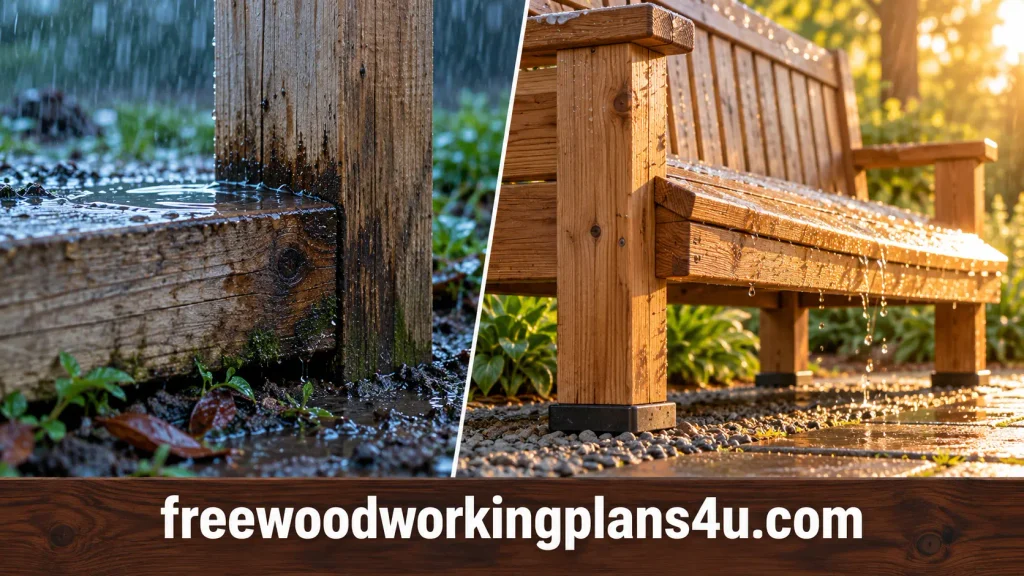
Soil contact keeps wood damp and can speed up decay. A board in a raised bed or a post set into the ground faces more persistent moisture than an above-ground trellis that dries between showers.
If you’re considering pressure-treated lumber, read the end tag or label. Choose a product marked for the exposure it will face. “Pressure-treated” doesn’t mean every board is rated for every use.
How easily can the project dry?
Rain matters, but so does what happens after it stops. Water caught in a flat ledge, a tight corner, or a joint pressed against the ground can keep wood damp long after the weather clears.
Good design gives water somewhere to go and air room to move. Material and construction work together: even suitable lumber benefits when it can dry.
What fits your budget and your patience for upkeep?
A low-priced board may mean more trade-offs in appearance, maintenance, or where it can safely be used. A more expensive species still needs good construction and care.
Compare the whole project. Include waste, the grade you can actually buy, fasteners, finish if you want one, and the maintenance you’re prepared to do. The USDA’s Wood Handbook treats moisture, decay, preservatives, and finishes as related parts of wood performance.
Lumber for outdoor benches and chairs
A bench needs to hold its shape, feel comfortable, and stand up to repeated use. Cedar and redwood are common options when suitable boards are available. Their relatively light weight can also make a finished bench easier to move.
Pressure-treated lumber may suit structural parts if its label matches the exposure, but it can be less convenient for fine furniture work. Before planing, sanding, or cutting treated boards, follow the product’s handling guidance and account for possible moisture-related movement.
When picking boards for a seat or back, look for straight stock without severe twist or large knots in critical spots. A little care at the lumberyard can make it easier to keep parts aligned and joints square later.
Recommended guide: Farmhouse Outdoor Bench Woodworking Plans: The 7-Step Blueprint That Saves Hundreds and Delivers an Heirloom-Worthy Backyard Showpiece
Lumber for outdoor tables
An outdoor table has a broad surface where rain, spills, and debris can collect. Think about how the top will drain and dry, as well as how you want it to look.
- Cedar or redwood may suit a lighter table if appropriate boards are available.
- Pressure-treated lumber may work for a frame or other parts rated for the exposure, but consider whether its condition and movement suit the design.
- A durable hardwood may suit a heavier, more refined table if you can source the right species and grade.
No species removes the need for sound construction. Avoid details that trap standing water, and choose fasteners intended for outdoor use and compatible with the lumber’s treatment.
Recommended reading: 15 Outdoor Woodworking Projects That Make Your Backyard Look $20,000 More Expensive (Without Hiring a Contractor)
Lumber for planters and raised garden beds
Planters and raised beds stay damp. Soil, irrigation, and rain keep their boards wet, so durability and material labeling deserve extra attention.
Recommended guide: Rolling Outdoor Plant Stand Woodworking Plans: Build a Heavy-Duty Mobile Plant Stand in One Weekend (Free Step-by-Step Guide)
Cedar and redwood are popular garden-bed choices, although they may cost more than common pine or fir. Pressure-treated lumber can also be an economical option when the product is labeled for its intended use. Oregon State University Extension notes that raised beds often stay wet and that the type of wood affects how quickly it decays.
If you’re growing food, don’t let an old internet claim—or the color of a board—make the decision for you. Avoid unidentified salvaged lumber and old industrial wood such as railroad ties. Check current product labeling and local gardening guidance.
Oregon State University published results from a four-growing-season study of raised beds made with copper-azole-treated Douglas-fir. The study found higher copper levels in soil touching the boards, but no increase in the vegetables and herbs tested. Those results apply to that product, site, and study; they do not settle the question for every treatment, garden, or location.
Recommended guide: Woodworking Cut List vs Materials List: How to Reconcile Them Before You Buy Lumber
Lumber for trellises, garden shelves, and small structures
A trellis or garden shelf may get rained on but remain above the soil. Cedar or locally available cypress could be worth comparing. Pressure-treated lumber may suit parts closer to the ground when its label matches the exposure.
A project with posts set in soil, long spans, or significant loads needs more than a suitable species. Check the required dimensions and local building guidance before you start cutting. Lumber that handles moisture well isn’t automatically strong enough for every structure.
A closer look at common outdoor lumber choices
Cedar
Cedar is widely used for outdoor furniture and garden projects. Look at the boards in front of you rather than relying on the species name alone. Grade, defects, and the amount of heartwood can affect which boards are best suited to an exposed project.
Recommended guide: The Complete Cedar Outdoor Furniture Woodworking Plans Guide: Build Weatherproof Patio Furniture That Lasts 20+ Years
Redwood
Redwood is another familiar choice in places where it’s readily available. Its price and availability can make it impractical elsewhere, so compare local alternatives before designing around it.
Pressure-treated pine
Pressure treatment uses preservatives to help protect wood from biological deterioration. The level of protection depends on the preservative and whether it has penetrated and been retained appropriately for the intended exposure.
Treatment and treatability vary among species and products, so follow the board’s label and handling directions.
Cypress and other regional woods
Cypress and other locally used species may be suitable options, but a familiar name can cover different species and grades. Ask what you’re buying and whether that specific product is sold for exterior use in your region.
Durable hardwoods
Some hardwoods are used outdoors, but “hardwood” by itself doesn’t mean “weather-resistant.” Check the species, stock quality, intended use, price, and workability before choosing one for a project.
What to look for when buying lumber
Take a moment to look over each board. It can save a lot of frustration when you get to the saw.
- Check for twist, bow, and severe crook. Badly distorted boards can make a straightforward build difficult.
- Look for cracks and damaged edges. Check the ends, especially if you need long, clean pieces.
- Save straight boards for important parts. Legs and rails often need cleaner, straighter stock than hidden supports.
- Read treatment labels. Confirm the stated use rather than assuming a board is suitable because of its color.
- Think about moisture and movement. Some lumber changes shape as it dries. That matters when a project calls for precise dimensions or close-fitting joints.
Recommended reading: What Is Saw Kerf in Woodworking? The Hidden Width Behind Every Cut
Build outdoor projects so the lumber can dry
The right wood helps. The small details in your design help too.
Give water a way out
Shape surfaces and joints so rain can run off rather than sit in place. Where the design allows, leave room for air to move around the boards.
Keep wood away from damp ground when you can
Raising a project off the soil can reduce constant moisture exposure. If a post or board must touch soil, choose lumber labeled for that use and follow the manufacturer’s directions.
Choose suitable fasteners
Use exterior-rated fasteners that are compatible with the wood and any treatment. Check the fastener manufacturer’s guidance, especially when working with pressure-treated lumber.
Decide how much upkeep you want
Exterior finishes vary in appearance and maintenance needs. Follow the product instructions and expect outdoor wood to change with sun and weather. A finish may help preserve the look you want, but it doesn’t change a board’s treatment rating or make every wood suitable for ground contact.
Questions woodworkers often ask about outdoor lumber
What’s the best wood for an outdoor bench?
Cedar and redwood are popular when the right boards are available and the budget allows. Pressure-treated lumber may suit some structural parts if its label matches the exposure and the design accounts for its condition and movement.
Recommended guide: How to Buy the Right Lumber for Any Woodworking Project: Choose the Species, Grade, Thickness, and Quantity
What’s the cheapest lumber for an outdoor project?
Pressure-treated pine is often considered for budget-conscious outdoor construction, particularly where the exposure calls for treated material. Prices and availability vary, so compare local options and check the treatment label.
Can I use regular pine outdoors?
Untreated pine can be vulnerable to decay in persistently wet or soil-contact conditions. Its suitability depends on exposure, design, protection, and maintenance. Don’t assume an interior-grade board will perform well outdoors just because it has a finish.
Is pressure-treated wood suitable for a raised garden bed?
That depends on the product, its label, intended use, and local guidance. Avoid unidentified salvaged lumber and old industrial timbers. Oregon State Extension’s recent study tested a specific copper-azole-treated Douglas-fir product at one site, so its findings don’t answer every question about every product or garden.
Does outdoor wood need a finish?
Not every project needs the same finish. Choose based on the appearance and maintenance you want, and follow the manufacturer’s directions. A finish is not a replacement for lumber suited to the project’s exposure.
Products / Tools / Resources
Tools for choosing and working with lumber
- A tape measure, straightedge, and square for checking boards and laying out cuts.
- Clamps and a drill for holding parts steady and assembling projects.
- An optional moisture meter if you need to compare boards before precise joinery.
Materials to match to your build
- Lumber labeled for the project’s exposure.
- Exterior-rated fasteners compatible with the lumber and its treatment.
- An exterior finish, if you want one, selected and maintained according to its instructions.
Further reading
- The USDA Forest Products Laboratory’s Wood Handbook: Wood as an Engineering Material covers moisture, decay, preservatives, fastenings, and finishes.
- Oregon State University Extension’s guidance on pressure-treated wood for raised beds describes its research on a specific treated Douglas-fir product in Oregon. Check guidance from an extension service in your own region as well.